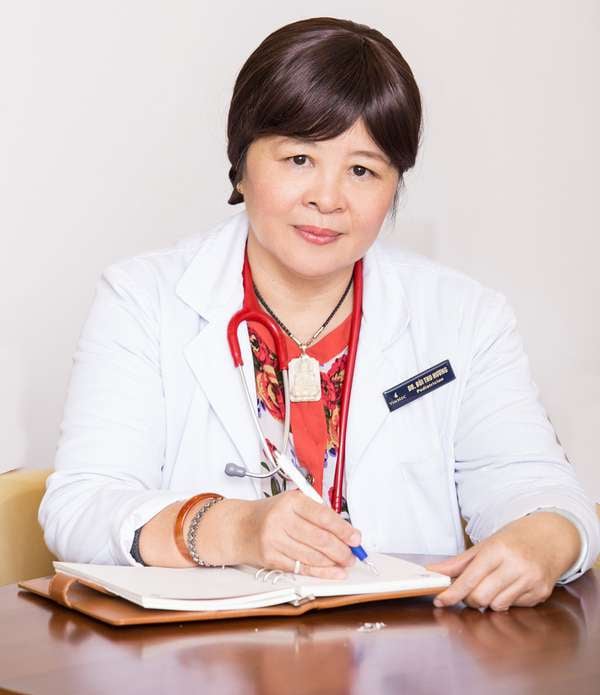
Specialist Level II Doctor Bui Thu Huong
Make an appointment with MD, Specialist Level II Bui Thu Huong - Former Head of Department of Gastroenterology at Vietnam National Children's Hospital, with over 40 years of experience in Pediatrics, particularly in Pediatric Gastroenterology - Hepatology and Nutrition.
Position: Former Head of Department of Gastroenterology - Vietnam National Children's Hospital
Languages: Vietnamese, English
So 55 duong Yen Ninh, Ba Dinh Ward, Hanoi, Hanoi
Mon - Sun: 07:30-12:00, 13:30-19:00
Times City T11, 458 Pho Minh Khai, Khu do thi Times City, Hai Ba Trung Ward, Hanoi, Hanoi
Mon - Fri: 08:00-12:00, 13:00-17:00
Sat: 08:00-12:00
About Specialist Level II Doctor Bui Thu Huong
MD, Specialist Level II Bui Thu Huong is a professional with over 40 years of experience in the field of Pediatrics, especially in Pediatric Gastroenterology - Hepatology and Nutrition. The physician was formerly the Head of the Department of Gastroenterology at Vietnam National Children's Hospital and previously served as Deputy Head of the Department of Pediatrics at Nam Dinh Provincial General Hospital.
Graduating as an MD, Specialist Level II in Pediatrics from Hanoi Medical University in 1999, Dr. Huong has contributed numerous scientific research works at the institute and specialty levels, notably a study on gastric bezoars in children. In addition, the physician regularly participates in international professional conferences held in Turkey, France, Singapore, Taiwan, the Philippines, etc.
Treatment Experience of MD, Specialist Level II Bui Thu Huong
With more than four decades of clinical practice and a long tenure leading the Department of Gastroenterology at a tertiary care hospital, MD, Specialist Level II Bui Thu Huong has successfully examined and treated many complex pathological cases in young children:
- Intensive diagnosis and management of Gastroenterology - Hepatobiliary diseases: Treatment of conditions such as gastroduodenal ulcers, gastroesophageal reflux, gastrointestinal hemorrhage, foreign bodies in the gastrointestinal tract, gastric bezoars, hepatitis, and hepatobiliary functional disorders in children.
- Treatment of prolonged absorption and digestive disorders: Examination and development of treatment regimens for children with chronic diarrhea, irritable bowel syndrome, persistent constipation, cow's milk protein allergy, and lactose intolerance.
- Consultation and recovery in Pediatric Nutrition: Addressing prolonged loss of appetite, stunting malnutrition, failure to thrive, micronutrient deficiencies, and establishing personalized nutrition regimens for both newborn infants and young children.
- Examination and treatment of Respiratory & Pediatric diseases: Management of episodes of bronchitis, pneumonia, bronchial asthma, viral fever, seasonal infectious diseases, and growth monitoring of children.
Guide to making appointments and the examination process with MD, Specialist Level II Bui Thu Huong
- Step 1: Make an appointment via Bcare by calling the hotline or filling out the appointment information on the system to obtain a priority number.
- Step 2: Go to the reception desk of the Department of Pediatrics at Hong Ngoc Yen Ninh Hospital (55 Yen Ninh Street, Ba Dinh District, Hanoi) to verify the scheduled appointment, receive the patient health booklet, and get directions to the clinic.
- Step 3: Enter the clinic to meet MD, Specialist Level II Bui Thu Huong to discuss detailed manifestations of the disease, eating habits, gastrointestinal/nutritional history, and undergo clinical examination.
- Step 4: Move to the paraclinical area to perform blood tests, stool tests, gastrointestinal endoscopy, abdominal ultrasonography, or radiography as indicated.
- Step 5: Return to the clinic to hear MD, Specialist Level II Bui Thu Huong review the results, advise on the treatment regimen, prescribe medication, and provide guidance on an appropriate nutrition regimen.
Notes before the visit
- If the child requires gastrointestinal endoscopy or blood tests, parents should have the child fast from breakfast according to specific instructions from healthcare professionals.
- Monitor and record details of the child's symptoms, such as frequency of bowel movements, characteristics of stool, signs of abdominal pain, regurgitation, or a list of foods suspected of causing allergies.
- Bring along the health monitoring book, growth chart, old prescriptions, or recent laboratory results/ultrasound reports of the baby.
- Proactively arrive approximately 10-15 minutes before the scheduled time to complete the appointment confirmation procedures at the reception desk.
Frequently Asked Questions
How should parents manage a child with prolonged constipation accompanied by abdominal pain?
Prolonged constipation may stem from a diet low in fiber, insufficient water intake, or organic causes such as congenital megacolon or anal fissure. Parents should not self-administer frequent enemas to the child, as this can easily cause mucosal lesions and disrupt the child's natural defecation reflex. It is necessary to bring the child for a Specialty examination in Pediatric Gastroenterology so that the physician can determine the cause, provide guidance on dietary regulation, and prescribe safe stool softeners.
What are the common manifestations of gastric bezoars in children and how are they managed?
Gastric bezoars form when children consume foods high in tannins (such as crisp persimmons, figs, guavas) or large amounts of insoluble fiber while the stomach is empty, leading to clumping. Children often present with epigastric abdominal pain, regurgitation, bloating, poor appetite, or a palpable mass in the abdomen. When suspicion arises, the physician will order abdominal ultrasonography or gastroscopy for accurate diagnosis and proceed with intervention to remove the bezoar or administer appropriate dissolving agents.
What daily care considerations are needed for children prone to gastroesophageal reflux?
For children with reflux, parents should divide meals into smaller portions throughout the day, avoiding overfeeding or having the child lie down immediately after eating/drinking milk. During sleep, the child's head and back can be elevated by approximately 15-30 degrees. If reflux causes failure to thrive, persistent cough, or excessive nighttime crying, parents need to bring the baby for an examination so the physician can prescribe adjuvant medications to reduce acid secretion or regulate gastric peristalsis.
Professional strengths
Workplace
- •Vinmec Times City International Hospital
- •Hong Ngoc Yen Ninh Hospital
Experience
- •Former Head of Department of Gastroenterology – Vietnam National Children's Hospital
- •Former Deputy Head of Department of Pediatrics – Nam Dinh Provincial General Hospital
- •Intensive Care Unit - Nam Dinh Provincial General Hospital
Education & training
- •1981: Graduated as a Pediatric Physician - Hanoi Medical University
- •1995: Graduated as MD, Specialist Level I in Pediatrics - Hanoi Medical University
- •1999: Graduated as MD, Specialist Level II in Pediatrics - Hanoi Medical University
- •Participated in international conferences on pediatric gastroenterology, nutrition, and hepatobiliary diseases in Turkey, Singapore, France, Taiwan, the Philippines, etc.
- •Participated in professional training courses conducted by foreign and Vietnamese experts at Vietnam National Children's Hospital