
MSc, MD Ho Quang Minh Dao
MD, MSc Ho Quang Minh Dao is an expert in ophthalmology with over 25 years of clinical experience, specializing particularly in vitreoretinal diseases. With dedication and extensive experience, MD, MSc Ho Quang Minh Dao is consistently trusted by patients for the examination and treatment of eye conditions.
Position: Head of Department, Vitreoretinal - Saigon Eye Hospital - Le Thi Rieng
Languages: Vietnamese, English
So 100 Le Thi Rieng, Ben Thanh Ward, Ho Chi Minh City, Ho Chi Minh City
Mon - Sat: 07:30-12:00, 13:00-16:30
Sun: 07:30-12:00
About MSc, MD Ho Quang Minh Dao
MD, MSc Ho Quang Minh Dao is an expert in ophthalmology with over 25 years of clinical experience, specializing particularly in vitreoretinal diseases. Having graduated as a General Practitioner and completed a Master of Medicine program at the University of Medicine and Pharmacy in Ho Chi Minh City, Dr. Dao possesses a solid academic foundation along with meticulous surgical technique.
Throughout his career, the physician served as Head of the Ophthalmology Department at Van Hanh General Hospital and worked at Da Nang Eye Hospital before transferring to Saigon Eye Hospital - Le Thi Rieng. Additionally, he completed an intensive training course in phacoemulsification surgery at Cho Ray Hospital. With dedication and extensive experience, MD, MSc Ho Quang Minh Dao is consistently trusted by patients for the examination and treatment of eye conditions.
Abnormal symptoms requiring immediate consultation with MD, MSc Ho Quang Minh Dao
With deep expertise in Vitreoretinal and Cataract Surgery, MD, MSc Ho Quang Minh Dao accepts patients for examination and treatment when abnormal symptoms appear or for those belonging to the following groups:
- Sudden appearance of numerous black spots, blurred streaks, or floating threads in front of the eyes (floaters) that increase rapidly.
- Appearance of flashing lights at the corner of the eye, especially in darkness or during eye movement.
- Seeing a dark curtain or shadow obscuring part or all of the visual field.
- Sudden decrease in visual acuity, distorted images, metamorphopsia, where straight lines appear curved.
- Blurred vision as if covered by a foggy membrane, sensitivity to bright light, or seeing halos around lights.
Individuals who should schedule routine follow-up examinations:
- Patients with diabetes mellitus and hypertension require periodic screening for retinal complications.
- Older adults at risk of or showing signs of macular degeneration and age-related cataracts.
- Individuals with a history of high myopia, at risk of degeneration or retinal tears.
- Patients who have previously undergone ophthalmic surgery or sustained ocular trauma requiring specialized monitoring.
Guide to scheduling appointments and the examination process with MD, MSc Ho Quang Minh Dao
- Step 1: Make an appointment via Bcare by calling the hotline or filling out appointment information on the system to obtain a priority number, helping to proactively choose examination time and reduce waiting time.
- Step 2: Arrive to verify the scheduled appointment at the reception desk of Saigon Eye Hospital - Le Thi Rieng; healthcare professionals will assist with procedures and guide you to the doctor's clinic.
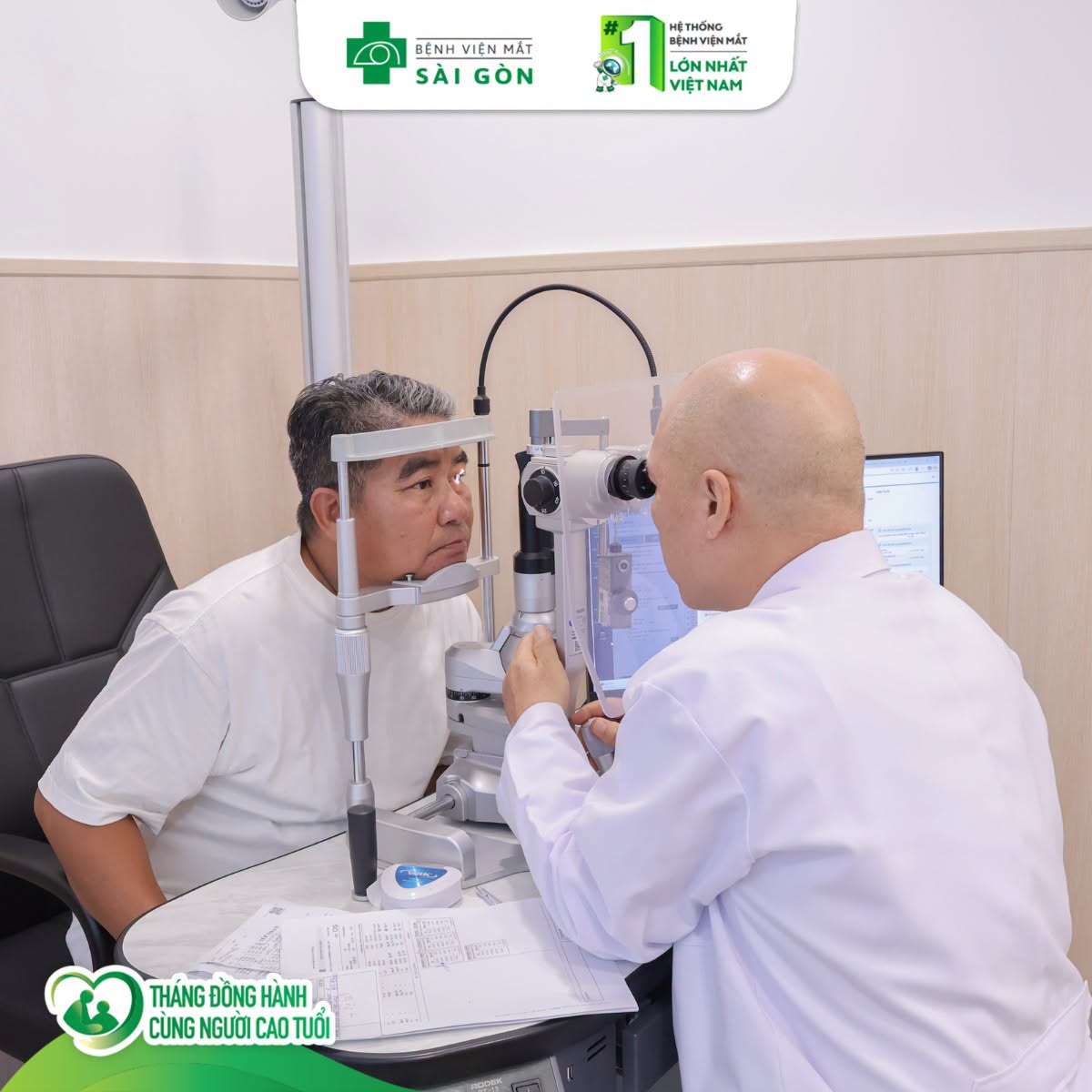
- Step 3: Enter the clinic to meet MD, MSc Ho Quang Minh Dao for a clinical examination, visual acuity assessment, and evaluation of eye status.
- Step 4: Perform indicated paraclinical tests (such as refraction, tonometry, optical coherence tomography [OCT] of the retina, and funduscopy) under nurse guidance if ordered by the physician.
- Step 5: Return to the initial clinic for the physician to review results, advise on medical treatment, or perform surgical planning/procedure as appropriate.
Notes before the visit:
- Bring full identification documents, patient health booklet, eyeglasses, old prescriptions, and eye imaging films (if available).
- Arrive approximately 10–15 minutes before the appointment time to complete confirmation procedures at the reception desk.
- If pupil dilation drops are required for fundus and retina examination, temporary blurred vision may occur for several hours; patients should be accompanied by a family member and avoid driving after the examination.
- Remove contact lenses (if worn) prior to examination as directed by healthcare staff.
- Clearly inform the physician of any history of systemic underlying diseases (diabetes mellitus, hypertension, cardiovascular disease) or drug allergy history.
Frequently Asked Questions
What are the signs of diabetic retinopathy and how is it treated?
Diabetic retinopathy in the initial stage often has insidious progression and no clear symptoms, being detected only during routine fundus examinations. As the disease progresses to more severe stages, patients may experience decreased visual acuity, appearance of black spots or blurred streaks floating in front of the eyes (floaters), blurred vision, or image distortion. Treatment methods include good control of glycemic index, intravitreal injections, panretinal photocoagulation, or vitrectomy for cases with severe hemorrhagic complications.
What are the signs of retinal detachment and how is it managed?
Typical signs of retinal detachment include flashes of light at the corner of the eye, sudden appearance of numerous floating black spots, and a dark curtain obscuring part or all of the visual field. This is an ophthalmologic emergency requiring early intervention, as delay can lead to permanent vision loss. Upon detecting these symptoms, patients must immediately go to a specialized eye facility for a surgeon to reattach the retina using laser or perform scleral buckle/vitrectomy surgery.
Is vitreous opacity dangerous and how is it recognized?
Individuals with vitreous opacity typically recognize it by seeing black streaks, threads, or small spots moving with eye gaze, most clearly visible against a white wall or bright sky. Most cases of vitreous opacity due to natural aging are benign and do not directly threaten vision. However, if vitreous opacity appears suddenly accompanied by flashes or blurred vision, it may be a warning sign of a retinal tear; patients need to seek immediate examination so the physician can perform funduscopy and provide timely management.
Professional strengths
Workplace
- •Saigon Eye Hospital - Le Thi Rieng
Experience
- •1998 - 2000: Attending Physician, Ophthalmology Department, Da Nang Eye Hospital
- •2003 - 07/2025: Head of Department, Ophthalmology, Van Hanh General Hospital
- •2025 - Present: Head of Department, Vitreoretinal, Saigon Eye Hospital - Le Thi Rieng
Education & training
- •1997 - General Practitioner - University of Medicine and Pharmacy in Ho Chi Minh City
- •2022 - Master of Medicine - University of Medicine and Pharmacy in Ho Chi Minh City