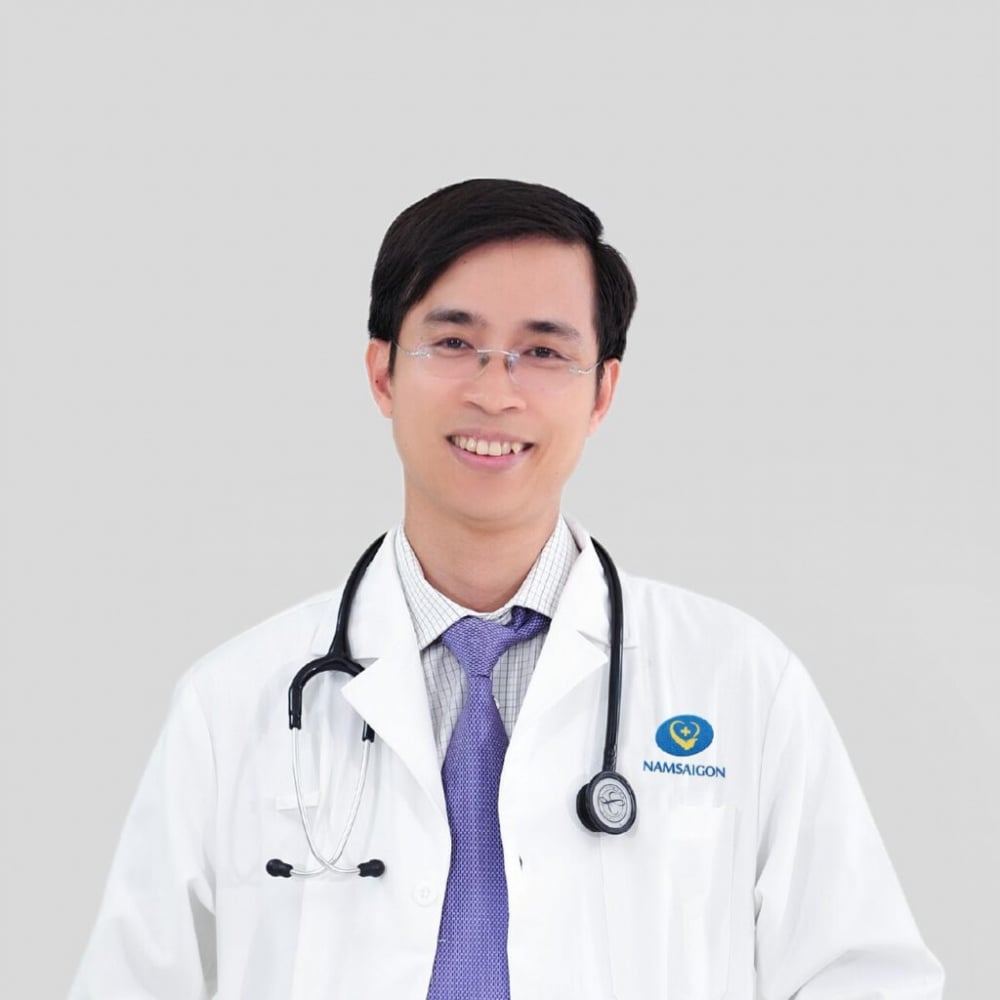
Specialist Level I Doctor Ho Thanh Lich
Dr. Ho Thanh Lich, MD, Specialist Level I, is one of the most experienced, dedicated, and reputable experts in the fields of Intensive Care, Stroke, and General Internal Medicine. His deep expertise and extensive clinical acumen enable him to effectively manage complex emergency situations, resuscitate critically ill patients, and provide effective examination and treatment for chronic neurologic, cardiovascular, respiratory, and gastrointestinal conditions.
Position: Head of Department of Internal Medicine - Nam Saigon International General Hospital
Languages: Vietnamese, English
So 88, Duong so 8, Khu dan cu Trung Son, Binh Hung Commune, Ho Chi Minh City, Ho Chi Minh City
Mon - Sat: 07:00-12:00, 13:30-17:00
Sun: 07:00-12:00
About Specialist Level I Doctor Ho Thanh Lich
Dr. Ho Thanh Lich, MD, Specialist Level I, is one of the most experienced, dedicated, and reputable experts in the fields of Intensive Care, Stroke, and General Internal Medicine in Vietnam. A former outstanding student at Hanoi Medical University, Dr. Lich possesses a solid professional foundation, having completed the Specialist Level I Physician program at Pham Ngoc Thach University of Medicine, combined with numerous advanced training certificates in acute stroke treatment, mechanical ventilation, and continuous hemofiltration.
With over 18 years of medical experience, the physician has held several key management positions, such as Head of the Intensive Care – Stroke Department at Hong Duc Hospital, and has been awarded the title of Outstanding Head of Department for many consecutive years. His deep expertise and extensive clinical acumen enable him to effectively manage complex emergency situations, resuscitate critically ill patients, and provide effective examination and treatment for chronic neurologic, cardiovascular, respiratory, and gastrointestinal conditions. Currently, Dr. Ho Thanh Lich, MD, Specialist Level I, serves as the Head of the Department of Internal Medicine at Nam Saigon International General Hospital.
Conditions examined and treated by Dr. Ho Thanh Lich, MD, Specialist Level I
With more than 18 years of clinical experience in Intensive Care – Stroke and Internal Medicine, Dr. Ho Thanh Lich, MD, Specialist Level I, directly examines, diagnoses, and effectively treats various groups of diseases:
- Diagnosis, emergency care, and development of specialized treatment regimens for cerebrovascular diseases such as cerebral infarction and cerebral hemorrhage, while effectively controlling symptoms of headache, dizziness, and neurologic disorders.
- Directly performing resuscitation, monitoring, and treatment for severe cases involving the nervous system, cardiovascular system, respiratory system, kidneys, postoperative care, and complex emergency situations.
- Comprehensive control and treatment of common internal medicine conditions across specialties including cardiology (hypertension, myocardial ischemia), pulmonology (pneumonia, COPD), gastroenterology, and nephrology-urology.
- Performing specialized interventional therapies in intensive care, such as advanced mechanical ventilation monitoring, continuous hemofiltration, and plasma exchange for critically ill patients.
Guide to scheduling appointments and the examination process with Dr. Ho Thanh Lich, MD, Specialist Level I
- Step 1: Make an appointment via Bcare by calling the hotline or filling out the booking information on the system to obtain a priority number, helping to reduce waiting time and proactively manage your visit schedule.
- Step 2: Arrive at Nam Saigon International General Hospital, verify the booked appointment details so that healthcare professionals can guide you through completing procedures and admit you to the Department of Internal Medicine.
- Step 3: Enter the clinic to meet Dr. Ho Thanh Lich, MD, Specialist Level I, for a clinical examination, assessment of neurologic reflexes and vital signs, and review of the patient's past medical history.
- Step 4: Undergo necessary paraclinical tests as indicated, such as computed tomography (CT scan), magnetic resonance imaging (MRI) of the brain, electrocardiogram, ultrasound, or blood tests, based on the physician's professional advice.
- Step 5: Return to the clinic for the physician to interpret results, conclude the disease status, prescribe medication, or advise on a follow-up plan and long-term health management.
Notes before the examination
- Bring along the complete patient health booklet, current daily prescriptions, and previous laboratory results and CT/MRI images to allow the physician to conveniently compare disease progression.
- Fast from breakfast if the patient requires it or is indicated to undergo blood tests or abdominal ultrasonography in the morning.
- Wear loose, comfortable clothing to facilitate clinical examination of body regions and testing of neurologic reflexes.
- List any abnormal symptoms currently experienced (especially headache, dizziness, weight loss) to discuss clearly with the physician.
- Arrive 10 to 15 minutes before the scheduled appointment time to complete information verification procedures at the hospital reception desk.
Frequently Asked Questions
What are the early warning signs of stroke that require immediate emergency care?
Patients should be taken to a medical facility immediately if sudden symptoms appear, such as facial droop, deviation of the philtrum to one side, or sudden weakness or paralysis of one side of the arms and legs. Additionally, dysarthria, slurred speech, dysequilibrium, severe vertigo, or a terrible headache appearing suddenly are also dangerous warning signs of stroke.
What pathologic risks do prolonged headache and dizziness indicate?
Prolonged headache and dizziness may be manifestations of various pathologic conditions such as cerebral ischemia, vestibular disorder, hypertension, or central nervous system injuries. In some cases, these may also be early signs of cerebral vascular malformation or risk of progression to cerebral infarction. Early examination helps the physician accurately determine the cause and intervene promptly.
What should patients note during medical treatment after experiencing a stroke?
Post-stroke patients must strictly adhere to the prescription prescribed by the physician to well control risk factors such as blood pressure, blood glucose, and lipid profile to prevent recurrence risk. Additionally, patients should combine early physical therapy-rehabilitation, maintain a low-salt diet, limit fat intake, and attend follow-up visits as scheduled.
What role do continuous hemofiltration and plasma exchange techniques play in intensive care?
Continuous hemofiltration and plasma exchange are advanced resuscitation techniques that help remove toxins, proinflammatory substances, or unexpected antibodies from the patient's body. These methods are often indicated for managing severe cases such as multivisceral failure, sepsis, severe acute pancreatitis, or dangerous immune-mediated diseases. Timely application helps protect organ function and improve recovery rates for patients.
Professional strengths
Workplace
- •Nam Saigon International General Hospital
Experience
- •2008 – 2014: Attending physician, Intensive Care – Stroke Department, Hong Duc Hospital.
- •2014 – 2019: Head of Department, Intensive Care – Stroke Department, Hong Duc Hospital.
- •12/2019 – 2/2022: Head of Department, Intensive Care – Emergency Department, Nam Saigon International General Hospital.
- •2022 – 2025: Deputy Head of Department, Intensive Care – Emergency Department, Nam Saigon International General Hospital.
- •2025 – Present: Head of Department, Department of Internal Medicine, Nam Saigon International General Hospital.
Awards & recognition
- •Successful treatment of many spectacular cases of severely ill patients.
- •Awarded the title of Outstanding Head of Department at Hong Duc Hospital and Nam Saigon International General Hospital for many years.
- •Outstanding student at Hanoi Medical University, with scientific reports presented at the Hanoi Medical University Scientific Conference in 2008.
Education & training
- •2008: Graduated as Doctor of Medicine, Hanoi Medical University.
- •2009 – 2010: Orientation in neurology and cerebrovascular specialty at Cho Ray Hospital, People's Hospital 115, and Gia Dinh General Hospital.
- •2010 – 2011: Completed continuing education course in neurology and applied radiology in neurology organized by the World Health Organization (WHO).
- •2015: Orientation course in intensive care at Gia Dinh General Hospital.
- •2015: Graduated Specialist Level I, Pham Ngoc Thach University of Medicine.
- •2016: Advanced mechanical ventilation course.
- •2022: Course on continuous hemofiltration and plasma exchange.
- •2008 – Present: Participated in numerous continuing education courses in specialties including cardiology, neurology, endocrinology, pulmonology, nephrology-urology, etc.