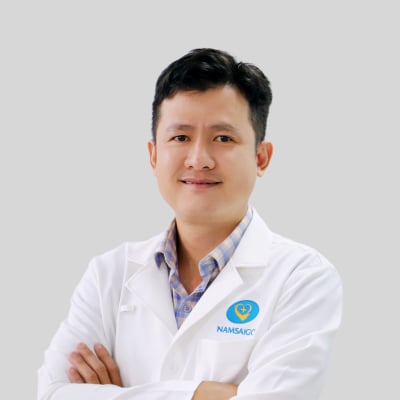
Specialist Level II Doctor Huynh Dang Thanh Son
MD, Specialist Level II Huynh Dang Thanh Son is a reputable expert in the field of Orthopedics - Spine with more than 18 years of experience in surgical treatment of musculoskeletal disorders, orthopedic conditions, and sports injuries. The physician has superior strengths in bone fracture fixation, treatment of pseudarthrosis, arthroscopic reconstruction of knee ligaments, management of rotator cuff injuries, as well as surgical techniques for knee arthroplasty and hip arthroplasty to treat osteoarthritis or femoral neck fractures.
Position: Deputy Head of Department, Orthopedics - Spine
Languages: Vietnamese, English
So 88, Duong so 8, Khu dan cu Trung Son, Binh Hung Commune, Ho Chi Minh City, Ho Chi Minh City
Tue, Sat: 07:00-12:00, 13:30-17:00
300.000đ
About Specialist Level II Doctor Huynh Dang Thanh Son
MD, Specialist Level II Huynh Dang Thanh Son is a reputable expert in the field of Orthopedics - Spine with more than 18 years of experience in surgical treatment of musculoskeletal disorders, orthopedic conditions, and sports injuries. Having worked for 14 years at the Emergency and Orthopedics - Spine Department – Cho Ray Hospital, the physician has superior strengths in bone fracture fixation, treatment of pseudarthrosis, arthroscopic reconstruction of knee ligaments, management of rotator cuff injuries, as well as surgical techniques for knee arthroplasty and hip arthroplasty to treat osteoarthritis or femoral neck fractures.
The physician's dedication and sharp professional thinking help many patients achieve good motor function recovery and return early to their daily lives. Currently, MD, Specialist Level II Huynh Dang Thanh Son holds the position of Deputy Head of Department, Orthopedics - Spine at Nam Saigon International General Hospital.
Diseases diagnosed and treated by MD, Specialist Level II Huynh Dang Thanh Son
With a deep professional foundation and many years of experience managing complex cases at top-tier hospitals, MD, Specialist Level II Huynh Dang Thanh Son directly examines, diagnoses, and treats various groups of Orthopedics - Spine diseases:
Examination and treatment:
- Trauma including sprains, dislocations, fractures, and soft tissue wounds.
- Musculoskeletal disorders (knee osteoarthritis, hip osteoarthritis, gout, osteoporosis, rheumatoid arthritis…).
- Sports injuries (sprains, knee ligament tears, shoulder instability, rotator cuff injuries…).
Surgery:
- Orthopedic and Spine Surgery.
- Internal fixation.
- Treatment of pseudarthrosis.
- Arthroscopy, joint replacement.
- Knee arthroplasty and hip arthroplasty surgery to treat osteoarthritis, femoral neck fractures, avascular necrosis of the femoral head…
Guide to scheduling appointments and the examination process with MD, Specialist Level II Huynh Dang Thanh Son
- Step 1: Make an appointment via Bcare by calling the hotline or filling out appointment information on the system to obtain priority numbering, helping to reduce waiting time and proactively manage examination time.
- Step 2: Go to the reception desk of Nam Saigon International General Hospital, verify the scheduled appointment information so that healthcare professionals can guide you through completing procedures and admit you to the clinic within the Orthopedics - Spine Department.
- Step 3: Enter the clinic to meet MD, Specialist Level II Huynh Dang Thanh Son for clinical examination, assessment of range of motion, evaluation of injury sites, and detailed inquiry into the mechanism of injury.
- Step 4: Perform advanced paraclinical tests such as bone radiography, Magnetic Resonance Imaging (MRI), computed tomography (CT scanner), or blood tests according to the physician's professional advice.
- Step 5: Return to the clinic for the physician to interpret results, conclude the status of musculoskeletal injury, and advise on a medical treatment regimen, physical therapy-rehabilitation program, or appropriate surgical indication.
Notes before going for an examination
- Bring along the complete patient health booklet, current prescriptions, and any previous X-ray, MRI, or CT scan films if available.
- Choose loose, comfortable clothing to facilitate examination and inspection of injured joint areas.
- Accurately remember the time of injury occurrence, the mechanism of injury, or the history of joint pain to discuss with the physician.
- Inform the physician if you have concomitant chronic diseases such as diabetes mellitus, hypertension, or are currently taking anticoagulants.
- Arrive 10 to 15 minutes before the scheduled time to complete confirmation procedures at the reception desk.
Frequently Asked Questions
When are patients with knee or hip osteoarthritis indicated for joint replacement surgery, and what is the effectiveness?
Knee or hip arthroplasty is usually considered when osteoarthritis is in a severe stage, serious structural bone changes occur, causing prolonged pain and no longer responding to medical treatments or physical therapy. Additionally, patients with femoral neck fractures or avascular necrosis of the femoral head also require joint replacement to restore mobility. This method helps remove the damaged part of the joint, replacing it with a suitable artificial joint, supporting patients in significantly reducing pain, improving ambulation posture, and recovering motor function.
Is arthroscopic surgery mandatory for knee ligament tears due to sports injuries?
The decision for arthroscopic reconstruction of knee ligaments depends on the severity of the injury (complete or partial tear), age, activity needs, and degree of joint instability. For young patients who frequently engage in sports or experience significant knee laxity, arthroscopic ligament reconstruction is necessary to restore knee stability and prevent early-onset osteoarthritis. Conversely, cases of incomplete tears or low activity needs may be considered for conservative treatment combined with rehabilitation exercises under physician monitoring.
What should be noted during care and recovery after orthopedic trauma surgery?
After orthopedic trauma surgery, patients must strictly adhere to the use of anti-inflammatory and analgesic medications, and keep the surgical wound dry and clean according to specialist instructions. In addition, patients need to start rehabilitation exercises early according to the prescribed regimen to avoid ankylosis, muscle atrophy, and help the injured area heal quickly. Attending follow-up visits as scheduled allows the physician to assess fracture healing progress, joint recovery status, and adjust exercise intensity appropriately.
Professional strengths
Workplace
- •Nam Saigon General Hospital
Experience
- •2008 – 2009: Attending physician at the Emergency Department, Cho Ray Hospital.
- •2009 – 2021: Attending physician at the Orthopedics - Spine Department, Cho Ray Hospital.
- •2022 – Present: Deputy Head of Department, Orthopedics - Spine, Nam Saigon International General Hospital.
Education & training
- •2006: General Practitioner, University of Medicine and Pharmacy at Ho Chi Minh City.
- •2010: MD, Specialist Level I in Orthopedics - Spine, University of Medicine and Pharmacy at Ho Chi Minh City.
- •2018: MD, Specialist Level II in Orthopedics - Spine, Pham Ngoc Thach University of Medicine.
- •2023: Certificate in Arthroscopic Joint Replacement.