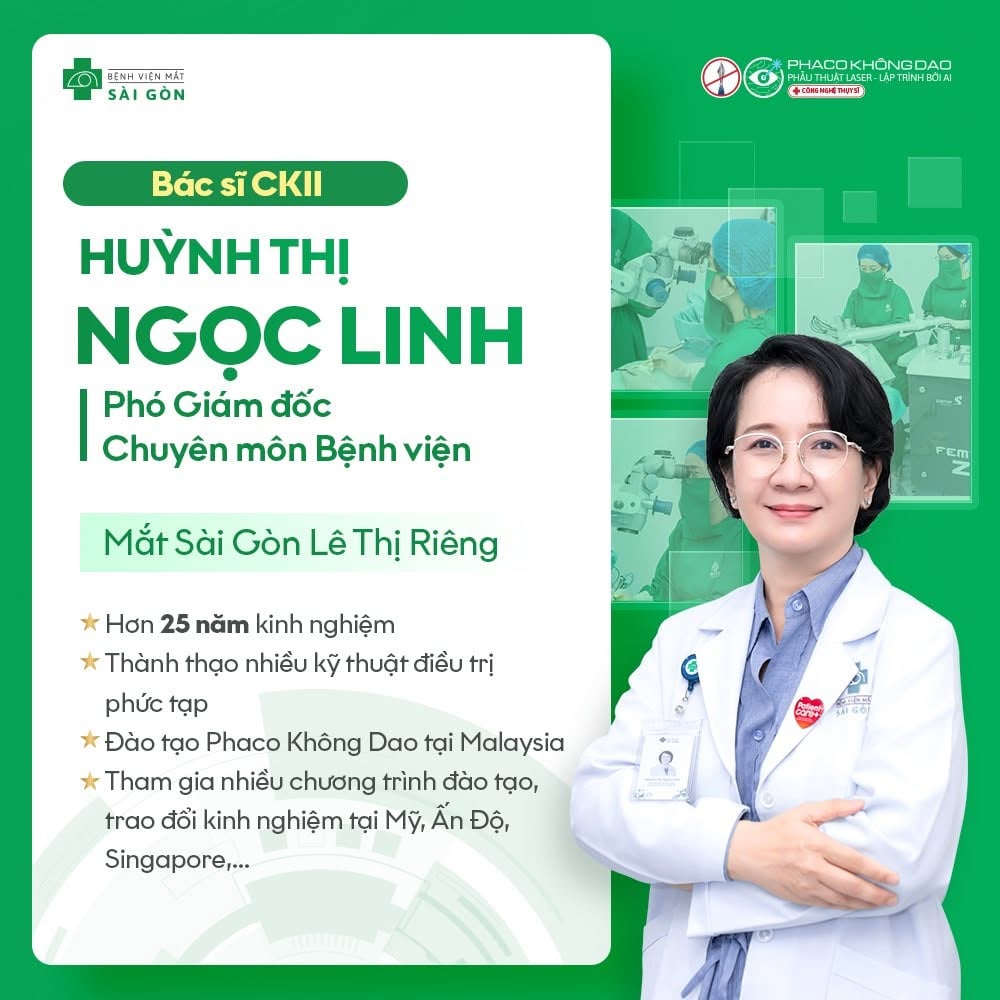
Specialist Level II Doctor Huỳnh Thị Ngọc Linh
MD, Specialist Level II Huỳnh Thị Ngọc Linh is an ophthalmology expert with more than 25 years of experience in the diagnosis, treatment, and surgical management of eye diseases. With a strong focus on cataract surgery, she has successfully performed thousands of phacoemulsification procedures, improving visual acuity and quality of life for patients.
Position: Deputy Medical Director - Saigon Eye Hospital - Le Thi Rieng
Languages: Vietnamese, English
So 100 Le Thi Rieng, Ben Thanh Ward, Ho Chi Minh City, Ho Chi Minh City
Mon - Sat: 07:30-12:00, 13:00-16:30
Sun: 07:30-12:00
About Specialist Level II Doctor Huỳnh Thị Ngọc Linh
MD, Specialist Level II Huỳnh Thị Ngọc Linh is an ophthalmology expert with more than 25 years of experience in the diagnosis, treatment, and surgical management of eye diseases. She graduated as an MD, Specialist Level II in Ophthalmology from the University of Medicine and Pharmacy at Ho Chi Minh City. Dr. Linh possesses a deep professional foundation and extensive experience working at major hospitals such as the Ho Chi Minh City Eye Hospital, FV Hospital (Franco-Vietnamese Hospital), and Can Tho General Hospital.
With a strong focus on cataract surgery, she has successfully performed thousands of phacoemulsification procedures, improving visual acuity and quality of life for patients. In addition to effectively treating many complex cases, she also plays an important role in training and mentoring young physicians. Currently, MD, Specialist Level II Huỳnh Thị Ngọc Linh serves as Deputy Medical Director at Saigon Eye Hospital - Le Thi Rieng.
Treatment Experience of MD, Specialist Level II Huỳnh Thị Ngọc Linh
With over 25 years of experience in ophthalmology and holding medical management positions at hospitals, MD, Specialist Level II Huỳnh Thị Ngọc Linh has extensive experience in treating and surgically managing complex eye conditions:
Performed thousands of cataract surgeries:
- - Performed phacoemulsification (Phaco) surgical techniques, managing hard cataracts or those associated with other pathologies.
- - Applied Nd:YAG laser treatment for posterior capsule opacification after surgery to help improve patient vision.
Diagnosis and Treatment of Glaucoma:
- - Conducted examinations, gonioscopy, and assessment of optic neuropathy in glaucoma cases.
- - Performed laser peripheral iridotomy to control intraocular pressure and preserve vision.
Ocular Plastic Surgery and Strabismus Surgery:
- - Directly performed strabismus surgery to improve ocular alignment and restore appearance.
- - Performed primary plastic surgery procedures of the ocular region and ocular adnexa.

Guide to Making an Appointment and Examination Process with MD, Specialist Level II Huỳnh Thị Ngọc Linh
- Step 1: Make an appointment via Bcare by calling the hotline or filling out the appointment form on the system to obtain a priority number, allowing you to proactively choose your examination time and reduce waiting times.
- Step 2: Arrive to verify your scheduled appointment at the reception desk of Saigon Eye Hospital - Le Thi Rieng; healthcare professionals will assist with administrative procedures and guide you to the physician's clinic.
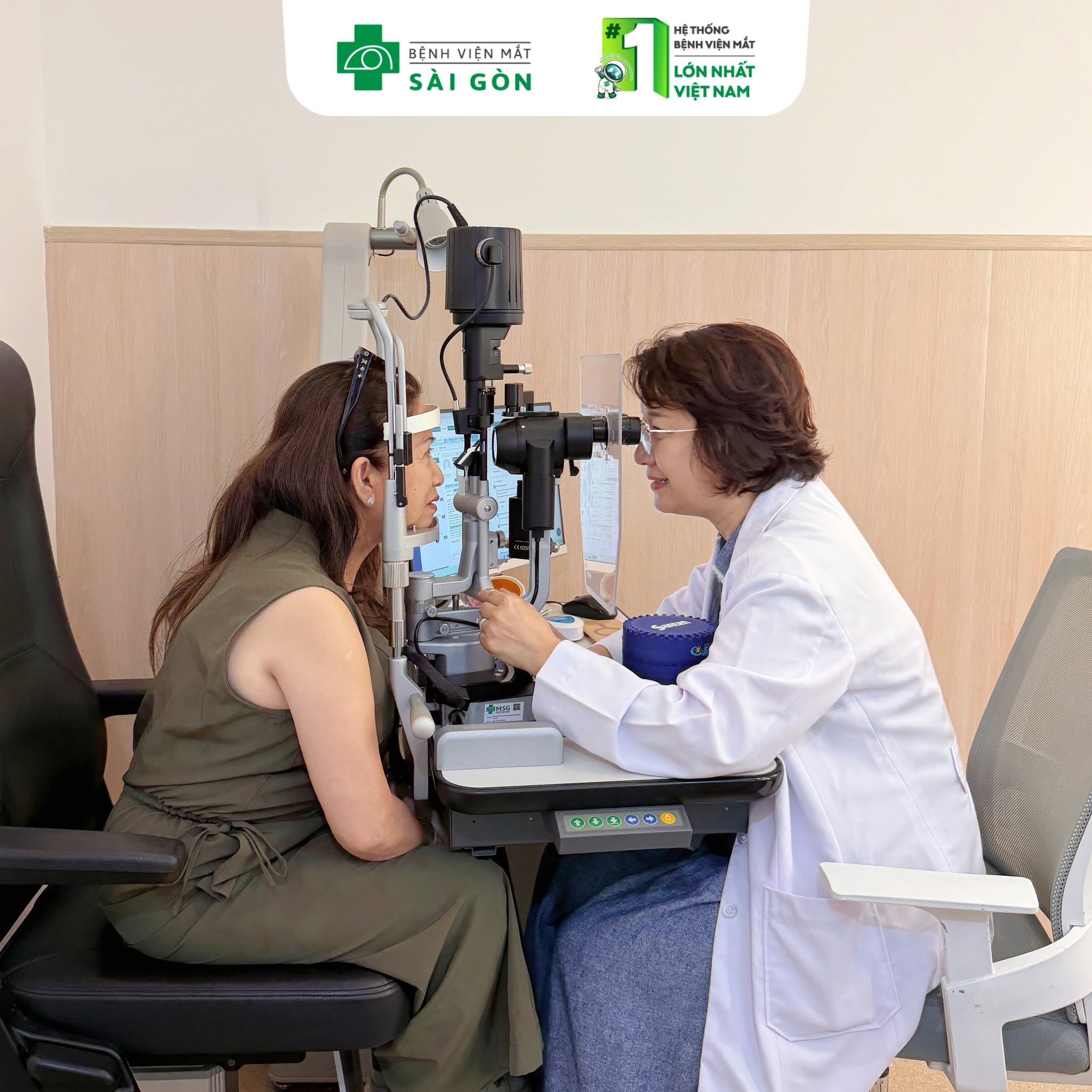
- Step 3: Enter the clinic to meet MD, Specialist Level II Huỳnh Thị Ngọc Linh for clinical examination, visual acuity assessment, and eye check-up.
- Step 4: Undergo specialized paraclinical tests (such as refraction, tonometry, and gonioscopy) as directed by the nurse if indicated by the physician.
- Step 5: Return to the initial clinic for the physician to review results, advise on medical treatment, or perform surgical planning for appropriate procedures.
Notes Before Your Visit:
- - Bring all identification documents, your patient health booklet, eyeglasses, and previous prescriptions (if available).
- - Arrive approximately 10–15 minutes before your scheduled time to complete appointment confirmation procedures at the reception desk.
- - If pupil dilation drops are required for fundus examination, temporary blurred vision may last for several hours; patients should be accompanied by a family member and must not drive vehicles after the examination.
- - Remove contact lenses (if worn) prior to the examination as instructed by healthcare professionals.
- - Clearly inform the physician if you have a history of systemic underlying diseases (hypertension, diabetes mellitus, cardiovascular disease) or drug allergies.
Frequently Asked Questions
What are the signs of cataracts and how are they treated?
Cataracts typically progress slowly, initially presenting as blurred vision resembling a foggy film covering the eye, sensitivity to bright light, or halo vision around lights at night. As the disease worsens, colors appear faded and visual acuity declines significantly, greatly affecting daily activities. The current effective treatment method is phacoemulsification surgery to emulsify and remove the cloudy crystalline lens and replace it with an artificial lens.
How can one recognize glaucoma (water cataract) and what are the treatment options?
Acute glaucoma often presents with sudden onset of severe ocular pain radiating to the head, redness and swelling of the eye, blurred vision accompanied by nausea, or multicolored halos around lights. In contrast, chronic glaucoma progresses insidiously, narrowing peripheral vision without causing obvious pain. Treatment focuses on lowering intraocular pressure using ophthalmic solutions, laser peripheral iridotomy, or surgery to preserve remaining vision.
What are the symptoms of strabismus (squint) and what treatment methods are available?
Strabismus is easily recognized when the two eyes do not look in the same direction; one eye may deviate inward, outward, upward, or downward during straight-ahead gaze. Patients with strabismus often experience diplopia (double vision), asthenopia (eye strain), and reduced depth perception. Treatment methods include vision therapy, wearing corrective glasses for refractive errors, or performing strabismus surgery to adjust the tension of the extraocular muscles to realign the eyes.
Professional strengths
Workplace
- •Saigon Eye Hospital - Le Thi Rieng
Experience
- •2000 - 2006: Attending Physician, Department of Outpatient Services, Can Tho General Hospital
- •2006 - 2009: Attending Physician, Department of Ophthalmology, Saigon Eye Hospital
- •2009 - 2021: Attending Physician, Department of Ophthalmology, Ho Chi Minh City Eye Hospital
- •2021 - 2024: Attending Physician, Department of Outpatient Services, FV Hospital (Franco-Vietnamese Hospital)
- •2024 - Present: Deputy Medical Director, Saigon Eye Hospital - Le Thi Rieng
Education & training
- •1995 - General Practitioner - Can Tho University
- •1998 - MD, Specialist Level I in Ophthalmology - University of Medicine and Pharmacy at Ho Chi Minh City
- •2008 - MD, Specialist Level II in Ophthalmology - University of Medicine and Pharmacy at Ho Chi Minh City