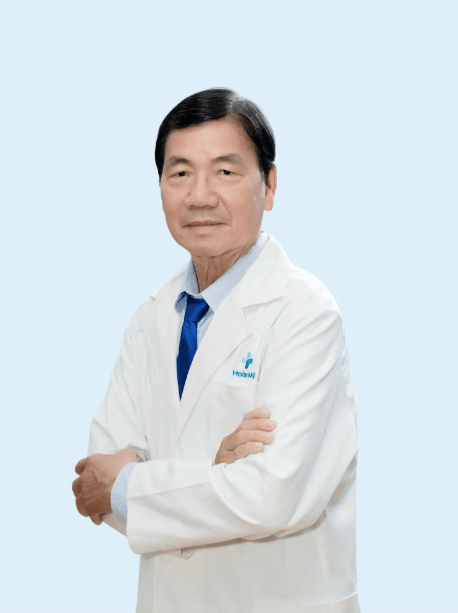
Specialist Level II Doctor Huỳnh Trung Lập
MD, Specialist Level II Huỳnh Trung Lập has more than 35 years of in-depth and extensive experience in General Surgery. The physician specializes in many complex surgical techniques such as laparoscopic surgery, pediatric surgery, and colorectal surgery...
Position: Head of Department of General Surgery, Hoan My Minh Hai Hospital - Ca Mau
Languages: Vietnamese, English
So 9, duong Lac Long Quan-Au Co, khom 29, Tan Thanh Ward, Ca Mau, Ca Mau
Mon - Sat: 07:00-11:30, 12:30-16:00
Sun: 07:00-12:00
About Specialist Level II Doctor Huỳnh Trung Lập
MD, Specialist Level II Huỳnh Trung Lập is one of the most seasoned experts in general surgery with 35 years of extensive experience in the field of surgical treatment. The physician graduated as a Doctor of Medicine from Can Tho University of Medicine and Pharmacy in 1987, then completed the MD, Specialist Level I (2005) and MD, Specialist Level II programs in General Surgery at the University of Medicine and Pharmacy in Ho Chi Minh City.
Throughout his career, the physician has mastered many advanced techniques through intensive training courses on advanced laparoscopic surgery, colorectal surgery, and stapled hemorrhoidopexy. Having held positions as Head of Department and Deputy Director at Ca Mau Hospital, MD, Specialist Level II Huỳnh Trung Lập currently serves as Head of Department of General Surgery at Hoan My Minh Hai General Hospital.
What diseases does Dr. Huỳnh Trung Lập treat?
Possessing high-level professional qualifications and extensive surgical expertise gained through thousands of operations, MD, Specialist Level I Huỳnh Trung Lập specializes in examining, diagnosing, and effectively performing surgical treatment for the following groups of diseases:
- Application of basic to advanced laparoscopic surgery to treat gastrointestinal and abdominal wall diseases such as acute appendicitis, gallstones, gallbladder polyps, and inguinal hernia.
- Performing specialized surgery to treat colorectal diseases, including excision of benign or malignant tumors (colorectal cancer) and complex polyps of colon.
- Applying the modern stapled hemorrhoidopexy method to achieve curative therapy for grade III internal hemorrhoid and grade IV internal hemorrhoids, ensuring minimal pain and providing high aesthetic and recovery outcomes for patients.
- Examining and performing pediatric surgery to manage congenital anomalies or common surgical conditions in children (such as inguinal hernia, phimosis, and cryptorchidism).
- Receiving first aid, consultation, and directly managing emergency surgical cases due to blunt abdominal trauma, penetrating abdominal wounds, or hollow viscus perforation.
Guidance on making an appointment and the examination process with Dr. Huỳnh Trung Lập
- Step 1: Make an appointment via Bcare by calling the hotline or filling in appointment information on the system to obtain priority numbering in order to proactively manage time and minimize waiting time upon arrival at the hospital.
- Step 2: Go to the reception desk at Hoan My Minh Hai General Hospital to verify the booked appointment so that healthcare professionals can check information and guide you to receive a queue number for entry into the Specialty Clinic of General Surgery managed by the physician.
- Step 3: Enter the clinic to meet the physician directly for clinical examination, specific discussion about manifestations of abdominal ache, gastrointestinal disturbance, or somatic abnormalities, and past medical history.
- Step 4: Move to functional rooms to perform indicated paraclinical tests such as abdominal ultrasonography, colorectal endoscopy, radiography, computed tomography (CT scan), or blood tests as required.
- Step 5: Bring the paraclinical results back to the initial evaluation room for the physician to review, analyze injury, provide an accurate diagnostic conclusion, and advise on a medical treatment regimen or schedule appropriate surgery.
Notes before going for an examination
- Patients need to bring along complete old medical records, prescriptions currently being used at home, and relevant laboratory results, ultrasound images, and CT scans related to the surgical condition within the last 6 months, if available.
- If experiencing symptoms of acute abdomen, abdominal distention, vomiting, or suspected need for stat laparoscopic intervention during the day, patients should strictly maintain nil by mouth status to ensure safety for the anesthesia process.
- For patients coming for examination of anorectum or colon diseases, it is advisable to limit consumption of overly solid or hard-to-digest foods the day before the examination to facilitate endoscopy or physical examination when indicated.
Frequently Asked Questions
What characteristic symptom warns patients that they need to see a General Surgeon?
Patients should go to the hospital immediately when signs of abdominal emergencies appear such as sudden severe abdominal pain or insidious increasing ache (especially in the right iliac fossa or periumbilical region), boardlike abdomen or significant abdominal distention, continuous vomiting accompanied by high fever, passage of fresh blood in stool or foul-smelling melena. These are warning signs of injury of intra-abdominal organs requiring timely intervention by a surgeon.
What are the advantages of the stapled hemorrhoidopexy method for treating hemorrhoids compared to traditional hemorrhoidectomy?
Stapled hemorrhoidopexy is a technique using a circular stapler to cut and suture the hemorrhoidal mucous membrane above the pectinate line – where there are no sensory nerves responsible for pain sensation. Consequently, this method helps patients achieve maximal postoperative pain reduction, leaves no open wound in the anal region, limits bleeding, shortens hospitalization to only 1-2 days, and allows patients to quickly return to normal activities.
When is a case of colorectal disease indicated for surgery?
Colorectal surgery is usually indicated when patients have tumors (large benign or malignant), complicated diverticulitis, intestinal obstruction, or polyps too large to be removed via flexible endoscope. For diagnosis, the physician will combine clinical examination, indicate colorectal endoscopy with lesional biopsy, and abdominal computed tomography (CT) to accurately assess the disease stage before planning radical resection.
Professional strengths
Workplace
- •Hoan My Minh Hai Hospital - Ca Mau
Experience
- •1990 – 2003: Head of Department of General Surgery, Ca Mau Hospital.
- •2003 – 2019: Deputy Director, Ca Mau Hospital.
- •2019 – Present: Head of Department of General Surgery, Hoan My Minh Hai General Hospital.
Education & training
- •1987 – Graduated as Doctor of Medicine, Can Tho University of Medicine and Pharmacy.
- •2005 – Graduated as MD, Specialist Level I – General Surgery, University of Medicine and Pharmacy in Ho Chi Minh City.
- •2008 – Graduated as MD, Specialist Level II – General Surgery, University of Medicine and Pharmacy in Ho Chi Minh City.
- •2002 – Laparoscopic surgery, Binh Dan Hospital.
- •2007 – Colorectal surgery, University of Medicine and Pharmacy in Ho Chi Minh City.
- •2008 – Advanced laparoscopic surgery, University of Medicine and Pharmacy in Ho Chi Minh City.
- •2010 – Stapled hemorrhoidopexy, Ho Chi Minh City Medical Association.