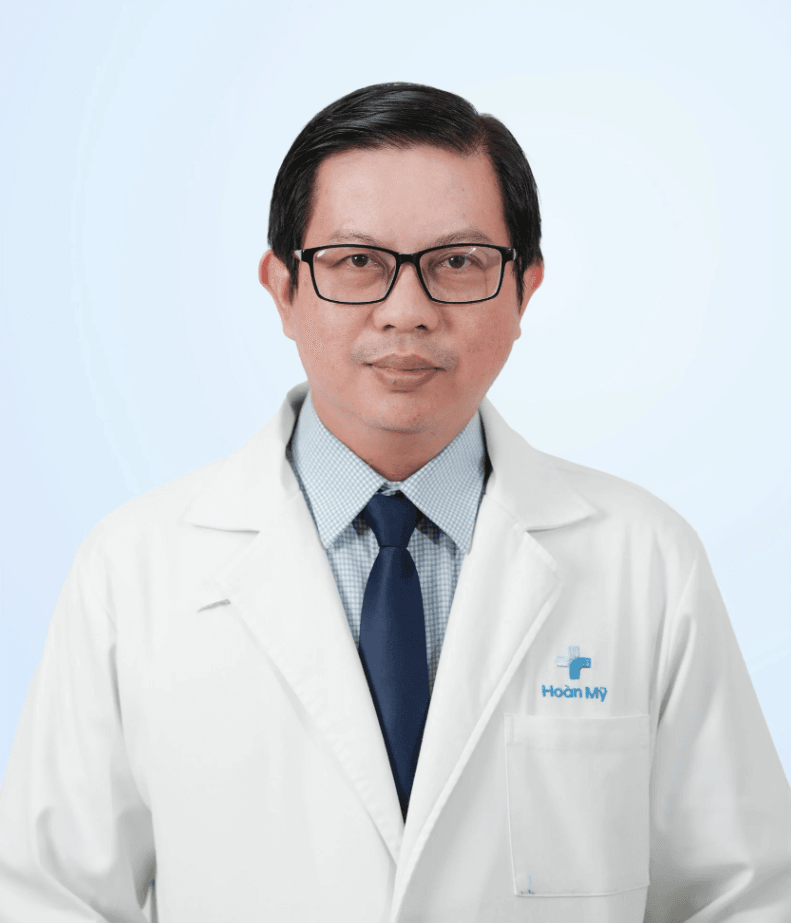
Specialist Level I Doctor Lam Phuc Minh
MD, Specialist Level I Lam Phuc Minh has more than 15 years of experience in Cardiology, with specialized expertise in cardiac surgery, video-assisted thoracoscopic surgery, peripheral vascular intervention...
Position: Cardiovascular and Thoracic Surgeon, Hoan My Cuu Long Hospital
Languages: Vietnamese, English
Lo 20, Duong Vo Nguyen Giap, Hung Phu Ward, Can Tho, Can Tho
Mon - Sat: 06:00-17:00
Sun: 06:00-11:20
About Specialist Level I Doctor Lam Phuc Minh
MD, Specialist Level I Lam Phuc Minh is one of the reputable and highly experienced professionals in the field of Cardiovascular and Thoracic Surgery, with 15 years of practical medical work. Currently, MD, Specialist Level I Lam Phuc Minh serves as an attending physician specializing in this field at Hoan My Cuu Long General Hospital. With a solid professional foundation upon graduating with a Specialist Level I degree in Thoracic Surgery from the University of Medicine and Pharmacy at Ho Chi Minh City, the doctor has mastered many complex surgical and minimally invasive interventional techniques, providing patients with effective treatment opportunities and rapid health restoration.
When should you make an appointment with MD, Specialist Level I Lam Phuc Minh?
Patients should proactively contact to make an appointment for early examination with MD, Specialist Level I Lam Phuc Minh when the body exhibits abnormal symptoms or there is a need for screening and treatment of the following conditions:
- Appearance of signs of peripheral vascular disease or chronic venous insufficiency such as: aching, numbness, leg heaviness in the afternoon, nocturnal muscle cramps, or visible blue veins and sinuous varicose veins under the skin.
- Presence of abnormal manifestations of the respiratory system and thoracic cage such as: hemoptysis, prolonged chest tightness, dyspnoea during motor function, or having been diagnosed with lung lesions requiring consultation for video-assisted thoracoscopic surgery lobectomy.
- Detection of a neck tumor, choking when swallowing, hoarseness due to a thyroid mass, and a desire for non-surgical treatment via radiofrequency ablation (RFA) technique.
- Patients requiring in-depth screening and consultation on surgical intervention regimens for cardiovascular diseases, vascular emergencies, or thoracic injuries ranging from simple to complex.
Guide to making appointments and the examination process with MD, Specialist Level I Lam Phuc Minh
To ensure the examination process proceeds smoothly without long waits, patients are requested to refer to the following steps:
- Step 1: Make an appointment via Bcare by calling the hotline or filling in booking information on the system to obtain a priority number to save waiting time at the hospital.
- Step 2: Arrive to verify the booked appointment at the hospital reception desk to be guided to receive the patient health booklet and proceed to the doctor's clinic.
- Step 3: Enter the clinic to meet the doctor for clinical examination, assessment of vein manifestations, regional lymphadenopathy in the neck, or auscultation of the heart and lungs, and discussion of the current health status.
- Step 4: Move to the paraclinical area to perform indicated tests such as Vascular Doppler ultrasonography, chest X-ray, computed tomography (CT-Scanner) of the thorax, or Thyroid ultrasound as required by the doctor (if any).
- Step 5: Return to the initial clinic for the doctor to read the results, provide a definitive diagnosis, prescribe medication for internal medicine treatment, or consult on a suitable surgical or high-frequency wave intervention regimen.
Notes before going for an examination
- Bring all CT-Scanner images of the thorax, vascular ultrasound results, thyroid ultrasound, or old cardiovascular prescriptions currently being used so that the doctor has a basis for accurate comparison.
- Wear loose, comfortable clothing (patients examining leg vascular diseases should especially wear loose pants or skirts) to facilitate the doctor's performance of clinical examination maneuvers.
- Proactively prepare questions about the symptoms being experienced and clearly notify the doctor of any drug allergy history or underlying conditions such as hypertension or diabetes mellitus if present.
Frequently Asked Questions
What are the advantages of treating goiter using the radiofrequency ablation (thyroid RFA) technique performed by the doctor?
Radiofrequency ablation (RFA) is one of the most advanced techniques currently available for the treatment of benign goiters, applied by doctors as an alternative to traditional open surgery.
This technique uses high-frequency alternating current to generate heat quantity that precisely destroys tumor cells without the need for skin incision, completely avoiding disfiguring scars in the neck area for the patient. The procedure is very quick under local anesthesia, helping to maximally preserve surrounding healthy thyroid tissue so that the patient does not have to take thyroid hormone medication for life. Patients can eat, drink, and resume normal activities and be discharged from hospital on the same day after the procedure ends.
What are the grades of lower extremity varicose veins and how will the doctor intervene in treatment?
Chronic venous insufficiency of the lower limbs is divided into multiple levels according to clinical classification (from C0 to C6), progressing from mild degrees such as leg fatigue and spider veins to leg swelling, changes in skin pigmentation, and finally non-healing ulcers. The doctor will base the individualized treatment regimen on the results of Vascular Doppler ultrasonography for each patient.
In the early phase, patients will be given medication instruction to use vasotonic agents combined with wearing medical compression stockings; in more severe phases, the doctor will indicate modern minimally invasive intervention methods to thoroughly and safely remove venous reflux.
In which cases is video-assisted thoracoscopic surgery lobectomy indicated and what benefits does it bring?
Video-assisted thoracoscopic surgery lobectomy is a high-level surgical technique, often indicated for patients with lung tumors (benign or early-stage cancer), large pneumatoceles with rupture risk, or focal pulmonary infections that do not respond to medical treatment.
Instead of performing a long thoracotomy incision that cuts through many muscles and ribs, the doctor only needs to access the thoracic cavity through small endoscopic ports measuring 1 to 2 cm. This minimally invasive method helps minimize post-operative pain sensation, well preserves pulmonary function, limits infection risk, and allows patients to quickly undergo extubation of drainage tubes for discharge.
At which units did Dr. Lam Phuc Minh accumulate medical work experience before joining Hoan My Cuu Long?
The doctor has had a continuous 15-year journey of work and accumulated extremely rich clinical experience in the field of thoracic and vascular surgery at major hospitals. After graduating from Can Tho University of Medicine and Pharmacy in 2010, the doctor dedicated nearly 15 years to honing skills at Kien Giang Provincial General Hospital (from July 2010 to April 2025), directly handling many vascular emergency cases and complex cardiopulmonary surgeries.
From July 2025 to the present, the doctor has officially transferred to work at Hoan My Cuu Long General Hospital, continuing to bring high professional competence to serve patients here.
Professional strengths
Workplace
- •Hoan My Cuu Long Hospital
Experience
- •07/2010 – 04/2025: Kien Giang Provincial General Hospital
- •07/2025 – present: Hoan My Cuu Long General Hospital
Education & training
- •Graduated from Can Tho University of Medicine and Pharmacy – 2010
- •Graduated with Specialist Level I in Thoracic Surgery, University of Medicine and Pharmacy at Ho Chi Minh City – 2018
- •Training certificates include:
- •1. Cardiac surgery
- •2. Video-assisted thoracoscopic surgery lobectomy
- •3. Peripheral vascular intervention
- •4. Vascular emergency
- •5. Phlebology
- •6. Video-assisted thoracoscopic surgery
- •7. Treatment of goiter using radiofrequency ablation (thyroid RFA) technique