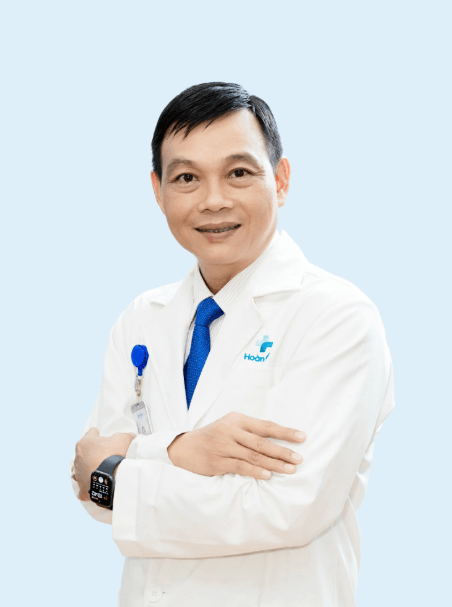
Specialist Level I Doctor Lam Thanh Mong
With 24 years of experience in General Surgery, MD, Specialist Level I Lam Thanh Mong specializes in laparoscopic colorectal surgery, laparoscopic abdominal and thyroid surgery, and also performs general ultrasound and esophagogastroduodenoscopy.
Position: General Surgeon - Hoan My Minh Hai Hospital
Languages: Vietnamese, English
So 9, duong Lac Long Quan-Au Co, khom 29, Tan Thanh Ward, Ca Mau, Ca Mau
Mon - Sat: 07:00-11:30, 12:30-16:00
Sun: 07:00-12:00
About Specialist Level I Doctor Lam Thanh Mong
MD, Specialist Level I Lam Thanh Mong is one of the leading specialists in General Surgery with 24 years of intensive experience in surgical procedures and gastrointestinal endoscopic interventions. The physician graduated as a Doctor of Medicine from Can Tho University of Medicine and Pharmacy in 2001 and completed the MD, Specialist Level I degree in General Surgery at the University of Medicine and Pharmacy in Ho Chi Minh City in 2011.
Oriented toward advanced technical development, Dr. Thao has completed numerous specialized training courses in laparoscopic abdominal surgery, colorectal endoscopy, laparoscopic thyroid surgery, and esophagogastroduodenoscopy at top-tier hospitals such as Cho Ray Hospital and the University of Medicine and Pharmacy Hospital in Ho Chi Minh City. Currently, MD, Specialist Level I Lam Thanh Mong serves as an Attending Physician in the Department of General Surgery at Hoan My Minh Hai General Hospital.
What conditions does MD, Specialist Level I Lam Thanh Mong treat?
- Colorectal and Anorectal Diseases: Laparoscopic colectomy and proctectomy for benign tumors, colorectal cancer, and diverticulitis; surgical treatment of hemorrhoids, anal fistula, and anal fissure.
- Gastrointestinal - Abdominal Diseases (Laparoscopic Surgery): Performs laparoscopic surgery for the treatment of acute appendicitis, gallstones, cholecystitis, inguinal hernia, ventral hernia, and gastric perforation.
- Thyroid Gland Diseases: Examination, diagnosis, and direct performance of laparoscopic surgery for thyroid diseases such as thyroid nodules, simple goiter, hyperthyroidism, or early-stage thyroid carcinoma (ensuring high cosmesis, leaving no long scars on the neck).
- Endoscopy and Radiology: Directly performs esophagogastroduodenoscopy to facilitate early cancer screening, detect ulcerative inflammation, identify H. pylori bacteria, and perform polypectomy of the gastrointestinal tract; combines general abdominal ultrasound to rapidly screen for solid organ injury.
Guide to making an appointment and the examination process with Dr. Lam Thanh Mong
- Step 1: The patient proactively makes an appointment with Dr. Mong via hotline or fills out information online on Bcare to receive priority queue numbers, minimizing waiting time in the lobby.
- Step 2: Go to the central reception desk at Hoan My Minh Hai Hospital where healthcare professionals will verify appointment details, guide administrative procedures, and direct you to the General Surgery clinic.
- Step 3: Enter the clinic to see Dr. Mong. The patient discusses symptoms in detail (abdominal pain, hematochezia, dysphagia, neck masses) and family past medical history for the examining physician to conduct an initial assessment.
- Step 4: Depending on the status, the physician will order general ultrasound, Computed Tomography (CT), or directly transfer the patient to the functional room to perform diagnostic esophagogastroduodenoscopy.
- Step 5: The patient brings paraclinical results back to the clinic. Dr. Mong will analyze the lesions in detail, provide a medical treatment regimen, or advise creating a profile and scheduling laparoscopic surgery if there is a surgical indication.
Special notes before going for an examination and performing gastrointestinal endoscopy:
- Nil by mouth: To prepare for general abdominal ultrasound and especially esophagogastroduodenoscopy, the patient must fast absolutely for at least 6 hours and refrain from drinking water for 2 hours before the procedure to ensure an empty stomach, allowing the physician to clearly observe lesions and avoid the risk of reflux causing aspiration into the airway.
- Notify medications currently taken: Patients with a history of cardiovascular disease, hypertension, or those taking anticoagulants (such as Aspirin, Plavix, Coumadin...) are required to notify Dr. Mong beforehand to receive guidance on safely suspending medication prior to endoscopy or surgery.
- Accompanied by a family member: If the patient requires painless gastroscopy (sedated endoscopy), it is mandatory to have a patient's family member accompany them to drive them home. Do not operate vehicles after the procedure due to adverse effects of anesthesia that may cause drowsiness and reduced alertness.
Frequently Asked Questions
What are the advantages of laparoscopic thyroid surgery compared to traditional open surgery?
Laparoscopic thyroid surgery is an advanced technique. Instead of making a long incision directly in the cervical region which affects cosmesis, the physician accesses the thyroid gland through ultra-small incisions in the axillary region or areola.
This method helps patients completely hide scars under clothing folds, minimizes postoperative pain sensation, limits injury to surrounding muscle structures and blood vessels, helping patients recover quickly and shortening hospital admission days.
When should a patient seek immediate care for colorectal disease screening?
You should see a physician for examination and colorectal endoscopy immediately if the following dangerous warning signs appear:
- Prolonged altered bowel habit (persistent abnormal diarrhea or constipation for several weeks)
- Hematochezia or black coffee-ground stool; intermittent abdominal cramp accompanied by abdominal distention
- Rapid weight loss of unknown etiology (especially in individuals over 45 years old or those with a family history of gastrointestinal cancer).
How does the standard preparation process before laparoscopic abdominal surgery typically proceed?
When there is a surgical indication for laparoscopic abdominal surgery (such as appendectomy, cholecystolithiasis, or colectomy), the patient will be guided to complete all preoperative tests (blood test, coagulation studies, electrocardiography, chest radiograph).
Before the day of surgery, the patient needs to eat light, easily digestible foods (congee, soup), use bowel evacuation medication according to nurse instructions, remain nil by mouth absolutely from midnight before the surgery date, and bathe using specialized antiseptic soap to ensure maximum sterility for the operation.
Professional strengths
Workplace
- •Hoan My Minh Hai Hospital
Experience
- •2001 – 2010: Attending Physician, Dam Doi General Hospital.
- •2010 – Present: Attending Physician, Hoan My Minh Hai General Hospital.
Education & training
- •2001 – Graduated as Doctor of Medicine, Can Tho University of Medicine and Pharmacy.
- •2011 – Graduated as MD, Specialist Level I – General Surgery, University of Medicine and Pharmacy in Ho Chi Minh City.
- •2010 – Certificate in Esophagogastroduodenoscopy, Cho Ray Hospital.
- •2011 – Certificate in Laparoscopic Abdominal Surgery, Cho Ray Hospital.
- •2017 – Continuing Education Certificate "Laparoscopic Colorectal Surgery", Cho Ray Hospital.
- •2017 – Certificate in Training Course for Laparoscopic Thyroid Disease Surgery, University of Medicine and Pharmacy in Ho Chi Minh City.