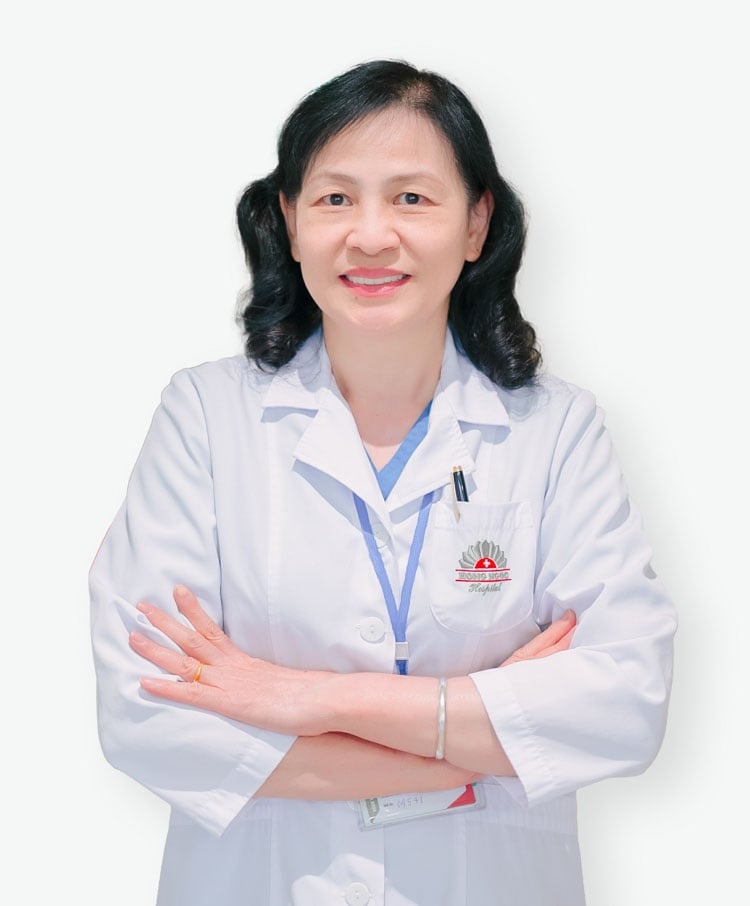
Specialist Level II Doctor Le Thi Tram
Dr. Le Thi Tram, MD, Specialist Level II, is one of the most experienced and reputable experts in pulmonology, with a medical career spanning over 40 years. She specializes in screening, initial diagnosis, and establishing effective treatment regimens for bronchogenic carcinoma and respiratory tract tumors, chronic obstructive pulmonary disease (COPD), bronchial asthma, and respiratory tract infections.
Position: Pulmonologist - Hong Ngoc Phuc Truong Minh General Hospital
Languages: Vietnamese, English
So 8 duong Chau Van Liem, Tu Liem Ward, Hanoi, Hanoi
Mon - Sun: 07:30-12:00, 13:30-17:00
About Specialist Level II Doctor Le Thi Tram
Dr. Le Thi Tram, MD, Specialist Level II, is among the leading senior experts in pulmonology, having dedicated herself to medicine since 1986. She possesses an excellent educational foundation, having graduated as a Doctor of Medicine from Thai Binh University of Medicine, completed her Master’s degree in Respiratory Medicine at the Military Medical Academy, and earned her Specialist Level II degree in Pulmonology from Hanoi Medical University.
With experience as a Principal Lecturer in the Department of Internal Medicine and many years serving as an attending physician at the Respiratory Center – Bach Mai Hospital - Campus 1 - Hanoi, she is renowned for her ability to diagnose and intensively treat complex pulmonary disorders. She is also an active member of the Vietnam Lung Association, the Vietnam Society of Respirology, and the Hanoi Lung Association, and is the author of valuable research studies on bronchogenic carcinoma and pulmonary mycetoma.
What conditions does Dr. Le Thi Tram specialize in treating?
With extensive practical experience gained through many years of work at the Respiratory Center of Bach Mai Hospital - Campus 1 - Hanoi, Dr. Le Thi Tram, MD, Specialist Level II, specializes in screening, initial diagnosis, and establishing effective treatment regimens for the following groups of diseases:
- Aspergillus mycetoma and dangerous opportunistic fungal infections of the respiratory system.
- Bronchogenic carcinoma and respiratory tract tumors through in-depth clinical and histopathological assessment.
- Chronic obstructive pulmonary disease (COPD), bronchial asthma, bronchiectasis, and acute or chronic respiratory failure.
- Respiratory tract infections, including severe pneumonia, acute bronchitis, pulmonary tuberculosis, and pleural effusion.
- Performing intensive screening and coordinating the development of synchronized internal medicine and surgical treatment regimens for cases involving diffuse lung lesions.
Guide to booking appointments and the examination process with Dr. Le Thi Tram
- Step 1: Make an appointment via Bcare by calling the hotline or filling out the booking information on the system to obtain a priority number and proactively select a time slot that fits your personal schedule.
- Step 2: Arrive at the reception desk at the registered time to verify your booked appointment and quickly complete the information confirmation procedures.
- Step 3: Proceed to the Pulmonology Specialty Clinic as directed by healthcare professionals for a direct clinical examination by the physician.
- Step 4: Undergo advanced paraclinical tests such as chest radiography, Chest CT, spirometry, or sputum and blood tests as directly ordered by the physician.
- Step 5: Return to the original clinic to receive the diagnostic conclusion, obtain the appropriate internal medicine prescription, and schedule follow-up appointments for disease monitoring.
Notes before the visit
- Patients should bring all laboratory results, X-ray films, computed tomography scans (Chest CT), and their most recent prescriptions.
- Specifically note the onset time and severity of symptoms such as persistent cough, hemoptysis, dyspnea, fever, or chest pain to provide this information to the physician.
- Patients should avoid using spray or inhaler bronchodilators for at least 4 to 6 hours prior to undergoing spirometry.
- Please wear loose, comfortable clothing to facilitate the physician's performance of cardiac and pulmonary auscultation or imaging procedures.
- Proactively arrive approximately 10 to 15 minutes before the scheduled appointment time to complete verification and information cross-checking procedures at the reception desk.
Frequently Asked Questions
In which populations does Aspergillus mycetoma commonly occur, and what are the signs for recognition?
Aspergillus mycetoma typically develops within pre-existing lung cavities, most commonly old tuberculous cavities, lung bullae, or bronchiectatic cavities. Typical signs include persistent hemoptysis, ranging from blood-streaked sputum to massive hemoptysis, accompanied by persistent dry cough, low-grade fever, or weight loss. When these signs appear against a background of previous lung lesions, patients require a Chest CT scan and antibody testing for accurate diagnosis.
How decisive is the determination of histopathological characteristics of bronchogenic carcinoma in treatment?
Determining histopathological characteristics via biopsy is the gold standard for accurately classifying bronchogenic carcinoma as small cell or non-small cell, as well as assessing the differentiation of malignant cells. This result is decisive in developing targeted treatment regimens and choosing between surgical treatment, chemotherapy, radiation therapy, or immunotherapy. For patients who have undergone surgery, histopathology also helps physicians perform prognostic assessment and evaluate recurrence risk for follow-up planning.
What principles must patients with chronic obstructive pulmonary disease (COPD) adhere to in order to limit exacerbations?
To control COPD and prevent dangerous exacerbations requiring hospital admission, patients must absolutely practice smoking cessation and avoid environments with smoke and dust. Patients need to strictly adhere to the daily use of prophylactic spray and inhaler medications according to the dosage instructed by the physician, even when not experiencing dyspnea. Additionally, annual influenza vaccination, pneumococcal vaccination according to schedule, and diaphragmatic breathing exercises will help preserve lung volume and improve quality of life.
Professional strengths
Workplace
- •Hong Ngoc Phuc Truong Minh General Hospital
Experience
- •1986 - 2002: Principal Lecturer, Department of Internal Medicine - Thai Binh University of Medicine
- •2002 - 2018: Attending Physician - Respiratory Center - Bach Mai Hospital - Campus 1 - Hanoi
- •2018 - 2022: Head of the Holistic Care Unit, Hai Phong International General Hospital
- •Member of the Vietnam Lung Association, the Vietnam Society of Respirology, and the Hanoi Lung Association
Awards & recognition
- •Thesis: "Histopathological characteristics of bronchogenic carcinoma in post-surgical patients" at the National Lung Hospital
- •Thesis: "Study of clinical features, paraclinical findings, and surgical treatment outcomes of Aspergillus mycetoma" at the National Lung Hospital
Education & training
- •1986: Graduated as a Doctor of Medicine from Thai Binh University of Medicine
- •1997: Completed Master’s degree in Respiratory Medicine at the Military Medical Academy
- •2012: Earned Specialist Level II degree in Pulmonology from Hanoi Medical University