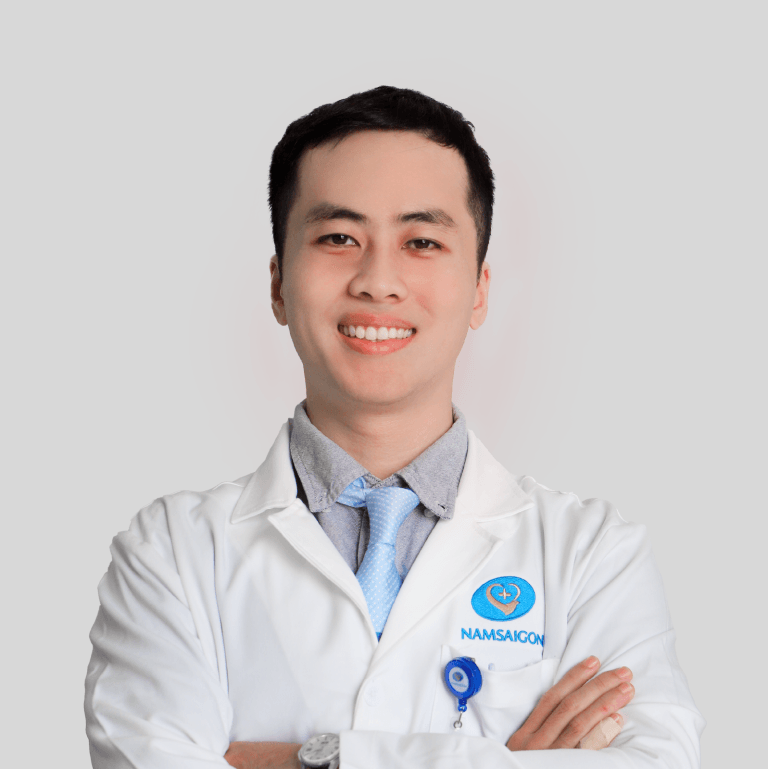
Doctor (MD) Le Vo Vinh Khai
Dr. Le Vo Vinh Khai is a dynamic and highly competent orthopedic surgeon. He specializes in the diagnosis and treatment of musculoskeletal conditions such as osteoarthritis, rheumatoid arthritis, osteoporosis, and trauma-related disorders. He is also proficient in various advanced surgical procedures, including arthroscopy, joint replacement, internal fixation for traumatic or pathological fractures, and minimally invasive spinal surgery.
Position: Orthopedic Surgeon - Nam Saigon International General Hospital
Languages: Vietnamese, English
So 88, Duong so 8, Khu dan cu Trung Son, Binh Hung Commune, Ho Chi Minh City, Ho Chi Minh City
Mon - Sat: 07:00-12:00, 13:30-17:00
Sun: 07:00-12:00
About Doctor (MD) Le Vo Vinh Khai
Dr. Le Vo Vinh Khai is a dedicated orthopedic surgeon with a solid professional foundation and a commitment to continuous learning. After graduating as a General Practitioner from Hue University of Medicine and Pharmacy in 2022, he completed an 18-month surgical training program in Orthopedics at Cho Ray Hospital. In his clinical practice, Dr. Le Vo Vinh Khai specializes in diagnosing and treating musculoskeletal conditions such as osteoarthritis, rheumatoid arthritis, osteoporosis, and trauma-related disorders. He is also proficient in various advanced surgeries, including knee and shoulder arthroscopy (addressing meniscal tears, anterior/posterior cruciate ligament ruptures, and rotator cuff injuries), hip arthroplasty, knee arthroplasty, internal fixation for traumatic or pathological fractures, and minimally invasive spinal surgery. Currently, Dr. Le Vo Vinh Khai works in the Department of Orthopedics – Trauma at Nam Saigon International General Hospital.
What conditions does Dr. Le Vo Vinh Khai treat?
- Osteoarthritis: Diagnosis, consultation on medical treatment regimens, and surgical intervention for hip and knee replacement in severe cases.
- Rheumatoid Arthritis and Osteoporosis: Examination, assessment of bone density status, and conservative treatment to improve pain symptoms and prevent complications such as porous bone structure and fractures.
- Knee Ligament and Cartilage Injuries: Performing knee arthroscopy to treat meniscal tears and reconstruct the anterior and posterior cruciate ligaments due to sports injuries or accidents.
- Rotator Cuff Injuries and Shoulder Joint Disorders: Shoulder arthroscopy helps address rotator cuff injuries, restore range of motion, and reduce persistent shoulder pain.
- Fractures Due to Trauma or Pathology: Stable internal fixation surgery helps align fractured bone segments, supports rapid fracture healing, and allows patients to resume mobility early.
- Spinal Conditions: Minimally invasive spinal surgery enables precise intervention at the site of spinal injury while minimizing impact on surrounding healthy tissues.
Guide to the Examination Process with Dr. Le Vo Vinh Khai
- Step 1: Make an appointment via Bcare by calling the hotline or filling out the booking form on the system to obtain a priority number, helping to reduce waiting time and proactively manage examination schedules.
- Step 2: Arrive at Nam Saigon International General Hospital, verify your scheduled appointment at the reception desk so that healthcare professionals can assist with administrative procedures and guide you to the Department of Orthopedics – Trauma.
- Step 3: Enter the clinic to meet Dr. Le Vo Vinh Khai for a direct clinical examination, checking joint range of motion, assessing ligament stability and muscle strength, and obtaining detailed information about the mechanism of injury or past medical history.
- Step 4: Undergo paraclinical tests as advised by the physician, such as X-rays, Magnetic Resonance Imaging (MRI) of the knee/shoulder/spine, Computed Tomography (CT Scan), bone densitometry, or blood tests.
- Step 5: Return to the initial clinic for the physician to review paraclinical results, provide an accurate diagnostic conclusion, consult on medical treatment regimens, physical therapy, or plan for surgery, and provide instructions for home monitoring.
Notes Before the Visit
- Bring all previous medical records, X-ray films, MRI scans, and CT scans of bones and joints if available.
- Wear loose, comfortable clothing (shorts or wide-leg pants are recommended for knee examinations) to facilitate the physician's clinical examination maneuvers.
- Clearly note the onset time of symptoms, the mechanism of injury (falls, twisting), and a list of daily medications currently being taken.
- Do not self-administer high-dose analgesics immediately before the appointment, as this may mask tender point signs during the physician's examination.
- Arrive at the hospital 10 to 15 minutes before the scheduled time to complete information verification procedures at the reception desk.
Frequently Asked Questions
What are the signs of a meniscal tear or cruciate ligament rupture in the knee following trauma?
Patients often hear a "popping" sound at the moment of injury, followed by rapid swelling, pain, and fluid accumulation in the knee joint. During movement, patients may feel knee laxity, a sensation of the leg "giving way," joint locking, or an inability to fully extend or flex the leg. If these signs appear, patients should see an orthopedic specialist for an MRI scan and accurate diagnosis.
What advantages does minimally invasive spinal surgery offer to patients?
Minimally invasive spinal surgery uses very small incisions and specialized equipment to precisely access the site of spinal injury. This method helps minimize damage to healthy muscle tissue, reduces intraoperative blood loss, decreases postoperative pain, and limits infection risk. Consequently, patients experience faster recuperation and can soon resume light activities.
When is internal fixation surgery indicated for fractures instead of conservative cast immobilization?
Internal fixation surgery is typically indicated when fracture segments are significantly displaced, involve complex comminuted fractures, extend into the joint surface, or are accompanied by vascular or nerve injuries. Additionally, fractures at sites prone to nonunion with external fixation alone require surgical intervention. The use of bone plates and screws or intramedullary nails provides stable fixation of bone ends, facilitating the fracture healing process and allowing patients to begin rehabilitation exercises early.
Professional strengths
Workplace
- •Nam Saigon International General Hospital
Experience
- •2024 – Present: Orthopedic Surgeon, Nam Saigon International General Hospital.
Education & training
- •2022: General Practitioner, Hue University of Medicine and Pharmacy.
- •2022 – 2024: Completed an 18-month surgical course, Cho Ray Hospital.
- •2024: Completed the basic musculoskeletal fracture fixation course by AO Foundation.