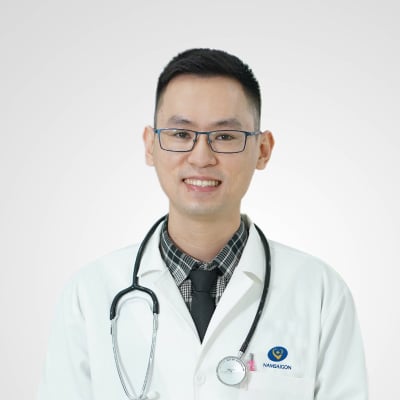
MSc, Specialist Level I Doctor Mai Van Dung
MD, MSc, Specialist Level I Mai Van Dung is one of the young physicians with high expertise and great enthusiasm in the field of General Surgery. The physician has specialized strengths in examining and surgically treating gastrointestinal diseases (appendicitis, diverticulitis, gastroduodenal diseases, colonic diseases, hemorrhoids), hepatobiliary and pancreatic diseases, thyroidectomy, laparoscopic inguinal hernia repair, and particularly the technique of laparoscopic common bile duct stone extraction.
Position: General Surgeon - Nam Saigon International General Hospital
Languages: Vietnamese, English
So 88, Duong so 8, Khu dan cu Trung Son, Binh Hung Commune, Ho Chi Minh City, Ho Chi Minh City
Mon - Sat: 07:00-12:00, 13:30-17:00
300.000đ
About MSc, Specialist Level I Doctor Mai Van Dung
MD, MSc, Specialist Level I Mai Van Dung is one of the young physicians with high expertise and great enthusiasm in the field of General Surgery. After graduating as a Doctor of Medicine in 2018 from the University of Medicine and Pharmacy at Ho Chi Minh City, the physician completed the residency program in Surgery at the same institution in 2021. During training, the physician accumulated in-depth clinical experience through residency work at leading hospitals such as Cho Ray Hospital and Binh Dan Hospital.
With more than 8 years of medical practice experience, MD, MSc, Specialist Level I Mai Van Dung possesses specialized strengths in examining and surgically treating gastrointestinal diseases (appendicitis, diverticulitis, gastroduodenal diseases, colonic diseases, hemorrhoids), hepatobiliary and pancreatic diseases, thyroidectomy, laparoscopic inguinal hernia repair, and particularly the technique of laparoscopic common bile duct stone extraction. Currently, MD, MSc, Specialist Level I Mai Van Dung serves as a General Surgeon in the Department of General Surgery – Nam Saigon International General Hospital.
Appointment schedule for MD, MSc, Specialist Level I Mai Van Dung
- Tuesday: Morning: 7:00 AM - 12:00 PM; Afternoon: 1:30 PM - 5:00 PM
- Saturday: Morning: 7:00 AM - 12:00 PM; Afternoon: 1:30 PM - 5:00 PM
Diseases examined and treated by MD, MSc, Specialist Level I Mai Van Dung
- Examination, diagnosis, and laparoscopic surgical treatment of appendicitis, diverticulitis, gastroduodenal diseases, colonic diseases, small bowel resection, and gastrectomy.
- Diagnosis and performance of laparoscopic common bile duct stone extraction, cholecystectomy, treatment of biliary stones, liver tumors, and pancreatic tumors.
- Examination, consultation on indications, and performance of safe hemorrhoidectomy to help patients minimize pain and recover quickly.
- Examination, diagnosis, and performance of laparoscopic inguinal hernia repair to reconstruct a strong and aesthetically pleasing abdominal wall.
- Diagnosis, professional consultation, and performance of thyroidectomy as well as laparoscopic splenectomy for the treatment of related injuries or diseases.
Guide to booking appointments and the examination process with MD, MSc, Specialist Level I Mai Van Dung
- Step 1: Book an appointment via Bcare by calling the hotline or filling out the booking information on the system to obtain a priority number, helping to reduce waiting time and proactively manage examination time.
- Step 2: Arrive at Nam Saigon International General Hospital, verify the booked appointment information so that healthcare professionals can guide you through completing procedures and admit you to the Department of General Surgery.
- Step 3: Enter the clinic to meet MD, MSc, Specialist Level I Mai Van Dung for a clinical examination, detailed discussion of symptoms, past medical history, and assessment of the current surgical status.
- Step 4: Perform necessary paraclinical tests as advised by the physician, such as blood tests, abdominal ultrasound, gastroscopy/colonoscopy, radiography, or computed tomography (CT) scan.
- Step 5: Return to the clinic for the physician to review paraclinical results, conclude the diagnosis, prescribe medication for internal medicine treatment, or provide detailed consultation on the surgical regimen, surgical intervention, and follow-up schedule.
Notes before the visit
- Fasting is required before breakfast, and colored or sugary drinks should be avoided if blood tests, abdominal ultrasound, or gastrointestinal endoscopy are suspected to be needed.
- Bring complete old medical records, laboratory results, X-ray/CT scan images, and prescriptions for daily medications currently being used.
- Wear comfortable, loose clothing to facilitate examination of the abdomen, anus, or neck region.
- Prepare information regarding the onset time of symptoms (such as subcostal abdominal pain, inguinal pain, hematochezia) to discuss directly with the physician.
- Proactively arrive at the hospital 10 to 15 minutes before the scheduled time to complete information verification procedures at the reception desk.
Frequently Asked Questions
What are the advantages of laparoscopic common bile duct stone extraction compared to traditional open surgery?
Laparoscopic common bile duct stone extraction is a minimally invasive method that allows the physician to remove stones from the biliary tract through very small incisions in the abdominal wall. This technique helps minimize postoperative pain sensation, limit infection risk, provide high cosmesis, and shorten the length of stay for patients. Additionally, gentle endoscopic intervention helps patients recover their physical condition early and return to daily activities.
When do patients with inguinal hernia need laparoscopic surgical treatment?
Inguinal hernia should be indicated for early surgery as soon as an abnormal bulge is detected in the inguinal-scrotal region, especially when the bulge causes pain, heaviness, or presents a risk of strangulated hernia. Laparoscopic inguinal hernia repair involves placing a prosthetic mesh to reinforce the weak point of the abdominal wall securely. This method is not only less painful and highly aesthetic but also helps minimize the recurrence rate compared to classic surgical procedures.
What should be noted when a goiter is detected, and when will the physician advise surgery?
When a goiter is detected during examination or ultrasound, patients need to undergo further specialized tests such as thyroid function tests and fine-needle aspiration (FNA) if there is suspicion. The physician will advise thyroidectomy in cases where the goiter is large enough to cause compression leading to dyspnea or dysphagia, substernal goiter, suspected cancer, or confirmed thyroid carcinoma. Timely surgical intervention helps completely resolve the lesion and protect the patient's health.
Professional strengths
Workplace
- •Nam Saigon International General Hospital
Experience
- •2018 – 2021: Resident Physician, Binh Dan Hospital and Cho Ray Hospital.
- •2021 – Present: General Surgeon, Nam Saigon International General Hospital.
Education & training
- •2012 – 2018: Doctor of Medicine, University of Medicine and Pharmacy at Ho Chi Minh City.
- •2018 – 2021: Resident Physician in Surgery, University of Medicine and Pharmacy at Ho Chi Minh City.