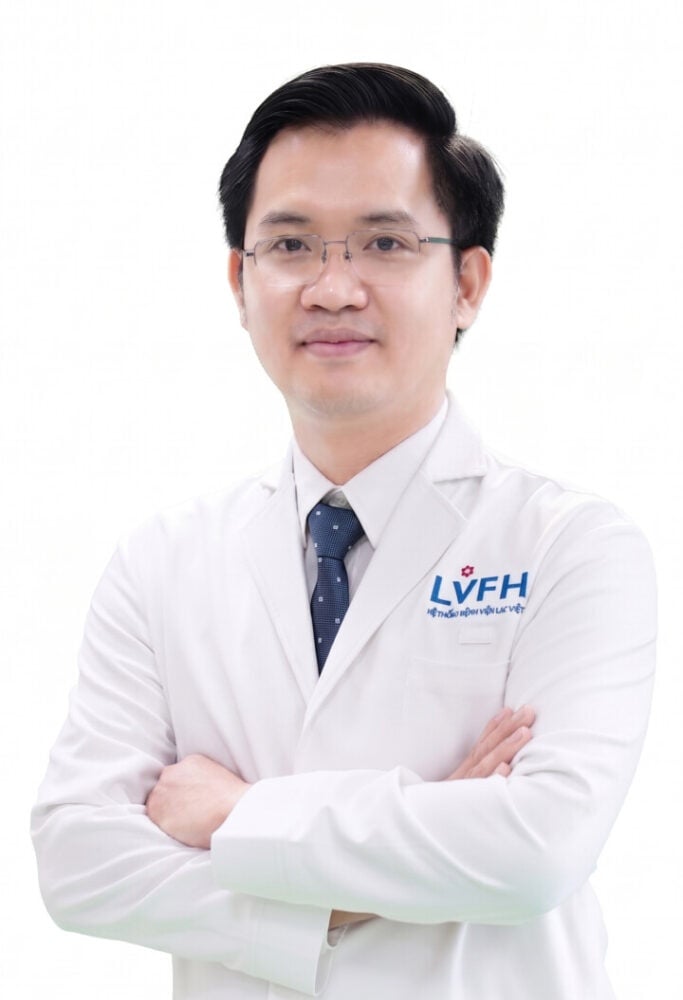
MSc, MD Nguyen Gia Cong
MD, MSc Nguyen Gia Cong is a highly competent surgeon with 8 years of experience in the examination and surgical intervention for complex surgical conditions. The physician has specialized expertise in surgical interventions for gastrointestinal, hepatobiliary, and urinary system diseases, and is always dedicated to accompanying patients throughout their course of treatment.
Position: Deputy Head of Department, General Surgery 1, Huu Nghi Lac Viet Hospital
Languages: Vietnamese, English
Duong Nguyen Tat Thanh, Vinh Yen Ward, Phu Tho, Phu Tho
Mon - Sun: 07:15-11:45, 13:15-16:45
About MSc, MD Nguyen Gia Cong
MD, MSc Nguyen Gia Cong is a highly competent surgeon with 8 years of experience in the examination and surgical intervention for complex surgical conditions. He graduated as a General Practitioner from the Military Medical Academy in 2018 and further advanced his professional qualifications with a Master’s degree in Surgery from Hanoi Medical University in 2024. Dr. Nguyen Gia Cong possesses a foundation of modern medical knowledge along with the standard work ethic of a military physician.
The physician has specialized expertise in surgical interventions for gastrointestinal, hepatobiliary, and urinary system diseases, and is always dedicated to accompanying patients throughout their course of treatment. His efforts and professional contributions have been honorably recognized with a Certificate of Merit from the Vietnam Private Hospital Association. Currently, MD, MSc Nguyen Gia Cong serves as Deputy Head of Department, General Surgery 1 at Huu Nghi Lac Viet Hospital.
What conditions does MD, MSc Nguyen Gia Cong treat?
MD, MSc Nguyen Gia Cong has extensive professional competence and clinical experience in the examination, diagnosis, and treatment of various general surgical conditions:
- Gastrointestinal diseases: Surgical and interventional procedures for the treatment of stomach, vermiform appendix, colorectal, hemorrhoid, anal fistula, inguinal hernia, and acute abdominal emergency conditions.
- Hepatobiliary and pancreatic diseases: Examination, assessment, and surgical intervention for cholecystolithiasis, biliary stones, acute and chronic cholecystitis, and benign lesions of the hepatobiliary system.
- Urinary system diseases: Diagnosis and interventional treatment of urolithiasis conditions such as renal calculus, ureteral calculus, vesical calculus, benign prostatic hyperplasia, and urinary tract abnormalities.
- Other general surgical conditions: Examination and management of soft tissue wounds, subcutaneous benign tumors, abscesses, and common surgical emergencies.
Guide to making an appointment and the examination process with MD, MSc Nguyen Gia Cong
- Step 1: Make an appointment via Bcare by calling the hotline or filling out the appointment information on the system to obtain a priority number, helping to reduce waiting time and proactively manage examination time.
- Step 2: Go to the reception desk at Huu Nghi Lac Viet Hospital, verify the scheduled appointment information so that healthcare professionals can guide you through completing the procedures and admit you to the Clinic of General Surgery 1.
- Step 3: Enter the clinic to meet MD, MSc Nguyen Gia Cong for clinical examination, inspection of the affected area, and detailed collection of past medical history.
- Step 4: Perform specialized paraclinical indications such as abdominal ultrasonography, radiography, computed tomography (CT), gastrointestinal endoscopy, or blood tests based on the physician's professional assessment.
- Step 5: Return to the clinic for the physician to interpret results, conclude the status of the injury, and advise on a medical treatment regimen or indicate appropriate surgical intervention.
Notes before going for an examination
- Bring all patient health booklets, current prescriptions, ultrasound results, or old imaging films if available.
- Fast (Nil by mouth) if blood tests, abdominal ultrasonography, or endoscopy of the gastrointestinal tract are required.
- Wear loose, comfortable clothing to facilitate the clinical examination of the abdomen.
- Record details of pain symptoms, onset time, and characteristics of the lesion to discuss with the physician.
- Arrive 10 to 15 minutes before the scheduled appointment time to complete confirmation procedures at the reception desk.
Frequently Asked Questions
When should patients seek specialty examination for Gastrointestinal, Hepatobiliary, and Pancreatic Surgery?
Patients should seek specialty surgical examination when experiencing symptoms such as severe abdominal pain or prolonged dull ache, particularly in the right hypochondriac region or epigastrium, accompanied by abdominal distention, jaundice, and scleral icterus. Other abnormal manifestations such as regurgitation, hematochezia, dysphagia, or the appearance of unusual masses on the abdominal wall are also warning signs of injury requiring early physician evaluation. Timely examination helps accurately detect the cause and determine appropriate surgical intervention before dangerous complications occur.
How are urinary system stone diseases assessed and indicated for surgical intervention?
For urinary system stone diseases such as renal calculus, ureteral calculus, or vesical calculus, the physician will base the management approach on the size, location, morphology of the stone, as well as the degree of hydronephrosis. In cases where small stones have not caused complications, monitoring and medical treatment may be sufficient; however, when stones are large or cause urinary tract obstruction, the physician will indicate appropriate surgical intervention methods to remove the stone. This process helps relieve the obstruction, maximally preserve renal function, and prevent recurrent urinary tract infections.
What do patients need to prepare before undergoing general surgical procedures?
Before proceeding with surgical intervention, patients will undergo comprehensive screening tests for general health, cardiac function assessment, and coagulation evaluation to ensure absolute safety for the operation. Patients must strictly adhere to preoperative fasting instructions according to the physician's specified times to avoid the risk of aspiration during anesthesia. Additionally, providing detailed information to the physician about medications currently being used, especially anticoagulants, along with allergy history, is mandatory to develop a safe intervention plan.
Professional strengths
Workplace
- •Huu Nghi Lac Viet Hospital
Experience
- •10/2018 – 05/2026: Attending physician specializing in Surgery.
Education & training
- •10/2022 – 10/2024: Completed the Master’s program in Surgery at Hanoi Medical University.
- •10/2012 – 10/2018: Graduated as a General Practitioner from the Military Medical Academy.