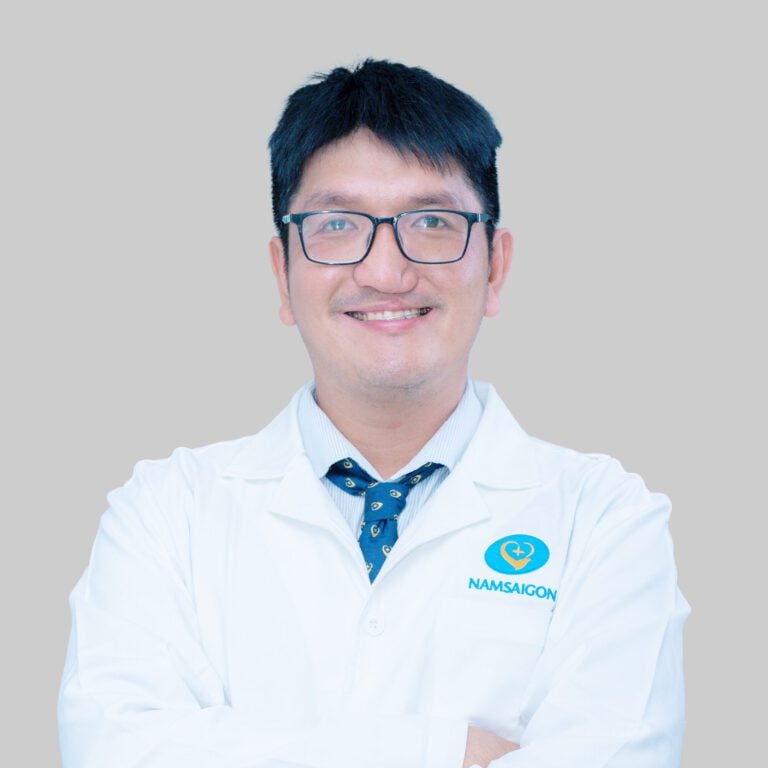
Specialist Level I Doctor Nguyen Huynh Vinh Phuoc
Dr. Nguyen Huynh Vinh Phuoc, MD, Specialist Level I, is an expert in the field of Neurology with many years of medical practice experience, possessing particularly deep theoretical knowledge and strong practical skills in diagnosing and treating acute stroke and complex neurological conditions.
Position: Neurologist - Nam Saigon International General Hospital
Languages: Vietnamese, English
So 88, Duong so 8, Khu dan cu Trung Son, Binh Hung Commune, Ho Chi Minh City, Ho Chi Minh City
Mon - Sat: 07:00-12:00, 13:30-17:00
Sun: 07:00-12:00
About Specialist Level I Doctor Nguyen Huynh Vinh Phuoc
Dr. Nguyen Huynh Vinh Phuoc, MD, Specialist Level I, is an expert in the field of Neurology with many years of medical practice experience, possessing particularly deep theoretical knowledge and strong practical skills in diagnosing and treating acute stroke and complex neurological conditions. Throughout his career, the physician accumulated extensive clinical experience at various healthcare facilities such as Xuyen A General Hospital, Maple Healthcare International Clinic, and Hong Hung General Hospital.
Dr. Nguyen Huynh Vinh Phuoc, MD, Specialist Level I, has specialized strengths in clinical and paraclinical diagnosis of acute stroke, is proficient in emergency thrombolytic techniques for stroke, manages neurological emergencies such as meningitis and epilepsy, and concurrently manages severe neurological internal medicine conditions. Currently, Dr. Nguyen Huynh Vinh Phuoc, MD, Specialist Level I, works as a Neurologist in the Department of Internal Medicine – Nam Saigon International General Hospital.
Abnormal symptoms requiring immediate consultation with Dr. Nguyen Huynh Vinh Phuoc, MD, Specialist Level I
Neurological diseases and acute stroke can leave severe sequelae or pose life-threatening risks if not treated promptly within the golden window. Patients should make an appointment immediately with Dr. Nguyen Huynh Vinh Phuoc, MD, Specialist Level I, when noticing the following abnormal signs:
- Appearance of philtrum deviation, drooping of one side of the face, distorted smile, or inability to raise the corners of the mouth normally.
- Sudden feeling of weakness or numbness in one arm or leg, difficulty raising the arm high, unsteady gait, or tendency to fall easily.
- Sudden slurred speech, unclear articulation, stuttering, or difficulty understanding others' speech.
- Onset of a sudden, severe headache unlike any previously experienced, possibly accompanied by nausea, vomiting, or blurred vision.
- Sensation of vertigo, unsteadiness while walking, dizziness, or sudden loss of coordination (incoordination).
- Appearance of generalized or focal seizures, foaming at the mouth, transient loss of consciousness (warning sign of a seizure episode).
- Prolonged fever accompanied by severe headache and neck stiffness preventing chin-to-chest contact (sign suspicious of meningitis).
Guide to making appointments and the examination process with Dr. Nguyen Huynh Vinh Phuoc, MD, Specialist Level I
- Step 1: Make an appointment via Bcare by calling the hotline or filling out appointment information on the system to obtain a priority number, helping to reduce waiting time and proactively manage visit times.
- Step 2: Arrive at Nam Saigon International General Hospital, verify the scheduled appointment at the reception desk so that allied health professionals can assist with procedures and guide you to the Department of Internal Medicine.
- Step 3: Enter the clinic to meet Dr. Nguyen Huynh Vinh Phuoc, MD, Specialist Level I, for direct clinical examination, assessment of neurological reflexes, evaluation of perception and motor function, and detailed inquiry into past medical history.
- Step 4: Perform paraclinical tests as advised by the physician, such as computed tomography (CT scan), magnetic resonance imaging (MRI) of the brain, electroencephalogram, or blood tests.
- Step 5: Return to the initial clinic for the physician to review paraclinical results, provide an accurate diagnostic conclusion, and advise on the medical treatment regimen, monitoring plan, or appropriate rehabilitation program.
Notes before the visit
- Bring complete old medical records, previous cranial CT/MRI films, and a list of medications currently being used.
- Wear loose, comfortable clothing to allow the physician convenient examination of neurological reflexes and limb motor functions.
- Clearly remember the onset time of abnormal symptoms, such as the start time of headaches, limb numbness/weakness, or seizures.
- Avoid self-administering antihypertensive agents, sedatives, or coin rubbing to the patient when suspecting a stroke before seeing the doctor.
- Arrive at the hospital 10 to 15 minutes before the scheduled appointment time to complete information verification procedures at the reception desk.
Frequently Asked Questions
What is the thrombolysis technique in acute stroke treatment, and what is the optimal golden window for its administration?
Thrombolysis is a method using intravenous injectable medication to dissolve blood clots causing cerebral vascular occlusion, helping restore blood flow to brain cells. The optimal golden window for performing this technique is within the first 3 to 4.5 hours from the onset of the first symptom of stroke. Bringing the patient to an emergency facility early during this period directly determines the potential for recovery and minimizes maximum sequelae such as paralysis and chronic nerve injury.
What should be done immediately upon discovering a relative showing signs suspected of acute stroke?
When detecting signs of stroke in a relative according to the FAST rule (facial asymmetry, limb weakness, dysarthria), the immediate action is to call an ambulance or transport the patient to the nearest hospital with stroke treatment capabilities. While waiting, have the patient rest in a well-ventilated area, elevate the head approximately 30 degrees, lie on one side if vomiting occurs to prevent airway aspiration, and loosen clothing. However, absolutely do not voluntarily give the patient food, drink, antihypertensive agents, perform coin rubbing, or prick fingers for bloodletting, as these actions may worsen the morbidity.
Can epilepsy be completely controlled by medical treatment?
Epilepsy can be effectively controlled if the patient strictly adheres to the treatment regimen prescribed by a specialist physician in Neurology using antiseizure medication. Approximately 70% of epilepsy patients can achieve complete cessation of seizures and maintain normal daily activities and work when taking medication at the correct dose and timing. Patients must absolutely not voluntarily stop medication or abruptly increase/decrease doses, as this can lead to status epilepticus, which is life-threatening.
What are the dangers of meningitis, and when is it necessary to seek neurologic emergency care?
Meningitis is a dangerous infection of the membranes enclosing the brain and spinal cord, which can cause permanent brain lesion, deafness, epilepsy, or death if not treated promptly. Patients need to be taken to emergency care immediately when exhibiting manifestations such as sudden high fever accompanied by severe headache, vomiting, neck stiffness (inability to touch chin to chest), photophobia, or altered consciousness and lethargy. The physician will conduct examination, paraclinical diagnosis, and immediate neurologic emergency intervention to protect brain cells.
Professional strengths
Workplace
- •Nam Saigon International General Hospital
Experience
- •Neurologist, Xuyen A General Hospital
- •Neurologist, Maple Healthcare International Clinic, District 7
- •Attending Physician, Department of Neurology – Cardiology, Hong Hung General Hospital, Tay Ninh.
- •Neurologist, Department of Internal Medicine, Nam Saigon International General Hospital
Education & training
- •2011 – 2018: Doctor of Medicine, University of Medicine and Pharmacy at Ho Chi Minh City
- •2021 - 2023: Specialist Level I – Neurology, Pham Ngoc Thach University of Medicine
- •2025 – Present: Specialist Level II – Neurology, Pham Ngoc Thach University of Medicine