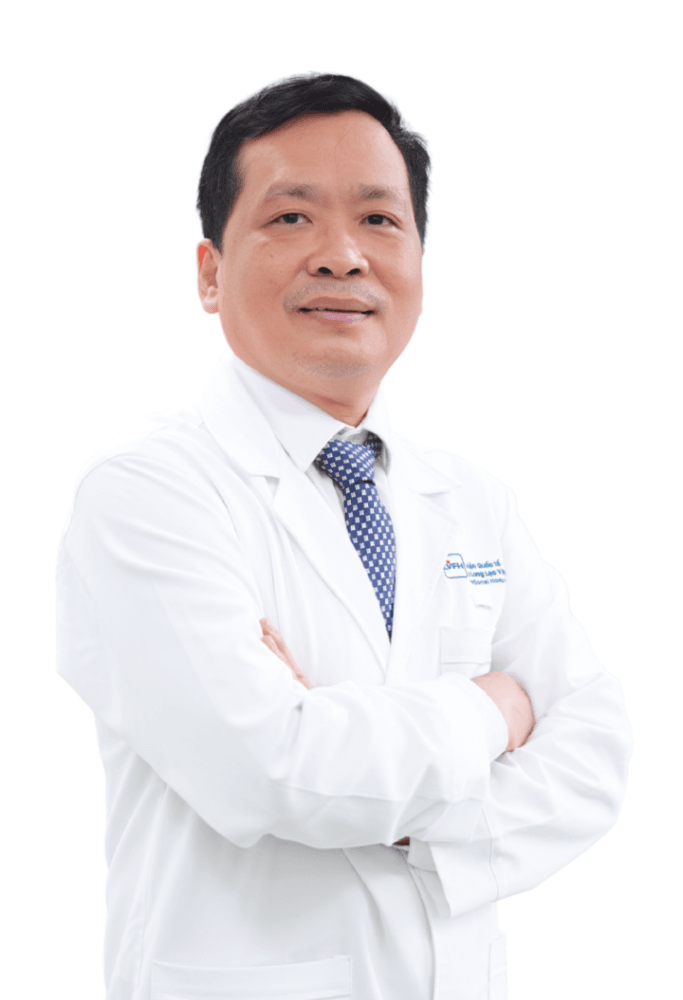
MSc, Specialist Level II Doctor Nguyen Nguyen Dong
MD, MSc, Specialist Level II Nguyen Nguyen Dong is an expert in General Surgery with 30 years of clinical experience in diagnosis and surgical procedures. The physician specializes in minimally invasive endoscopic surgery for the treatment of gastrointestinal, urological, thyroid, and anorectal diseases, as well as the management of surgical emergencies.
Position: Head of Department of General Surgery 1 - Huu Nghi Lac Viet Hospital
Languages: Vietnamese, English
Duong Nguyen Tat Thanh, Vinh Yen Ward, Phu Tho, Phu Tho
Mon - Sun: 07:15-11:45, 13:15-16:45
About MSc, Specialist Level II Doctor Nguyen Nguyen Dong
MD, MSc, Specialist Level II Nguyen Nguyen Dong is an expert in General Surgery with 30 years of clinical experience in diagnosis and surgical procedures. During his career, the physician served as Head of the Department of General Surgery at Yen Bai Provincial General Hospital, as well as Hospital Director and Head of the Department of General Surgery at Huu Nghi Lac Viet Hospital.
The physician specializes in minimally invasive endoscopic surgery for the treatment of gastrointestinal, urological, thyroid, and anorectal diseases, as well as the management of surgical emergencies. Currently, MD, MSc, Specialist Level II Nguyen Nguyen Dong holds the position of Head of Department of General Surgery 1 at Huu Nghi Lac Viet Hospital.
Treatment Experience of MD, MSc, Specialist Level II Nguyen Nguyen Dong
With 30 years of work in General Surgery and experience in professional management and administration at major hospitals, MD, MSc, Specialist Level II Nguyen Nguyen Dong has received and performed surgeries to manage many complex forms of surgical pathology:
- Minimally invasive endoscopic surgery for the management of complex urolithiasis: Proficiently performs percutaneous nephrolithotomy, flexible ureteroscopic lithotripsy, and endoscopic lithotripsy of ureteral and bladder stones. The application of these minimally invasive methods allows for precise access to the stone location, minimizes injury to surrounding healthy tissue, and shortens recovery time for patients.
- Endoscopic surgery for gastrointestinal and abdominal tumors: Performs surgical interventions for gastric tumors, colon tumors, cholecystectomy, resection of hepatic cyst caps, and percutaneous biliary stone lithotripsy. These endoscopic interventions allow for careful dissection of lesions, clear control of the surgical field, and risk mitigation of postoperative complications.
- Thyroid surgery and anorectal procedures: Transoral endoscopic thyroid surgery leaves no surgical scar in the cervical region, as does total thyroidectomy for indicated pathological cases. For hemorrhoidal disease, the physician intervenes using the Longo method, which helps reduce pain sensation and supports the restoration of anal structure.
- Management of abdominal surgical emergencies and trauma: Timely diagnosis and surgical management of dangerous emergency cases such as gastric perforation, acute appendicitis, strangulated hernia, blunt abdominal trauma, or penetrating abdominal wounds.
Guide to Booking Appointments and Examination Process with MD, MSc, Specialist Level II Nguyen Nguyen Dong
- Step 1: Make an appointment via the Bcare system by calling the hotline or registering information online to receive a priority number, helping to proactively choose a time and reduce waiting time at the hospital.
- Step 2: Arrive at the reception desk of Huu Nghi Lac Viet Hospital on time for the appointment, provide information to healthcare professionals to complete the procedures for entering the Clinic of Department of General Surgery 1.
- Step 3: Enter the clinic to meet MD, MSc, Specialist Level II Nguyen Nguyen Dong so that the physician can take the past medical history, discuss clinical symptoms, and perform a general examination.
- Step 4: Undergo advanced paraclinical tests (such as abdominal ultrasonography, radiography, computed tomography (CT), blood test, or gastrointestinal endoscopy) based on the physician's professional assessment.
- Step 5: Return to the clinic for the physician to review the imaging report, analyze the status of the injury, and advise on a medical treatment regimen or appropriate surgical indication.
Notes before the examination:
- Bring all patient health booklets, current prescriptions, ultrasound results, CT/X-ray films, and old medical records (if any).
- In cases of examining gastrointestinal diseases or when blood tests and abdominal ultrasonography are required, patients should fast from breakfast to ensure high precision of ultrasound images and laboratory results.
- Patients with chronic underlying conditions (such as hypertension, diabetes mellitus, cardiovascular disease) need to notify the physician in detail during the examination.
- Arrive 10 - 15 minutes before the scheduled time to complete confirmation procedures at the reception desk.
Frequently Asked Questions
What are the advantages of percutaneous nephrolithotomy or flexible ureteroscopic lithotripsy compared to traditional open surgery?
Percutaneous nephrolithotomy or flexible ureteroscopic lithotripsy are minimally invasive intervention techniques that use small tracts or natural body pathways to access and fragment stones using laser energy. Compared to traditional open surgery, these techniques help patients experience less pain, minimize the risk of exsanguination, reduce renal parenchyma injury, and significantly shorten hospital stay duration.
How is transoral endoscopic thyroid surgery performed?
Transoral endoscopic thyroid surgery is an interventional technique that accesses the thyroid gland through small incisions in the oral cavity (lower labial mucosa area). The physician inserts endoscopic instruments to dissect and excise the diseased portion of the thyroid gland. This method completely avoids leaving scars on the skin of the cervical region, ensuring high cosmesis while achieving treatment effectiveness equivalent to conventional surgical procedures.
How should patients prepare and care for their health after hemorrhoid surgery using the Longo method?
After hemorrhoid surgery using the Longo method, patients must adhere to taking medication exactly as prescribed by the physician and maintain hygiene of the anal region with tepid water or a specialized solution. Regarding diet, patients should supplement with fiber-rich foods and drink enough water to prevent constipation, while simultaneously limiting prolonged sitting or vigorous physical activity during the first few weeks postoperatively.
Professional strengths
Workplace
- •Huu Nghi Lac Viet Hospital
Experience
- •2025 – present: Head of Department of General Surgery 1 at Huu Nghi Lac Viet Hospital.
- •2011 – 2025: Hospital Director, Head of Department of General Surgery 1 – Huu Nghi Lac Viet Hospital.
- •2007 – 2011: Head of Department of General Surgery at Yen Bai Provincial General Hospital.
- •2005 – 2007: Deputy Head of Department of General Surgery at Yen Bai Provincial General Hospital.
- •1995 – 2005: Specialist Physician in General Surgery at Yen Bai Provincial General Hospital.
Education & training
- •2024: Graduated as MD, Specialist Level II in General Surgery.
- •2002: Graduated with a Master’s degree in General Surgery at Hanoi Medical University.
- •1995: Graduated as a General Practitioner at Thai Nguyen University of Medicine and Pharmacy.