
MSc, MD Nguyen Thanh Kim Hue
MSc, Resident Physician Nguyen Thanh Kim Hue is one of the talented and dedicated young physicians in the field of Musculoskeletal medicine. Dr. Hue specializes in the diagnosis and treatment of autoimmune arthropathies, spondylarthritis, and osteoporosis, with proficient skills in performing safe intra-articular interventional procedures.
Position: Physician, Department of Musculoskeletal Medicine
Languages: Vietnamese, English
So 8 duong Chau Van Liem, Tu Liem Ward, Hanoi, Hanoi
Mon - Sun: 07:30-12:00, 13:30-17:00
About MSc, MD Nguyen Thanh Kim Hue
MSc, Resident Physician Nguyen Thanh Kim Hue is one of the talented and dedicated young physicians in the field of Musculoskeletal medicine. After graduating as a General Practitioner and completing the residency program in Internal Medicine at Hanoi Medical University Hospital, Dr. Hue successfully defended her Master's thesis on the clinical and paraclinical features of spondylarthritis in female patients.
In addition to clinical practice, the physician is the author of research published in the Vietnam Medical Journal and has participated in and presented at the annual conference of the Vietnam Rheumatology Association. With a solid training foundation and a caring, dedicated approach, MSc, Resident Physician Nguyen Thanh Kim Hue consistently instills confidence in patients during examination and treatment.
What conditions does MSc, Resident Physician Nguyen Thanh Kim Hue treat?
MSc, Resident Physician Nguyen Thanh Kim Hue accepts patients for examination, diagnosis, and treatment of various conditions within the Musculoskeletal specialty:
- Diagnosis and treatment of autoimmune arthropathies and arthritis: Examination and development of intensive treatment regimens for patients with rheumatoid arthritis, spondylarthritis (particularly spondylarthritis in women), gouty arthritis, psoriatic arthritis, knee osteoarthritis, hip joint, and spine degeneration.
- Examination and management of osteoporosis: Screening, bone densitometry assessment, fracture prevention counseling for osteoporotic fractures, and osteoporosis treatment for primary and secondary cases in older adults or postmenopausal women.
- Treatment of soft tissue and periarticular disorders: Examination and treatment of shoulder periarthritis, tendinitis, carpal tunnel syndrome, enthesitis, spring finger, and fibromyalgia.
- Performing safe intra-articular interventional procedures: Directly performing clinical interventional techniques such as intra-articular injection, enthesis injection, and knee joint aspiration under ultrasound guidance to reduce pain and support motor rehabilitation for patients.
- Assessment and diagnosis of systemic diseases: Accepting examinations for musculoskeletal manifestations in systemic connective tissue diseases such as systemic lupus erythematosus, scleroderma, and autoimmune myositis.
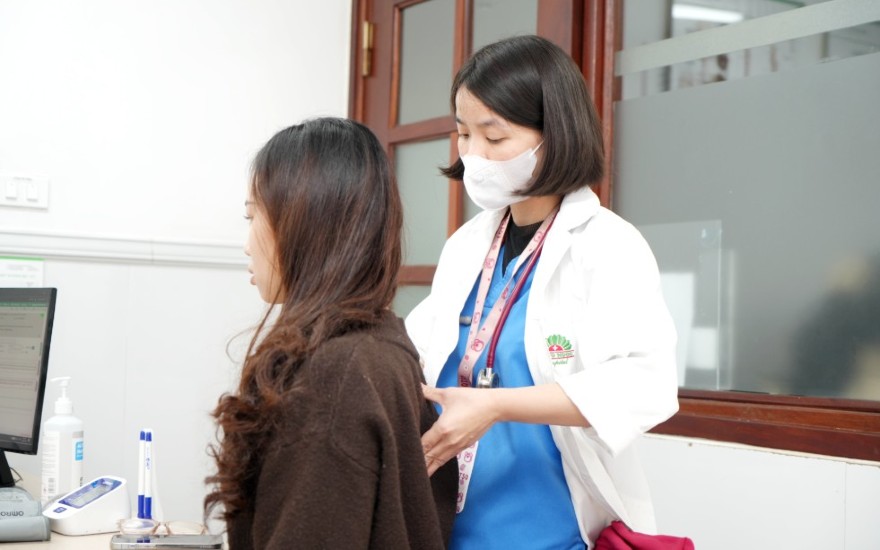
Guide to booking appointments and the examination process with MSc, Resident Physician Nguyen Thanh Kim Hue
- Step 1: Make an appointment via Bcare by calling the hotline or filling out the booking information on the system to obtain a priority number and proactively select a suitable time slot.
- Step 2: Arrive to verify the booked appointment at the reception desk of the Musculoskeletal Department to receive the patient health booklet and instructions for entering the clinic.
- Step 3: Enter the clinic to meet MSc, Resident Physician Nguyen Thanh Kim Hue to discuss details regarding painful and swollen sites, symptom onset duration, past medical history, and undergo clinical examination.
- Step 4: Move to the paraclinical area to perform blood tests, rheumatoid factor (RF) and anti-cyclic citrullinated peptide antibody (Anti-CCP) testing, bone densitometry, radiography, Magnetic Resonance Imaging (MRI), or musculoskeletal ultrasound as indicated by the physician.
- Step 5: Return to the clinic to hear MSc, Resident Physician Nguyen Thanh Kim Hue review results, conclude the diagnosis, advise on the medical treatment regimen or perform intra-articular injection procedures, and schedule an appropriate follow-up visit.
Notes before the examination
- If advanced blood tests or biochemical assays are indicated, patients should proactively fast before the examination.
- Patients should proactively record details of painful and swollen sites, the time of day when pain is most severe (morning or evening), and the duration of morning stiffness to discuss with the physician.
- Bring complete old medical records, X-ray, MRI, bone densitometry results, or current prescriptions related to musculoskeletal diseases.
- Wear loose, comfortable clothing to allow the physician to easily examine the range of motion of the knee joints, shoulder joints, or spine.
- Arrive approximately 10-15 minutes early before the scheduled time to complete the appointment confirmation procedures at the hospital reception desk.

Frequently Asked Questions
What are the distinct identifying characteristics of spondylarthritis in women?
Spondylarthritis in women often has a silent progression and is more easily overlooked compared to men because back pain symptoms are not overly prominent. Female patients typically present with lumbar pain, persistent buttock pain lasting more than 3 months, increased pain in the late night or near dawn, accompanied by morning stiffness. Additionally, the disease may be associated with inflammation of peripheral joints such as the knee, ankle, or calcaneal tendon enthesitis. Early examination allows the physician to perform immunoassays and radiology diagnostics for timely intervention, preventing ankylosis complications.
When should patients with knee pain undergo intra-articular injection?
Intra-articular injection is a procedure that delivers medication (such as corticosteroids or Hyaluronic Acid lubricants) directly into the joint cavity to reduce inflammation, alleviate pain, and enhance joint lubrication. This method is typically indicated when patients have moderate-stage knee osteoarthritis, rheumatoid arthritis, or reactive arthritis experiencing acute swelling and pain where oral medication does not yield the desired effectiveness. This procedure must be performed by a specialist physician in Musculoskeletal medicine under absolute aseptic conditions to ensure safety.
What are the symptoms of osteoporosis and how can it be detected early?
Osteoporosis is often considered a "silent thief" because in the initial stage, the disease causes almost no obvious symptoms. Only when bone density is severely reduced do patients exhibit signs such as sporadic musculoskeletal soreness, height loss, kyphosis, or more seriously, having a fracture even after very minor trauma. For early detection, postmenopausal women and individuals over 50 years old should proactively undergo periodic bone densitometry (DEXA method) so the physician can assess and advise on prophylaxis and timely treatment regimens.
Professional strengths
Workplace
- •Hong Ngoc Phuc Truong Minh General Hospital
Experience
- •2023 - present: Working at the Department of Endocrinology - Musculoskeletal, Hong Ngoc Phuc Truong Minh General Hospital
- •Participation in domestic seminars: Vietnam Rheumatology Conference, Annual Musculoskeletal Conference of Bach Mai Hospital - Campus 1 - Hanoi, Ho Chi Minh City Rheumatology Conference, Hanoi Osteoporosis Conference, Ho Chi Minh City Osteoporosis Conference
Awards & recognition
- •2022: Author of article: "Clinical and paraclinical features of spondylarthritis in female patients" published in the Vietnam Medical Journal
- •2024: Presenter at the annual conference of the Vietnam Rheumatology Association
Education & training
- •2013 - 2019: Studied General Medicine at Hanoi Medical University Hospital
- •2019 - 2023: Completed residency training, majoring in Internal Medicine, at Hanoi Medical University Hospital
- •2022: Defended Master's thesis: "Clinical and paraclinical features of spondylarthritis in female patients"