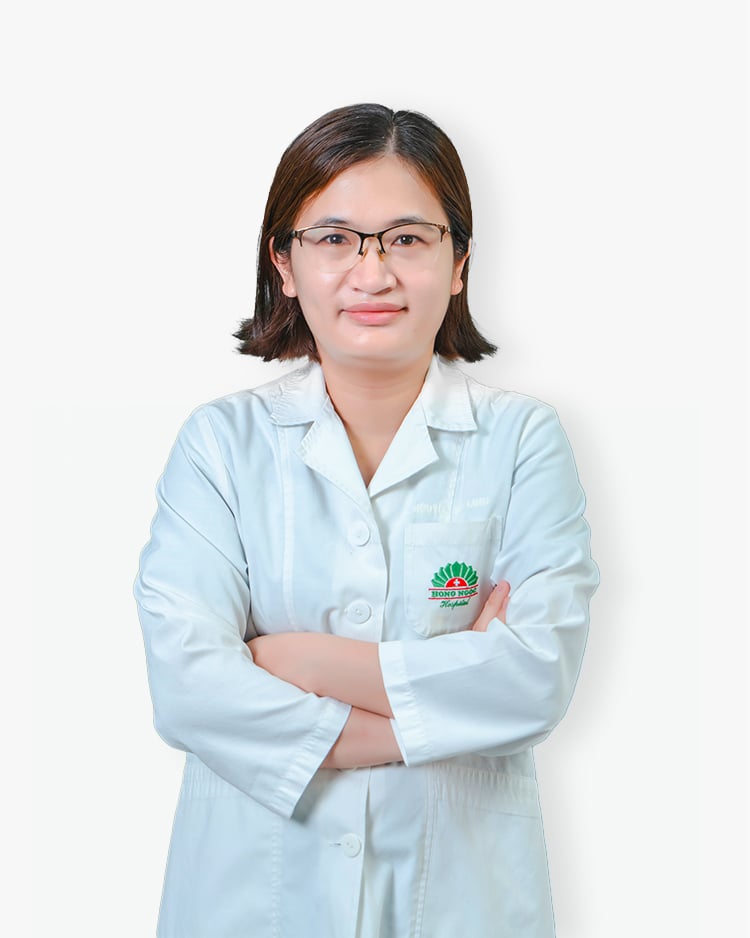
Specialist Level I Doctor Nguyen Thi Bich Lien
Dr. Nguyen Thi Bich Lien, MD, Specialist Level I, has more than 10 years of experience in examining and managing pediatric asthma, pediatric allergy-immunology, neonatal resuscitation and care, and treating common respiratory and gastrointestinal diseases in children. With solid expertise, dedication, and a gentle demeanor, Dr. Nguyen Thi Bich Lien consistently provides complete trust and peace of mind to families with young children.
Position: Pediatric Department, Hong Ngoc General Hospital - Yen Ninh Branch
Languages: Vietnamese, English
So 55 duong Yen Ninh, Ba Dinh Ward, Hanoi, Hanoi
Mon - Sun: 07:30-12:00, 13:30-19:00
About Specialist Level I Doctor Nguyen Thi Bich Lien
Dr. Nguyen Thi Bich Lien, MD, Specialist Level I, is an experienced professional in the field of Pediatrics, currently working at Hong Ngoc General Hospital (Yen Ninh branch). After graduating as a General Practitioner from the Military Medical Academy in 2013 and completing her training as a Specialist Level I Physician in Pediatrics at Hanoi Medical University in 2020, Dr. Lien has accumulated more than 10 years of clinical experience in the medical field.
In addition, she continuously enhances her professional qualifications through intensive training courses in Pediatric Emergency, Neonatal Resuscitation, and management of Asthma and Pediatric Allergy-Immunology at leading hospitals such as Vietnam National Children's Hospital and Central Obstetrics and Gynecology Hospital. With solid expertise, dedication, and a gentle demeanor, Dr. Nguyen Thi Bich Lien, MD, Specialist Level I, consistently provides complete trust and peace of mind to families with young children.
What conditions does Dr. Nguyen Thi Bich Lien, MD, Specialist Level I, treat?
With a solid educational foundation and extensive experience in Pediatrics, Dr. Nguyen Thi Bich Lien, MD, Specialist Level I, performs examinations, diagnoses, and treats a wide variety of conditions in young children:
- Diagnosis and treatment of respiratory tract diseases, asthma, and allergies: Examination, management, and treatment of bronchial asthma in children, bronchitis, pneumonia, otitis media, allergic rhinitis, croup, and acute allergic episodes in children.
- Examination, care, and resuscitation of newborn infants: Comprehensive health monitoring for newborns, management of jaundice, early-life gastrointestinal disturbances, excessive crying, preterm birth, and conditions requiring neonatal resuscitation monitoring.
- Management of common infectious diseases in children: Safe monitoring and treatment for children with hand, foot, and mouth disease, dengue fever, influenza, exanthematous fever, measles, varicella, and prolonged viral fevers.
- Examination and treatment of gastrointestinal and nutritional disorders: Diagnosis and treatment of acute/chronic diarrhea, constipation, lactose intolerance, persistent loss of appetite, malnutrition, and advice on scientific complementary feeding regimens.
- Vaccination counseling and physical development assessment: Assessment of developmental milestones, height, and body weight according to age, and counseling on safe vaccination schedules for children.
Guide to scheduling appointments and the examination process with Dr. Nguyen Thi Bich Lien, MD, Specialist Level I
- Step 1: Make an appointment via Bcare by calling the hotline or filling out the booking information on the system to obtain a priority number and proactively select a suitable time slot.
- Step 2: Go to the reception desk of the Pediatric Department at Hong Ngoc General Hospital (No. 55 Yen Ninh, Ba Dinh District, Hanoi) to verify your scheduled appointment, receive a patient health booklet, and get instructions for entering the clinic.
- Step 3: Enter the clinic to meet Dr. Nguyen Thi Bich Lien, MD, Specialist Level I, to discuss detailed manifestations of the illness, immunization history, and allergy history of the child, and undergo clinical examination.
- Step 4: Move to the paraclinical area to perform blood tests, virus testing, radiography, or ultrasound as indicated by the physician.
- Step 5: Return to the clinic to hear Dr. Nguyen Thi Bich Lien, MD, Specialist Level I, review the results, advise on the medical treatment regimen, prescribe medication, and provide guidance on home care and monitoring for the child.
Notes before the visit
- Carefully monitor the child's symptoms, such as fever temperature, cough sounds, respiratory rate, frequency of bowel movements, or signs of allergy, to discuss them in detail with the physician.
- Bring along all necessary documents, including the health record book, vaccination certificate, current prescriptions, or recent laboratory results for the child.
- Avoid letting the child eat too much or drink colored beverages immediately before the visit to facilitate observation of the pharyngeal mucosa and minimize regurgitation.
- If the child has a history of drug allergy, food allergy, or seasonal allergy, parents must notify the physician at the beginning of the consultation.
- Proactively arrive approximately 10-15 minutes before the scheduled appointment time to complete the confirmation procedures at the hospital reception desk.
Frequently Asked Questions
How can one recognize early signs of a bronchial asthma attack in a child?
Children with bronchial asthma often exhibit prodromal signs or onset indicators such as persistent cough (especially at night or during vigorous exercise), wheezing, audible stridor upon exhalation, and rapid shallow breathing. As the asthma attack progresses to a more severe state, parents may observe the child exerting effort to breathe, chest retraction, nasal flaring, or fatigue and difficulty speaking full sentences. Upon noticing these manifestations, parents should administer rescue inhalers as directed by the specialist physician or promptly take the child to the nearest healthcare facility.
How should parents manage urticaria or seasonal allergies in young children?
When a child develops urticaria or seasonal allergies, parents should first maintain good skin hygiene, dress the child in breathable clothing made of soft cotton materials, and prevent scratching that could cause excoriation and subsequent infection. Avoid exposing the child to suspected allergens such as pollen, pet dander, dust smoke, or foods prone to causing allergies. If the urticaria persists, causes significant pruritus leading to excessive crying, or is accompanied by lip swelling, eye swelling, or dyspnea, parents must seek immediate medical attention so the physician can prescribe appropriate antihistamines.
When is neonatal jaundice considered abnormal and requiring immediate medical evaluation?
Jaundice in newborns can be physiologic but may also indicate dangerous pathologic signs if not detected timely. Parents should seek immediate medical attention if jaundice appears within the first 24 hours after birth, or if it becomes intense and spreads down to the abdomen, thighs, and feet. Additionally, concomitant manifestations such as lethargy, refusal to feed, excessive sleepiness, fever, or acholic stool are warning signs of pathologic jaundice that require evaluation and early intervention with phototherapy by a pediatric specialist.
Professional strengths
Workplace
- •Pediatric Department, Hong Ngoc General Hospital - Yen Ninh Branch
Experience
- •From 2013 to 2020: Ninh Binh Maternity and Children's Hospital
- •From 2021 to Present: Hong Ngoc General Hospital
Education & training
- •Graduated as a General Practitioner - Military Medical Academy (2013)
- •Completed Specialist Level I Training in Pediatrics - Hanoi Medical University (2020)
- •Completed training course in Pediatric Emergency - Vietnam National Children's Hospital
- •Certificate in Asthma and Certain Pediatric Allergic Diseases - Vietnam National Children's Hospital
- •Completed training course in Neonatal Resuscitation - Central Obstetrics and Gynecology Hospital