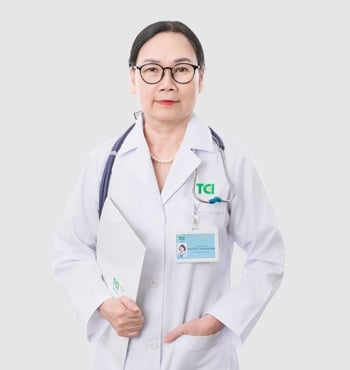
MSc, MD Nguyen Thi Minh Huong
MD, MSc Nguyen Thi Minh Huong - Former Deputy Head of the Radiation Therapy Department and Acting Head of the Nutrition Department at Hanoi Oncology Hospital - is an expert in oncology with over 45 years of experience. In addition to mastering modern multimodal treatment regimens such as immunotherapy and targeted therapy for lung cancer and breast cancer, Dr. Huong has a particular strength in integrating clinical nutrition to improve quality of life and maintaining direct professional connections with leading oncology professors in Singapore.
Position: Oncologist, Department of Oncology – Thu Cuc International General Hospital
Languages: Vietnamese, English
286 Thuy Khue, Ba Dinh Ward, Hanoi, Hanoi
Mon - Sun: 06:30-12:00, 13:30-20:00
About MSc, MD Nguyen Thi Minh Huong
MD, MSc Nguyen Thi Minh Huong is currently an Oncologist in the Department of Oncology at Thu Cuc TCI Healthcare System (Thu Cuc International General Hospital). Prior to joining Thu Cuc TCI, Dr. Huong held several key leadership positions at Hanoi Oncology Hospital, including Deputy Head of the Radiation Therapy Department and Acting Head of the Nutrition Department. She graduated as a General Practitioner and completed her Master’s degree program specializing in Cancer at Hanoi Medical University.
With more than 45 years of experience in the medical field, MD, MSc Nguyen Thi Minh Huong is one of Vietnam's most seasoned experts in chemoradiotherapy. Dr. Huong completed specialized training programs in Cancer from the International Atomic Energy Agency (IAEA) in Australia and Japan. In addition to mastering modern multimodal treatment regimens such as immunotherapy and targeted therapy for lung cancer and breast cancer, she has a particular strength in integrating clinical nutrition to improve quality of life and maintaining direct professional connections with leading oncology professors in Singapore.
When should you schedule an appointment with Dr. Nguyen Thi Minh Huong?
Patients and their families should proactively make an appointment for consultation, regimen advice, or cancer screening with MD, MSc Nguyen Thi Minh Huong when they have the following needs or symptoms:
- Need for periodic screening and early detection of malignant diseases, or when high-risk factors are present (family history of cancer, long-term tobacco smoking, chronic hepatitis).
- Palpable masses or abnormal lymph nodes in the cervical region, axilla, groin, or pectoral region (breast tumor screening) that progress rapidly and are painless.
- Appearance of warning signs of lung cancer such as persistent dry cough, hemoptysis or bloodstained sputum, persistent chest tightness, and shortness of breath on exertion.
- Experiencing symptoms suggestive of gastrointestinal cancer such as dysphagia, bloating, rapid weight loss of unknown etiology, hematochezia, or altered bowel habit.
- Need for consultation and development of a multimodal treatment regimen (combining chemotherapy, radiation therapy, targeted therapy, and immunotherapy) for oncologic conditions.
- Cancer patients undergoing treatment who require a specialized clinical nutrition regimen to improve physical status and reduce adverse effects of chemoradiotherapy.
- Need for planning palliative care management and treatment, controlling chronic anginal pain for late-stage cancer patients to improve quality of life.
Guide to scheduling appointments and the examination process with MD, MSc Nguyen Thi Minh Huong
- Step 1: Make an appointment in advance via the Thu Cuc TCI call center system or online portal to select a suitable time slot, receive priority numbering for seeing Dr. Huong, and minimize waiting time.
- Step 2: Arrive at the reception desk in the Department of Oncology – Thu Cuc International General Hospital according to your appointment. Healthcare professionals will guide you through administrative procedures, measure basic vital signs, and escort you to the clinic.
- Step 3: Clinical examination directly with Dr. Nguyen Thi Minh Huong. During this visit, patients need to provide complete information about bodily symptoms, personal and family past medical history, as well as previous medical records and laboratory results (if available).
- Step 4: Perform paraclinical tests as directed by the physician, such as blood tests for cancer biomarkers (tumor markers), ultrasound, Computed Tomography (CT) scan, Magnetic Resonance Imaging (MRI), or tumor biopsy if suspicion arises.
- Step 5: At the end of the procedure, patients bring the paraclinical results back to the initial clinic. Dr. Huong will directly review the results, provide a definitive diagnosis, advise on the optimal treatment direction (or arrange international multidisciplinary consultation if necessary), and schedule regular follow-up.
Important notes for patients and family members:
- When coming for the examination, bring all previous medical records, including: imaging films (X-ray, CT, MRI), pathology reports (if any), current prescriptions, and previous treatment summaries so that the physician has the most comprehensive data.
- For cancer screening blood tests or simulation scans, patients should fast (for at least 6 - 8 hours) before arriving at the hospital to ensure the precision of biochemical indices.
- Prepare a list of questions or concerns regarding the morbidity, treatment regimen, and adverse effects to discuss directly with the physician during the clinic visit.
- Cancer patients with weak physical status or those experiencing chronic pain should have a patient's family member accompany them throughout the examination process to assist with ambulation and facilitate information reception regarding treatment advice from the physician.
Frequently Asked Questions
What is the importance of clinical nutrition for cancer patients during chemoradiotherapy?
Many cancer patients suffer from cachexia or die due to malnutrition before the tumor devastates the body. The chemoradiotherapy process often causes serious adverse effects such as anorexia, nausea, oral mucosal ulceration, and changes in taste, preventing patients from ingesting sufficient energy. Designing a specialized, scientific clinical nutrition regimen helps compensate for energy deficits, stimulate regeneration of healthy cells, enhance the immune system, and maintain stable body weight. This ensures that patients have adequate physical status to complete the entire treatment regimen without interruption, thereby significantly improving the success rate of the case.
What benefits does professional collaboration with Singaporean physicians at Thu Cuc TCI bring to patients?
This cooperation provides a solution for "international standard cancer treatment right in Vietnam." Patients gain access to Singapore's most advanced treatment regimens—Singapore being a leading healthcare nation in the region—through direct or online consultations between Dr. Huong and Singaporean professors. The greatest benefit is that patients can use medications and apply modern technology equivalent to receiving care abroad, while maximizing savings on travel and accommodation costs, reducing language barriers, and ensuring close local monitoring and care by the Vietnamese medical team.
What role do biomarkers play in guiding current common cancer immunotherapy treatments?
Biomarkers (such as PD-L1 protein expression, MSI status, or TMB) act like "keys" helping physicians decode the unique biological characteristics of each tumor. In immunotherapy, testing these biomarkers helps physicians accurately determine whether the patient's cancer cells have the ability to evade the immune system and whether the body will respond well to immunotherapy drugs. Instead of empirical treatment, relying on biomarkers allows physicians to build an optimized, individualized, and targeted regimen, avoiding the wasteful use of expensive drugs that do not yield clinical effectiveness for the patient.
Professional strengths
Workplace
- •Thu Cuc International General Hospital
Experience
- •– 1982 – 1994: Deputy Head of the Nutrition Department and Attending Physician in the Pediatrics Department – Thanh Nhan Hospital.
- •– 1994 – 2000: Attending Physician in the Tumor Department – Thanh Nhan Hospital.
- •– January 2001 – August 2007: Deputy Head of the Radiation Therapy and Chemotherapy Department – Hanoi Oncology Hospital.
- •– August 2007 – June 2011: Deputy Head of the Radiation Therapy Department and Deputy Head acting as Head of the Nutrition Department – Hanoi Oncology Hospital.
- •– June 2011 – January 2013: Deputy Head of the Radiation Therapy Department, concurrently acting as Head of the Nutrition Department – Hanoi Oncology Hospital.
- •– May 2013 – Present: Oncologist in the Department of Oncology – Thu Cuc International General Hospital.
Education & training
- •1981: Graduated as a General Practitioner – Hanoi Medical University.
- •1986 – 1991: MD, Specialist Level I in Pediatrics – Hanoi Medical University.
- •2003 – 2006: Master of Science in Cancer – Hanoi Medical University.