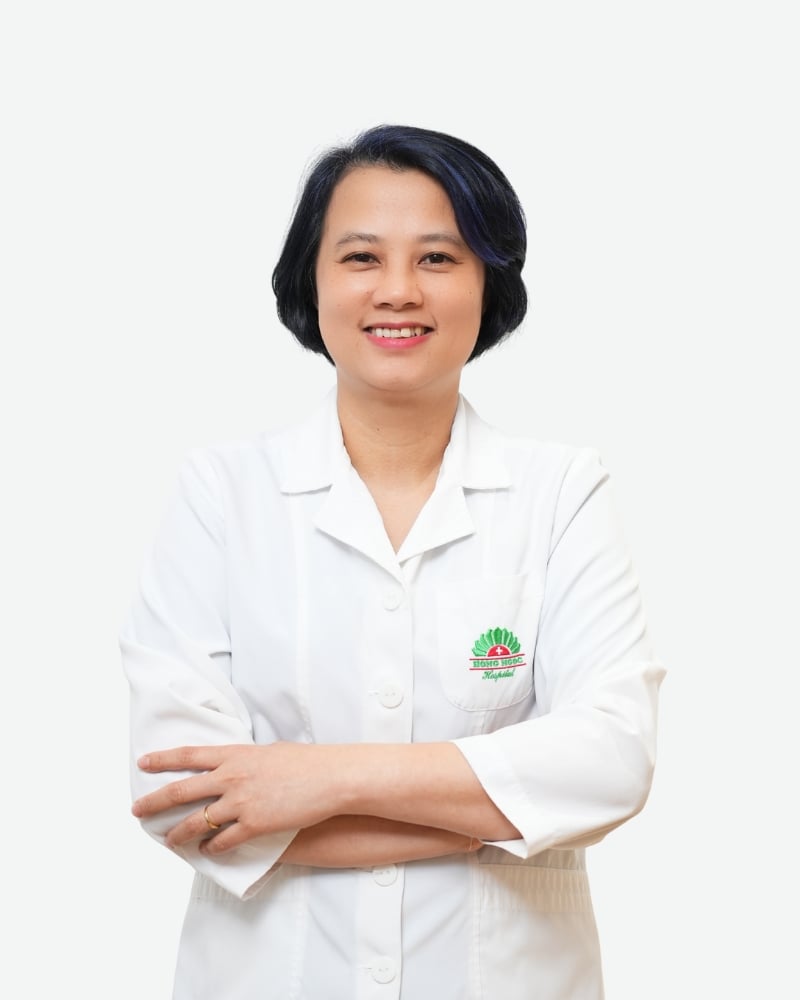
Specialist Level II Doctor Nguyen Thi My
MD, MSc, Specialist Level II. Nguyen Thi My is a senior expert in the field of Pediatrics with 20 years of clinical experience. The physician has exceptional strengths in mastering advanced intensive care techniques such as continuous hemofiltration, agile management of critical emergency cases and multiple organ failure, while also being highly proficient in treating severe pediatric internal medicine and infectious diseases in young children.
Position: Pediatric Department - Hong Ngoc Phuc Truong Minh General Hospital
Languages: Vietnamese, English
So 8 duong Chau Van Liem, Tu Liem Ward, Hanoi, Hanoi
Mon - Sun: 07:30-12:00, 13:30-17:00
About Specialist Level II Doctor Nguyen Thi My
MD, MSc, Specialist Level II. Nguyen Thi My is a confident professional with high-level expertise in the field of Pediatrics, possessing 20 years of continuous clinical work experience. Her clinical management capabilities are firmly validated by nearly two decades (2006–2023) of dedication at the Pediatric Intensive Care Unit of Saint Paul General Hospital – one of the leading pediatric emergency centers in the capital.
In addition, the physician continuously updates and masters advanced medical techniques through specialized certifications in pediatric continuous hemofiltration and general ultrasound for pathologic diagnosis. From 2024 to the present, the physician has officially joined and brought high-quality treatment standards to the Pediatric Department at Hong Ngoc Phuc Truong Minh General Hospital.
Diseases examined and treated by the physician
Possessing the sharp thinking of an intensive care specialist along with a comprehensive foundation in pediatric internal medicine, MD, MSc, Specialist Level II. Nguyen Thi My directly receives patients for examination, diagnosis, and treatment for pediatric patients in the following disease groups:
- Management of complex and critical pediatric internal medicine emergency situations such as acute respiratory failure, septic shock, febrile seizures, acute poisoning, or acid-base imbalance disorders.
- Specialized examination and treatment of severe respiratory tract infections in young children, including complicated severe pneumonia, acute bronchiolitis, status asthmaticus, and croup causing airway stenosis.
- Examination and development of treatment regimens for dangerous acute infectious diseases with a high risk of complications, such as severe dengue fever, high-grade hand, foot, and mouth disease, bacterial meningitis, measles, and malignant influenza.
- Application of advanced techniques and coordination of treatment consultations for pediatric patients with multiple organ failure requiring dialysis indication for continuous hemofiltration or acute renal dysfunction disorders.
- Examination, advice, and treatment of general pediatric internal medicine conditions (respiratory, gastroenterology, nutrition), performing rapid bedside general ultrasound to detect abnormalities common in children.
Guide to scheduling appointments and the examination process with Dr. Nguyen Thi My
- Step 1: Make an appointment via Bcare by calling the hotline or filling out appointment information on the system to obtain priority numbering and proactively select a time slot suitable for the family's schedule.
- Step 2: Arrive to verify the scheduled appointment at the reception desk of the Pediatric Department at the Phuc Truong Minh facility so that support staff can quickly complete the file opening procedures.
- Step 3: Move into the clinic room where MD, MSc, Specialist Level II Nguyen Thi My will directly perform a meticulous clinical examination, check vital signs (pulse, temperature, respiratory rate, SpO2), and assess the child's consciousness and reflexes.
- Step 4: Perform advanced paraclinical tests according to the physician's medical orders, including blood tests (assessing infection status, liver and kidney biochemistry), arterial blood gas analysis, chest X-ray, or general ultrasound to examine the abdominal cavity.
- Step 5: Return to the initial clinic room to hear the physician review results, analyze disease progression, provide a definitive diagnosis conclusion, and advise on a safe medical treatment regimen or guide hospital admission for urgent monitoring if there are signs of worsening.
Notes before the visit
- Families need to bring all patient health booklets, current prescriptions, laboratory results, or previous hospital admission records of the child (if any) so that the physician has a comprehensive view of the medical history.
- For children showing critical signs such as dyspnea, stridor, lethargy, seizures, or vomiting everything, parents do not need to wait according to the usual procedure but must immediately notify healthcare professionals to take the child to the emergency area.
- Parents should pay attention to observing and accurately remembering the time when symptoms started, the nature of the fever episodes, the number of startle responses, or the child's breathing pattern at home to provide intuitive information to the physician.
- It is recommended to dress the child in loose, comfortable clothing with button-up shirts to facilitate the physician's performance of clinical examination maneuvers, auscultation, or bedside ultrasound.
- Families should proactively arrive at the hospital 10 to 15 minutes before the scheduled appointment time to complete initial reception procedures at the nurse station.
Frequently Asked Questions
In which cases is pediatric continuous hemofiltration (CRRT) indicated, and what is its role in intensive care?
Continuous hemofiltration is an advanced technique in pediatric intensive care, indicated for pediatric patients with acute kidney injury, severe septic shock, multiple organ failure, acute poisoning, or inborn errors of metabolism with significant fluid overload and toxin accumulation. The role of this technique is to act as a continuous replacement for impaired renal function, helping to eliminate bacterial toxins, proinflammatory cytokines, and restore homeostasis, thereby protecting visceral organs and opening opportunities for survival in critically ill children.
How can parents recognize early signs of respiratory failure in young children at home to seek timely hospital care?
Respiratory failure is a common medical emergency caused by airway diseases. Parents can recognize it early through signs such as: the child breathing significantly faster than the age threshold (more than 60 breaths per minute in infants under 2 months, more than 50 breaths per minute in infants aged 2–11 months, and more than 40 breaths per minute in children over 1 year old); the child exerting effort to breathe leading to chest retraction (deep subcostal indentation during inhalation), nasal flaring, or wheezing, grunting, pallor accompanied by lethargy, and refusal to feed.
How should a child with a febrile seizure be managed locally before being taken to an emergency physician?
When a child has a febrile seizure, parents need to calmly perform the following steps: Place the child lying on their side in a cool, flat place to prevent aspiration of vomitus and keep the airway patent; absolutely do not insert any hard objects into the child's mouth and do not restrain or pin down the limbs. Next, remove excess clothing, use a warm towel to wipe the axillary region and groin to lower the fever, and administer antipyretic medication rectally (if available). Seizures usually resolve spontaneously after 1–2 minutes, after which the child must be immediately taken to the hospital for a specialist to diagnose the cause.
Professional strengths
Workplace
- •Pediatric Department - Hong Ngoc Phuc Truong Minh General Hospital
Experience
- •2006 - 2023: Physician at the Pediatric Intensive Care Unit - Saint Paul General Hospital
- •2024 - Present: Pediatric Department - Hong Ngoc Phuc Truong Minh General Hospital
Education & training
- •2006: Graduated as a General Practitioner - Hanoi Medical University Hospital
- •2014: Graduated Master of Pediatrics - Hanoi Medical University Hospital
- •2018: Certificate in General Ultrasound for Diagnosing Common Pathologies
- •2023: Graduated MD, Specialist Level II in Pediatrics - Intensive Care at Hanoi Medical University Hospital
- •2022: Certificate in Pediatric Continuous Hemofiltration