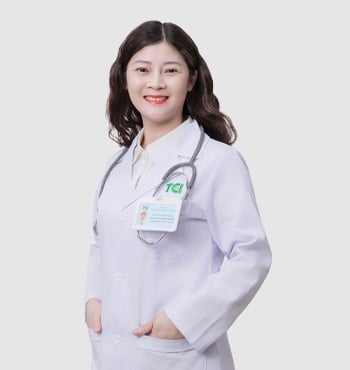
Specialist Level I Doctor Nguyen Thi Thanh Hien
Dr. Nguyen Thi Thanh Hien, MD, Specialist Level I, has more than 20 years of extensive clinical experience, combining sharp diagnostic imaging skills with proficient gastrointestinal endoscopy techniques. She has particular strengths in diagnostic endoscopy, early detection of mucosal lesions, tumors, and polyps, and timely development of treatment regimens for gastroduodenal diseases.
Position: Functional Exploration - Endoscopy Physician, Thu Cuc Tran Duy Hung General Clinic (216 Tran Duy Hung)
Languages: Vietnamese, English
216 Tran Duy Hung, Cau Giay Ward, Hanoi, Hanoi
Mon - Sun: 07:00-12:00, 13:30-17:00
About Specialist Level I Doctor Nguyen Thi Thanh Hien
Dr. Nguyen Thi Thanh Hien, MD, Specialist Level I, is a specialist physician in Gastroenterology - Hepatobiliary and Pancreatic Diseases and Radiology with 19 years of extensive clinical practice. The deep integration of acute diagnostic imaging capabilities and proficient gastrointestinal endoscopy techniques provides a significant advantage, enabling Dr. Hien to achieve early detection and accurate assessment of lesions within the gastrointestinal tract.
Before joining the Functional Exploration and Endoscopy Department at the Thu Cuc TCI Healthcare System (facility at 216 Tran Duy Hung, Hanoi), she dedicated 10 years to service at the Department of Radiology, Gang Thep Hospital (Thai Nguyen). She consistently earns the trust of numerous patients due to her meticulous work ethic, gentle counseling, and timely, effective treatment regimens.
Diseases examined and treated by the physician
Leveraging a solid professional foundation in gastrointestinal endoscopy and radiology, Dr. Nguyen Thi Thanh Hien, MD, Specialist Level I, performs examinations, screening endoscopies, and effective treatments for the following disease groups:
- Gastroduodenal diseases: Acute and chronic gastritis, peptic ulcer, gastroesophageal reflux disease (GERD), Helicobacter pylori (HP) bacterial infection of the gastrointestinal tract.
- Screening for upper gastrointestinal tract lesions: Performing esophagoscopy, gastric, and duodenal endoscopy to detect foreign bodies, polyps, areas of metaplasia, or benign and malignant tumors (early-stage gastrointestinal cancer).
- Colonic and rectal diseases: Collaborative diagnosis of colitis, irritable bowel syndrome (IBS), and colorectal polyps through appropriate clinical presentation and paraclinical indications.
- Functional gastrointestinal disorders: Examination and management of abdominal pain of unknown etiology, flatulence, dyspepsia, acid reflux, dysphagia, nausea, or prolonged altered bowel habit.
Guide to booking appointments and examination procedures with Dr. Nguyen Thi Thanh Hien, MD, Specialist Level I
- Step 1: Make an appointment via the Bcare system (call the hotline or register online) to proactively select a suitable time slot, receive priority queue number, and minimize waiting time at the facility.
- Step 2: Arrive at the Thu Cuc TCI Healthcare System facility at 216 Tran Duy Hung according to the scheduled appointment. Reception staff will verify information, complete administrative procedures, and guide you to Dr. Hien's clinic room.
- Step 3: Enter the clinic room to meet Dr. Nguyen Thi Thanh Hien directly to discuss uncomfortable symptoms, past medical history, eating habits, and undergo clinical examination of the abdomen.
- Step 4: Move to the Functional Exploration area to perform gastrointestinal endoscopy techniques (standard endoscopy or painless anesthesia-assisted endoscopy) and other paraclinical orders such as blood tests, abdominal ultrasonography, or HP bacteria testing.
- Step 5: Bring results back to the initial clinic room. The physician reviews the endoscopic imaging results, provides a definitive diagnosis conclusion, prescribes medication, and offers detailed advice on appropriate diet and lifestyle for the patient.
Important notes before undergoing gastrointestinal endoscopy:
- To allow the physician to clearly visualize the gastric mucosa and prevent dangerous reflux during the procedure, patients must fast completely for at least 6 to 8 hours prior to the procedure time.
- Do not drink colored liquids (such as milk, coffee, soft drinks, fruit juice); only small amounts of plain water should be consumed at least 2 hours before the endoscopy.
- Please clearly inform the physician about any medications currently being used (especially anticoagulants and antidiabetic agents) and any history of drug allergy (if applicable).
- If choosing the anesthesia-assisted endoscopy method (painless endoscopy), patients should be accompanied by a family member to assist with transportation after the procedure is completed.
Frequently Asked Questions
Is anesthesia-assisted (painless) gastrointestinal endoscopy safe, and what are its benefits for patients?
Anesthesia-assisted endoscopy involves using a short-acting dose of anesthetic agent, allowing the patient to enter a gentle sleep throughout the procedure performed by the physician (approximately 10–15 minutes). This method is very safe under the supervision of an anesthesiologist, ensuring the patient experiences no pain sensation, discomfort, or gagging. A major benefit is that it allows the physician to observe carefully and perform polypectomy or biopsy procedures more accurately due to decreased intestinal motility and lack of patient stimulation or retching.
How is Helicobacter pylori (HP) transmitted, and why is curative therapy necessary?
Helicobacter pylori is a common cause of gastric ulcers and one of the factors contributing to increased malignancy risk for gastric cancer. This bacterium is primarily transmitted via the fecal-oral or oral-oral route through sharing bowls, chopsticks, dipping sauces, personal items, or consuming food that does not ensure hygiene. Curative therapy using combination antibiotic regimens is necessary to heal ulcerative lesions, prevent recurrent disease, and avoid dangerous future complications.
Do gastric polyps detected via endoscopy need to be removed?
The majority of gastric polyps detected via endoscopy are benign (such as hyperplastic polyps or fundic gland polyps). However, some types of polyps (such as adenomatous polyps) have the potential to progress to malignancy over time. Depending on the size, number, and histopathological nature of the polyp based on endoscopic images, the physician will indicate immediate removal during the endoscopy or perform a biopsy for anatomic pathology, thereby establishing an appropriate regular follow-up plan for the patient.
Professional strengths
Workplace
- •Thu Cuc Tran Duy Hung General Clinic
Experience
- •2005 – January 2015: Physician, Department of Radiology – Gang Thep Hospital, Thai Nguyen.
- •February 2015 to present: Physician, Functional Exploration – Endoscopy, Thu Cuc TCI Healthcare System.
Education & training
- •2004: Graduated as a General Practitioner – Thai Nguyen Medical University.
- •2015: Completed Specialist Level I training in Radiology – Hanoi Medical University Hospital.
- •April 2017 – September 2017: Completed training course for Certificate in Upper Gastrointestinal Endoscopy at the Endoscopy – Functional Exploration Department, Buu Dien Hospital (Post Hospital) - Campus 1.