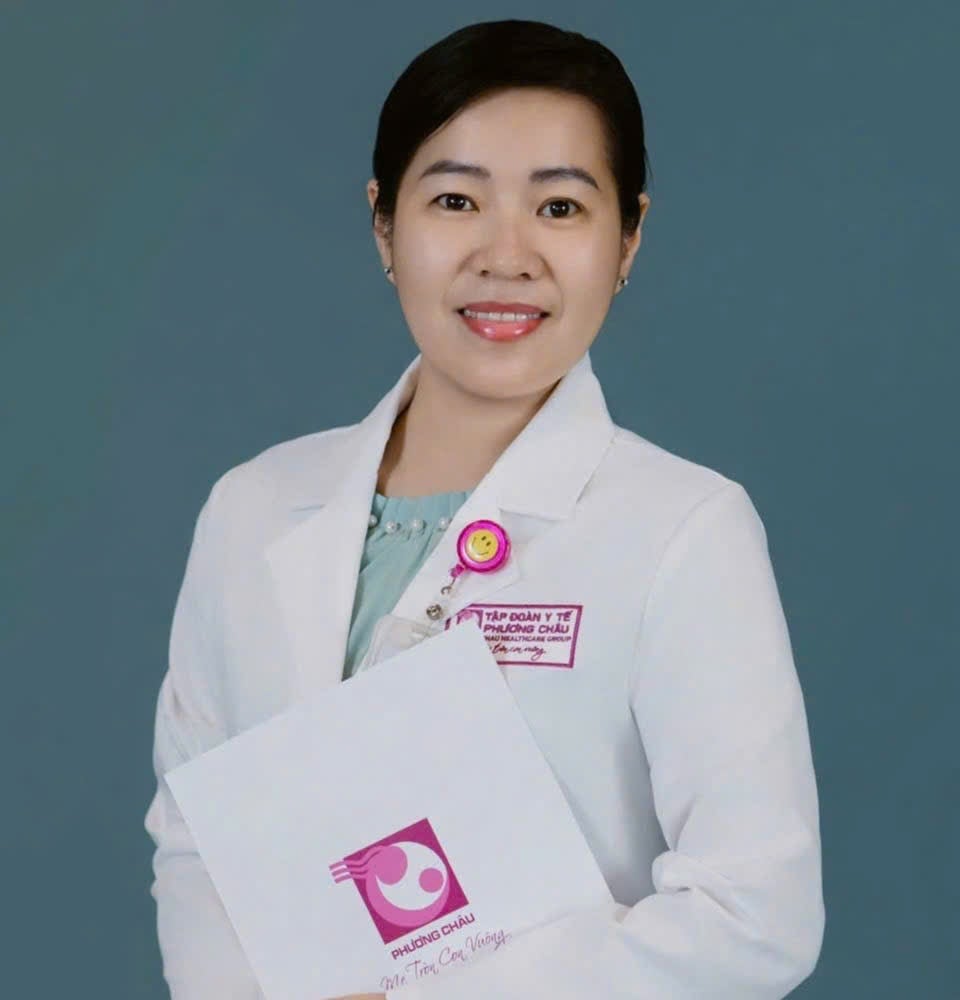
Specialist Level I Doctor Nguyen Thi Thuy Hong
Dr. Nguyen Thi Thuy Hong, MD, Specialist Level I, is currently the Head of the Department of Pediatrics at Phuong Chau International Hospital, with more than 15 years of in-depth experience in pediatrics and neonatology.
Position: Head of the Department of Pediatrics and Neonatology, Phuong Chau International Hospital
Languages: Vietnamese, English
So 300 Nguyen Van Cu noi dai, Tan An Ward, Can Tho, Can Tho
Mon - Sun: 07:00-11:30, 13:00-16:30
About Specialist Level I Doctor Nguyen Thi Thuy Hong
Dr. Nguyen Thi Thuy Hong, MD, Specialist Level I, is a reputable expert with over 15 years of extensive experience in pediatrics and neonatal resuscitation. She graduated from Can Tho University of Medicine and Pharmacy with a General Practitioner degree, then completed her Specialist Level I training in Pediatrics at Ho Chi Minh City University of Medicine and Pharmacy in 2011. With a solid professional foundation, she previously worked at leading pediatric units such as Can Tho Children's Hospital and the Department of Neonatology at Tu Du Hospital.
Since 2013, she has served as the Head of the Department of Pediatrics at Phuong Chau International Hospital, providing parents with absolute peace of mind through her dedication and excellent clinical competence.
What conditions does Dr. Nguyen Thi Thuy Hong treat?
- Medical examination, treatment, and intensive resuscitation for newborns, premature infants, and low-birth-weight infants, including Kangaroo Mother Care techniques, basic and advanced neonatal resuscitation (NICU).
- Examination, diagnosis, and management of common pediatric infectious diseases, immune-related disorders, and immunodeficiency in children.
- Screening examinations, early detection of signs, and timely intervention for children at risk of autism or diagnosed with autism spectrum disorder.
- Examination and treatment of endocrine disorders and inborn errors of metabolism in children; performance of echocardiography and management of congenital heart disease from an early stage.
- Periodic health check-ups, comprehensive nutritional counseling, monitoring of physical and mental development in children, and consultation on human milk bank operations.
Guide to scheduling appointments and the examination process with Dr. Nguyen Thi Thuy Hong
- Step 1: Make an appointment via Bcare by calling the hotline or filling out the booking form on the system to obtain a priority number, allowing you to manage your time proactively and avoid long waiting periods upon arrival at the hospital.
- Step 2: Arrive at the reception desk of Phuong Chau International Hospital to verify your scheduled appointment. Healthcare professionals will check your information, complete the initial administrative medical record, and issue a referral slip to the clinic.
- Step 3: Enter the clinic for a direct clinical examination by the physician, who will listen to symptoms of discomfort, take a past medical history and maternal obstetric history, or review previous laboratory results referred from other facilities.
- Step 4: Proceed to functional rooms to undergo necessary paraclinical tests as indicated, such as echocardiography, blood tests, micronutrient assays, or specialized psychological assessments, depending on the patient's condition.
- Step 5: Return to the original clinic for the physician to interpret the paraclinical results, analyze the extent of injury, establish the final diagnosis, prescribe medication, or recommend an appropriate intervention regimen.
Notes before the visit
- Parents should bring all previous patient health booklets, laboratory results, ultrasound reports, current prescriptions, or the child’s vaccination record so that the physician has accurate reference data.
- For children being examined for screening or risk assessment for autism, parents should prepare information regarding developmental milestones, motor skills, and any abnormal daily behaviors to discuss thoroughly with the physician.
- As the physician currently holds the position of Head of the Department of Pediatrics, her schedule is very busy. Parents are advised to proactively make an appointment before arriving.
Frequently Asked Questions
What are the benefits of Kangaroo Mother Care for premature and low-birth-weight infants, and when can it be applied?
Kangaroo Mother Care is a method of placing the premature infant in skin-to-skin contact on the chest of the mother or a caregiver. This helps stabilize the infant’s body temperature, respiratory rate, and heart rate, while minimizing physiologic apnea episodes. The method also enhances the infant’s immune system, improves digestion, promotes deep sleep, and strengthens the maternal-infant bond. This technique is applied immediately once the premature infant’s vital signs are completely stable and under the direct guidance and indication of a neonatology specialist.
How can parents recognize early warning signs that their child is at risk for autism spectrum disorder?
Parents can recognize early risks of autism in children through manifestations such as speech delay, lack of response when called by name, absence of eye contact, or failure to point at desired objects before 12 months of age. Children may also exhibit repetitive behaviors such as spinning in circles, lining up toys in straight rows, or having exaggerated reactions to sounds or light. When these warning signs are observed, parents should bring the child for a specialty examination so that the physician can diagnose and initiate early intervention before the age of three to achieve the best outcomes.
How dangerous are inborn errors of metabolism in newborns, and how are they screened?
Inborn errors of metabolism are a group of dangerous diseases caused by a deficiency in enzymes or functional proteins, preventing the body from metabolizing nutrients from milk into energy. This leads to toxin accumulation and organ damage. The disease progresses rapidly and can cause poor feeding, regurgitation, lethargy, seizures, or death if not treated urgently. This condition can be effectively screened early using heel-stick blood collection within the first 48 to 72 hours after birth.
Professional strengths
Workplace
- •Phuong Chau International Hospital
Experience
- •Head of the Department of Pediatrics, Phuong Chau International Hospital, since 2013
- •Physician for Neonatal Examination and Treatment, Department of Neonatology, Tu Du Hospital, 2011 - 2013
- •Physician for Pediatric Examination and Treatment, Can Tho Children's Hospital, 2007 - 2009
- •Over 15 years of experience in Pediatrics
Education & training
- •Specialist Level I in Pediatrics, Ho Chi Minh City University of Medicine and Pharmacy, 2011
- •General Practitioner, Can Tho University of Medicine and Pharmacy, 2007
- •8th Asian Congress of Pediatric Infectious Diseases
- •June – October 2018: Advanced Neonatal Treatment Course
- •April – September 2008: Echocardiography Training at Pham Ngoc Thach University of Medicine
- •September – December 2008: Congenital Heart Disease Management Course at Children's Hospital 1