
Assoc. Prof., PhD, MD Nguyen Xuan Thanh
Associate Professor, MD, PhD, People's Physician Nguyen Xuan Thanh has over 40 years of experience in internal medicine diagnosis and treatment, achieving numerous accomplishments in the field of hepatobiliary diseases, particularly in the treatment of viral hepatitis and cirrhosis.
Position: Medical Consultant, Outpatient Department – Thu Cuc International General Hospital.
Languages: Vietnamese, English
286 Thuy Khue, Ba Dinh Ward, Hanoi, Hanoi
Mon, Fri, Sat: 06:30-12:00, 13:30-20:00
300.000đ
About Assoc. Prof., PhD, MD Nguyen Xuan Thanh
Associate Professor, MD, PhD, People's Physician Nguyen Xuan Thanh is one of the most outstanding leading experts in Internal Medicine and Hepatobiliary Diseases in Vietnam, with more than 40 years of clinical, teaching, and health administration experience. He possesses a profound academic foundation, having graduated from the General Practitioner program (1978), completed Specialist Level I training (1980), earned a PhD in Infectious Diseases (1984) at the Military Medical University (now the Academy of Military Medicine), and was awarded the title of Associate Professor of Medicine in 2005. His expertise was elevated to an international level during the period of 1990–1995 when he participated in doctoral research training in Gastroenterology and Hepatobiliary Diseases at Shimane University School of Medicine (Japan) under the direct mentorship of Professor Shimada, a leading Japanese expert in hepatobiliary diseases.
Throughout his illustrious career, Associate Professor, MD, PhD Nguyen Xuan Thanh has made significant contributions to national medicine through key positions: Former Director of the Institute of Army Hygiene and Epidemiology (Department of Military Medicine, Ministry of National Defense) and long-time Lecturer in the Department of Infectious Diseases at the 103 Academy of Military Medicine. For his exceptional dedication, he was honored by the President of the State with the title of Meritorious Physician (2001) and subsequently People's Physician. Since December 2012, he has served as an Internist and Senior Medical and External Affairs Consultant at Thu Cuc International General Hospital.
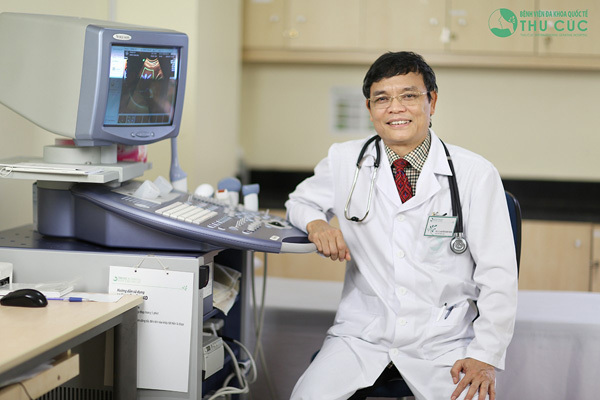
Dr. Nguyen Xuan Thanh diagnoses and treats
Diagnosis and treatment of liver disorders
- Diagnosis and treatment of hepatitis
- Diagnosis and treatment of hepatitis B
- Diagnosis and treatment of hepatitis C
- Diagnosis and treatment of hepatitis A
- Diagnosis and treatment of alcohol-associated hepatitis
- Diagnosis and treatment of autoimmune hepatitis
- Diagnosis and treatment of cirrhosis
- Diagnosis and treatment of alcohol-associated cirrhosis
- Diagnosis and treatment of non-alcoholic cirrhosis
- Diagnosis and treatment of biliary cirrhosis
- Diagnosis and treatment of fatty liver disease
- Diagnosis and treatment of liver abscess
- Diagnosis and treatment of other liver disorders such as: liver fluke infection, heat in the liver, elevated liver enzymes.
Diagnosis and treatment of biliary tract disorders
- Diagnosis and treatment of gallstones
- Diagnosis and treatment of cholecystolithiasis
- Diagnosis and treatment of choledocholithiasis
- Diagnosis and treatment of biliary stones
- Diagnosis and treatment of cholangitis
- Diagnosis and treatment of cholecystitis
- Diagnosis and treatment of gallbladder polyps
- Diagnosis and treatment of other biliary disorders such as: biliary ascariasis, gallbladder sludge.
Surgical treatment
- Laparoscopic cholecystectomy
- Surgery for gallstone treatment
Diagnosis and treatment of intrahepatic tumors and cancer
- Diagnosis and treatment of hepatic capillary hemangioma
- Diagnosis and treatment of hepatic cysts
- Diagnosis and treatment of intrahepatic hemangioma
- Diagnosis and treatment of liver cancer
Diagnosis and treatment of biliary tract tumors and cancer
- Diagnosis and treatment of gallbladder adenomyoma
- Diagnosis and treatment of gallbladder cancer
- Diagnosis and treatment of cholangiocarcinoma
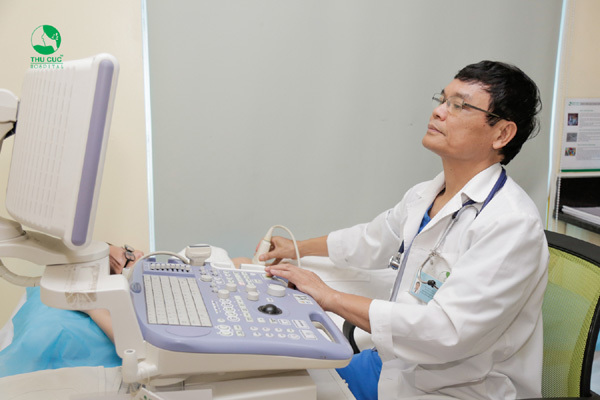
Guidance on scheduling appointments and the examination process with Associate Professor, MD, PhD, People's Physician Nguyen Xuan Thanh
- Step 1: Make an appointment via Bcare to select a suitable time slot and confirm the clinical schedule of Associate Professor, MD, PhD, People's Physician Nguyen Xuan Thanh.
- Step 2: Arrive at the reception desk at the designated facility of the Thu Cuc Healthcare System, present your appointment information so staff can assist in completing registration procedures and quickly obtain a number for the specialist clinic.
- Step 3: Proceed to the examination room where Associate Professor, MD, PhD, People's Physician Nguyen Xuan Thanh will conduct a direct clinical examination, listen to subjective symptoms (jaundice, fatigue, anorexia, right upper quadrant pain), and thoroughly review medication history and past medical history.
- Step 4: Undergo advanced paraclinical tests as ordered by the Associate Professor, including: Blood tests (assessment of liver enzymes AST/ALT, bilirubin, albumin, coagulation function), quantitative viral load assays (HBV-DNA, HCV-RNA), high-technology abdominal ultrasonography, or CT/MRI of the hepatobiliary system when necessary.
- Step 5: Return to the initial examination room to hear the Associate Professor directly analyze results, establish a definitive diagnosis, provide a detailed explanation of the patient's condition, and formulate a specialized, safe medical treatment regimen.
Notes before the visit
- Patients should bring all current prescriptions, blood test results, imaging films, or old medical records from other hospitals to allow the Associate Professor to compare and accurately assess disease progression.
- If blood tests for hepatobiliary function or blood glucose are required, or if digestive functional studies are planned for the morning, patients must be nil by mouth for 6 to 8 hours prior to the examination.
- For patients currently undergoing antiviral therapy for hepatitis B or C, do not discontinue medication on your own before the appointment date to avoid distorting the assessment of actual viral load.
- It is recommended to wear loose, comfortable clothing (button-down shirt or loose T-shirt) to facilitate the Associate Professor’s performance of abdominal clinical examinations, such as palpation of the liver and spleen, and inspection of cutaneous signs.
- Due to the high demand for appointments with leading experts like the Associate Professor, families should arrive 15 to 20 minutes early to complete screening procedures and initial blood pressure measurement at the nurse station.

Frequently Asked Questions
Why is chronic hepatitis B virus infection referred to as a "silent killer," and how can it be detected early?
Chronic hepatitis B virus infection is called a "silent killer" because the disease often progresses insidiously, causing virtually no distinct clinical symptoms for many years. By the time patients develop symptoms such as persistent fatigue, scleral icterus, jaundice, abdominal distention, or right upper quadrant pain, the disease has often progressed to severe stages such as cirrhosis or liver cancer. The only way to achieve early detection is to proactively undergo blood screening for vaccination status and periodic liver function tests.
For patients who have progressed to the stage of cirrhosis, what is the purpose of the medical treatment regimen, and is a complete cure possible?
Medically, once liver tissue has transformed into fibrous scar bands, it cannot completely revert to healthy liver tissue. However, strict adherence to the physician's intensive medical treatment regimen is extremely important to: eliminate the cause of cirrhosis (such as using medications to control the virus, absolute abstinence from alcohol), protect and maximally restore remaining healthy hepatocytes, thereby arresting further disease progression and preventing life-threatening complications such as gastrointestinal hemorrhage due to ruptured esophageal varices, ascites, or hepatic coma.
What is the role of Japanese hepatobiliary ultrasound technology in the early diagnosis of liver abnormalities?
Japan is a world leader in radiology technology and hepatobiliary disease management. The application of advanced hepatobiliary ultrasonography according to Japanese standards allows physicians to observe the smoothness and coarse structure of the hepatic parenchyma, perform elastometry to assess the grade of hepatic fibrosis (FibroScan), and especially detect ultra-small hepatocellular carcinoma (HCC) nodules measuring just a few millimeters, giving patients the opportunity for early intervention with a very high success rate.
Workplace
- •THU CUC INTERNATIONAL GENERAL HOSPITAL
Experience
- •1978 – 1997: Attending Physician, Lecturer – Academy of Military Medicine
- •1997 – March 2012: Director of the Institute of Army Hygiene and Epidemiology, Department of Military Medicine, Ministry of National Defense
- •1981 – 2012: Lecturer, Department of Infectious Diseases, 103 Academy of Military Medicine
- •December 2012: Internist and Medical Consultant – Thu Cuc International General Hospital
Awards & recognition
- •People's Physician
- •Many of the Associate Professor's studies on the liver have been published in international journals and recognized by the global community.
Education & training
- •1971 – 1978: Studied General Practice – Military Medical University
- •1979 – 1980: Studied Specialist Level I in Infectious Diseases – Military Medical University
- •1984: Received PhD in Infectious Diseases – Military Medical University.
- •1990 – 1995: Participated in Doctoral Research Training – Specialty in Gastroenterology and Hepatobiliary Diseases, Member of the Japanese Society of Hepatology and the Japanese Society of Ultrasonics – Shimane University School of Medicine, Japan.
- •2005: Recognized as Associate Professor of Medicine – State Council for Professor Titles.
- •Interned and conducted research in the Department of Gastroenterology at Shimane University School of Medicine, Japan, under the guidance of Professor Shimada – a leading expert in Japan for the diagnosis and treatment of hepatobiliary diseases.