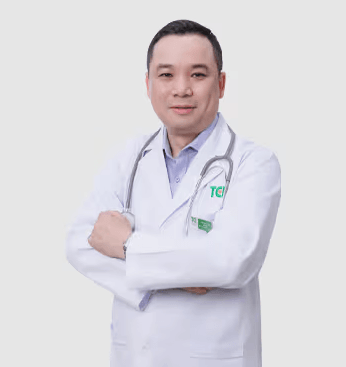
Specialist Level I Doctor Pham Duc Son
Dr. Pham Duc Son, MD, Specialist Level I, is a professional with solid expertise and extensive experience in the field of Gastrointestinal Endoscopy and Functional Exploration. Dr. Pham Duc Son has helped thousands of patients undergo screening and accurate diagnosis of gastrointestinal diseases in a smooth, gentle manner, completely eliminating the fear associated with flexible endoscopic procedures.
Position: Head of the Unit for Functional Exploration - Gastrointestinal Endoscopy
Languages: Vietnamese, English
216 Tran Duy Hung, Cau Giay Ward, Hanoi, Hanoi
Mon - Sun: 07:00-12:00, 13:30-17:00
About Specialist Level I Doctor Pham Duc Son
Dr. Pham Duc Son, MD, Specialist Level I, is a professional with solid expertise and extensive experience in the field of Gastrointestinal Endoscopy and Functional Exploration. Currently, he serves as the Head of the Unit for Functional Exploration - Gastrointestinal Endoscopy at Thu Cuc International General Clinic (216 Tran Duy Hung).
With dedication, attentiveness, and the ability to apply modern endoscopic technologies, Dr. Pham Duc Son, MD, Specialist Level I, has helped thousands of patients undergo screening and accurate diagnosis of gastrointestinal diseases in a smooth, gentle manner, completely eliminating the fear associated with flexible endoscopic procedures.
When should you schedule an appointment with the doctor?
Patients should proactively make an appointment for examination and endoscopy with Dr. Pham Duc Son, MD, Specialist Level I, when experiencing abnormal signs or belonging to the following groups:
- Presence of symptoms of gastrointestinal disturbance lasting for a prolonged period, such as epigastric pain, belching, acid reflux, nausea, abdominal distention, dyspepsia, or difficulty swallowing.
- Altered bowel habit of unknown etiology, such as persistent diarrhea, frequent constipation, hematochezia, or dark tarry stools.
- Rapid, sudden weight loss of unknown etiology accompanied by anorexia, fatigue, and pallor.
- Individuals who need screening or early cancer screening for gastrointestinal cancer (gastric cancer, esophageal cancer, colorectal cancer), especially those over 40 years of age or those with a family history of malignant gastrointestinal diseases.
- Patients requiring monitoring and scheduled follow-up visits for chronic medical conditions such as gastroduodenal ulcer, gastroesophageal reflux disease (GERD), gastric polyps, polyp of colon, or Helicobacter pylori infection.
Guide to scheduling appointments and the examination process with Dr. Pham Duc Son, MD, Specialist Level I
- Step 1: Make an appointment via Bcare by calling the hotline or filling out the appointment form on the system to obtain a priority number and proactively select an examination time slot that fits your personal schedule.
- Step 2: Arrive at the reception desk of Thu Cuc International General Clinic to verify the booked appointment so that healthcare professionals can confirm information, print the examination slip, and guide you to the doctor's clinic.
- Step 3: Enter the clinic to meet the doctor directly to present your health status, symptoms experienced, past medical history (personal and family), and undergo clinical examination.
- Step 4: Move to functional departments to perform paraclinical tests as indicated, such as blood tests, ultrasound, radiography, computed tomography (CT)/magnetic resonance imaging (MRI), or biopsy, according to the doctor's professional requirements.
- Step 5: Return to the initial clinic to have the doctor review the paraclinical results, provide a definitive diagnosis, advise on an appropriate treatment regimen, and receive a prescription (if any).
Notes before the examination
- Bring all old medical records, previous endoscopy results, and current prescriptions to allow the doctor to compare and accurately assess disease progression.
- Maintain complete fasting for at least 6 to 8 hours before undergoing gastroscopy, and evacuate the colon according to specific instructions beforehand if colonoscopy is indicated.
- Notify the doctor in detail about all medications currently being used, especially anticoagulants, medication for blood pressure, cardiovascular drugs, or diabetes mellitus treatments, to receive appropriate instructions for temporary discontinuation.
- Avoid consuming colored beverages such as coffee, milk, soft drinks, or fruit juices before the endoscopic procedure to prevent difficulties in observing the mucous membrane.
- It is advisable to be accompanied by a patient's family member to assist with transportation and care after the procedure, especially in cases where anesthesia-assisted endoscopy is chosen.
Frequently Asked Questions
How does anesthesia-assisted gastrointestinal endoscopy (painless endoscopy) work, and is it safe?
Anesthesia-assisted gastrointestinal endoscopy is a method in which the patient is induced into a temporary deep sleep state using an adequate dose of intravenous anesthesia before the flexible endoscope is inserted into the gastrointestinal tract. This method is extremely safe when performed at a reputable facility because the anesthetic agents have a very short duration of action. The patient will be insensate to pain, discomfort, or nausea throughout the procedure and will regain alertness within 5 to 10 minutes after the procedure ends.
What is Helicobacter pylori in the stomach, and why is it necessary to detect and eradicate this bacterium early?
Helicobacter pylori (HP) is a type of bacterium that lives and develops directly in the mucus layer of the gastric mucosa, capable of secreting toxins that cause chronic gastroduodenal ulcerative inflammation. Early detection via endoscopy and breath tests, followed by thorough HP eradication treatment, is crucial, as uncontrolled long-term HP infection is one of the leading causes of complications such as gastrointestinal hemorrhage, gastric perforation, and significantly increases the risk of progression to gastric cancer.
After endoscopic polypectomy of the colon, what dietary and lifestyle precautions should patients take?
After colonic polypectomy, patients should prioritize soft, liquid, easily digestible foods such as porridge and soup for the first few days, while limiting hard, greasy, spicy, or hot foods, as well as stimulants like alcoholic beverages. Regarding lifestyle, patients should avoid strenuous physical activity, refrain from lifting heavy objects, and monitor stool color. If abnormal manifestations such as severe abdominal pain, high fever, or fresh rectal bleeding occur, they must promptly return to the hospital for timely management by the physician.
Professional strengths
Workplace
- •Thu Cuc Tran Duy Hung General Clinic
Experience
- •2009 – 2018: Physician in the Gastroenterology department – Hospital 198 (Ministry of Public Security).
- •July 2019 – present: In charge of the Endoscopy Functional Exploration Room – Thu Cuc International General Clinic.
Education & training
- •2009: Graduated as a General Practitioner – Military Medical Academy.
- •March – June 2012: Upper gastrointestinal flexible endoscopy – Bach Mai Hospital - Campus 1 - Hanoi
- •March – June 2013: Certificate in Colonoscopy – Cho Ray Hospital
- •June – September 2013: Certificate in Therapeutic Endoscopy – Cho Ray Hospital
- •2019: Completed Specialist Level I training – Military Medical Academy.