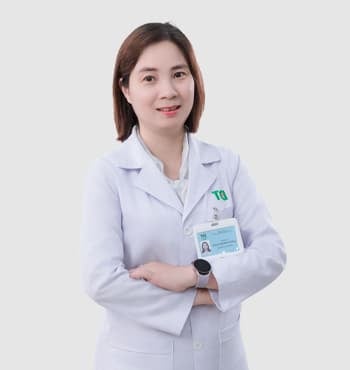
MSc, MD Pham Khanh Hong
MD, MSc Pham Khanh Hong specializes in gastroscopy and colonoscopy, facilitating effective screening and management of gastrointestinal lesions. Dr. Hong currently works at the Functional Exploration – Gastrointestinal Endoscopy Department of Thu Cuc TCI General Clinic (32 Dai Tu facility).
Position: Endoscopist - Gastroenterology, Thu Cuc TCI General Clinic 32 Dai Tu
Languages: Vietnamese, English
Eco Lake View, 32 Dai Tu, Hoang Mai Ward, Hanoi, Hanoi
Mon - Sun: 08:00-12:00, 13:30-17:00
About MSc, MD Pham Khanh Hong
MD, MSc Pham Khanh Hong currently works at the Functional Exploration – Gastrointestinal Endoscopy Department of Thu Cuc TCI General Clinic (32 Dai Tu, Hoang Mai). Dr. Hong graduated as a General Practitioner and completed the Master’s program in Internal Medicine at Hanoi Medical University Hospital.
With over 20 years of extensive experience, Dr. Pham Khanh Hong possesses a profound professional foundation in internal medicine and gastrointestinal pathology. Beyond this, Dr. Hong received formal training in the Intensive Care Unit and completed specialized certificates in Gastroscopy and Colonoscopy at Bach Mai Hospital - Campus 1 - Hanoi. The combination of an emergency physician's sharp clinical thinking, precise endoscopic technique, and a warm, approachable demeanor has made Dr. Hong a solid health anchor, trusted by many patients.
Diseases examined and treated by the doctor
MD, MSc Pham Khanh Hong performs clinical examinations, diagnostic endoscopy, and effective treatment for the following groups of diseases:
- Gastroduodenal diseases: Examination and treatment of gastroduodenal ulcer, gastroesophageal reflux disease (GERD), and Helicobacter pylori (HP) infection using standard medical regimens.
- Colorectal diseases: Diagnosis, monitoring, and treatment of irritable bowel syndrome (IBS), spastic colon, ulcerative colitis, and early detection of colorectal polyps via colonoscopy.
- Gastrointestinal cancer screening: Directly performing gastroscopy and colonoscopy, applying modern techniques for the early detection of premalignant lesions or very early-stage cancer in the esophagus, stomach, and colorectum.
- General internal medicine conditions: Examination and advice on treatment for common internal medicine diseases, gastrointestinal dysfunction, hepatobiliary disorders, and coordination of initial management of emergency internal medicine conditions based on extensive resuscitation experience.
Guide to booking appointments and the examination process with MD, MSc Pham Khanh Hong
- Step 1: Make an appointment in advance via the Bcare system (call the hotline or register online) to choose a suitable examination time slot, receive a priority code at the 32 Dai Tu facility, and minimize waiting time.
- Step 2: Arrive at the reception desk of Thu Cuc TCI General Clinic (address: 32 Dai Tu) on time for the appointment. Healthcare professionals will assist you in verifying information, completing initial records, and guiding you to the clinical examination room.
- Step 3: Enter the examination room to meet MD Pham Khanh Hong directly. Please clearly share with the doctor about your current symptoms (abdominal pain, acid reflux, weight loss, altered bowel habit...), past medical history, and medications currently being used. The doctor will perform a clinical examination and order appropriate paraclinical tests (such as endoscopy, blood tests, ultrasound).
- Step 4: Move to the specialty area to undergo the ordered procedures. If gastroscopy/colonoscopy is indicated, you will be guided on bowel preparation, blood tests, and electrocardiogram measurement to ensure safety conditions are met before entering the endoscopy suite.
- Step 5: Bring the paraclinical results back to the original examination room. Dr. Hong will analyze the endoscopic images in detail, conclude the diagnosis, prescribe medication, and provide specific advice on diet, lifestyle, and scheduled follow-up visits.
Important notes when preparing for gastrointestinal endoscopy:
- Patients must fast completely for at least 6-8 hours before the endoscopy to ensure an empty stomach, allowing the doctor to clearly observe lesions. If choosing sedated endoscopy (painless), you must also refrain from drinking water for at least 2-4 hours before the procedure to avoid the risk of aspiration into the airway.
- For colonoscopy, you need to use bowel evacuation medication according to healthcare professional instructions starting the day before or several hours before the procedure until stool output is clear.
- Please bring your prescription and recent medical records. If you are taking anticoagulants, medication for cardiovascular disease, hypertension, or diabetes mellitus, notify Dr. Hong immediately during the clinical examination so that safe temporary discontinuation of medication can be advised prior to the endoscopy.
- If opting for sedated endoscopy, patients are required to have a patient's family member accompany them to drive them home. Do not drive yourself after waking up from anesthesia, as the anesthetic agents may temporarily affect alertness.
Frequently Asked Questions
How is Helicobacter pylori (HP) bacteria transmitted, and why is curative therapy necessary?
HP bacteria are one of the causes of gastroduodenal ulcer and increase malignancy risk for gastric cancer. They spread primarily through the "oral-oral" route (sharing bowls/chopsticks, dipping food in shared sauce, direct kissing) and the "fecal-oral" route (due to poor hand hygiene after using the toilet or consumption of infected food). Curative therapy for HP using combined antibiotic regimens is essential to heal ulcers, prevent complications such as bleeding and gastric perforation, and significantly reduce the risk of progression to gastric cancer in the future.
What is the difference between conventional gastrointestinal endoscopy and sedated endoscopy (painless)?
Conventional endoscopy is performed while the patient is fully awake. During the procedure, the patient may experience choking sensations, nausea (during gastroscopy), or abdominal distention and discomfort (during colonoscopy) due to the movement of the endoscope. In contrast, sedated endoscopy (painless) involves inducing a short, gentle sleep in the patient using intravenous anesthetics at sufficient dosage. The procedure proceeds very smoothly; the patient experiences no malaise, pain, or fear. Additionally, relieving psychological pressure helps the doctor observe carefully and perform procedures (such as polypectomy, biopsy) most accurately and safely.
Is Irritable Bowel Syndrome (IBS) dangerous, and how can symptom flares be limited?
IBS is a functional disorder of the colon, characterized by recurrent abdominal pain, flatulence, constipation, or diarrhea, but it does not cause organic lesions or inflammation of the intestinal mucosa. IBS is a benign condition that is nonprogressive toward cancer and is not life-threatening, but it greatly affects quality of life. To limit flares, patients need to manage psychological stress well, avoid irritant foods such as spicy dishes, alcohol, coffee, milk, and high-fat foods, while increasing dietary fiber intake and maintaining regular physical activity.
Professional strengths
Workplace
- •Thu Cuc TCI General Clinic 32 Dai Tu
Experience
- •Has 15 years of experience as an Attending physician in the Gastroenterology Department, Thanh Nhan Hospital.
- •Currently working at the Functional Exploration – Gastrointestinal Endoscopy Department, Thu Cuc TCI General Clinic 32 Dai Tu.
Education & training
- •2005: Graduated as a General Practitioner, Hanoi Medical University Hospital.
- •2006 – 2006: Physician training at the Intensive Care Unit – Thanh Nhan Hospital.
- •2015: Graduated with a Master’s degree in Internal Medicine at Hanoi Medical University Hospital.