
Assoc. Prof., PhD, MD Pham Thi Hong Thi
People's Physician, Meritorious Physician, Associate Professor, PhD Pham Thi Hong Thi is one of the most experienced experts in Cardiology in Vietnam with more than 40 years of experience. She is the former Vice Director of the Institute of Cardiovascular Diseases at Bach Mai Hospital - Campus 1 - Hanoi, and has also been involved in training generations of physicians at major universities such as Hanoi Medical University Hospital and the Military Medical Academy.
Position: Former Vice Director of the Institute of Cardiovascular Diseases, Bach Mai Hospital - Campus 1 - Hanoi
Languages: Vietnamese, English
So 42, 44 Nghia Dung, Ba Dinh Ward, Hanoi, Hanoi
Wed: 07:00-12:00
371.000đ
About Assoc. Prof., PhD, MD Pham Thi Hong Thi
People's Physician, Meritorious Physician, Associate Professor, PhD Pham Thi Hong Thi is one of the most experienced experts in Cardiology in Vietnam with more than 40 years of dedicated medical service. She previously held a core leadership position as the former Vice Director of the Institute of Cardiovascular Diseases at Bach Mai Hospital - Campus 1 - Hanoi, while also participating in the training of generations of physicians at major universities such as Hanoi Medical University Hospital and the Military Medical Academy. For her significant contributions to national medicine, she was awarded prestigious titles including People's Physician (2017), Meritorious Physician (2008), Third-Class Labor Order (2018), along with numerous certificates of merit from the Prime Minister and the Ministry of Health.
Appointment Schedule for Associate Professor, PhD Pham Thi Hong Thi
Dong Do Eye Hospital
- Tuesday mornings and Thursday mornings weekly: 8:00 AM - 12:00 PM
MEDLATEC General Hospital - Nghia Dung, Hanoi
- Wednesday mornings weekly: 8:00 AM - 12:00 PM
Experience in Treating Difficult Cases by Associate Professor, PhD Pham Thi Hong Thi
Possessing academic qualifications with an Associate Professor and PhD degree in Cardiology, along with time spent as an advanced fellow in France, People's Physician, Meritorious Physician, Associate Professor, PhD Pham Thi Hong Thi has particular strengths in diagnosing and treating complex cardiovascular diseases:
- Examination, in-depth diagnosis, and establishment of treatment regimens for patients with rheumatic fever and rheumatic heart disease – a field in which she served for many years as Head of the specialized research department at the Institute of Cardiovascular Diseases, Bach Mai Hospital - Campus 1 - Hanoi.
- Application of advanced electrocardiogram techniques to accurately predict the site of coronary artery occlusion in patients with acute anterior septal myocardial infarction, helping guide timely percutaneous coronary intervention to save damaged myocardium.
- Screening, assessment, and risk prediction of future coronary artery disease based on advanced medical scores (such as the Framingham risk score), helping patients proactively prevent acute cardiovascular events.
- In-depth application of echocardiography techniques to accurately diagnose cardiomyopathy, valvular heart disease, heart failure, and other complex cardiovascular anomalies.
- Comprehensive clinical management for severe cardiovascular cases, patients requiring customized treatment involving high-technical internal medicine multi-regimen coordination.
Guidance on Booking Appointments and Examination Procedures with Associate Professor, PhD Pham Thi Hong Thi
- Step 1: Make an appointment via Bcare by calling the hotline or filling in booking information on the system to obtain a priority queue number, helping proactively choose a suitable time slot and minimize waiting time upon arrival at the facility.
- Step 2: Arrive to verify the booked appointment at the reception desk of the facility so that support staff can check information, complete initial administrative procedures, and receive a referral slip to enter the physician's clinic.
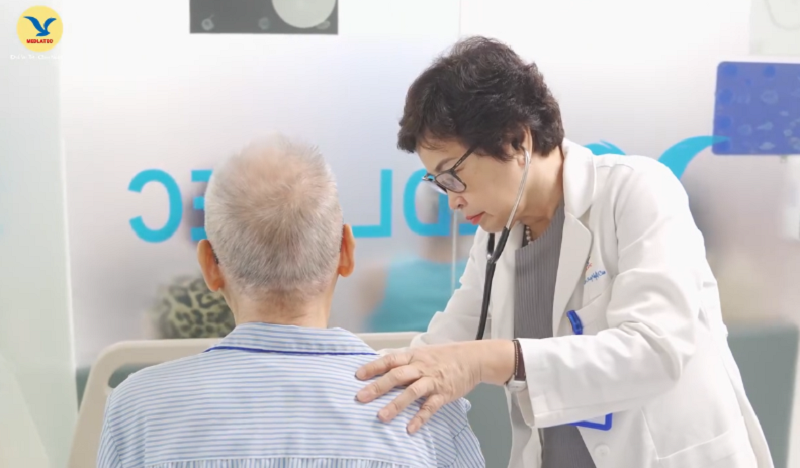
- Step 3: Enter the clinic to meet the physician directly for the first step of clinical examination; the physician will perform blood pressure measurement, auscultation, thoroughly elicit symptoms such as chest pain, dyspnoea, palpitation, or family history of heart disease.
- Step 4: Move to functional rooms to undergo paraclinical tests ordered by the physician, including: electrocardiogram (ECG), diagnostic Doppler echocardiography, frontal chest X-ray, blood tests to assess lipid profile (Cholesterol, Triglyceride), liver function, kidney function, or cardiac enzyme indices.
- Step 5: Bring all test results back to the original clinic; the physician will carefully analyze biochemical indices and ultrasound images, provide the most accurate diagnostic conclusion, prescribe medication for medical treatment, or advise on specialized intervention if indicated.
Notes Before Going for Examination
- Patients need to bring all previous medical records, ECG recordings, echocardiography results, or discs of previous coronary angiograms, along with current prescriptions used at home, to allow the physician to continuously assess disease progression.
- If there are indications for blood tests to check lipid profiles or blood glucose, patients should note fasting for 6 to 8 hours before coming for the examination to ensure the accuracy of the results.
- Since Associate Professor, PhD Pham Thi Hong Thi is deeply involved in concurrent teaching duties at major medical schools and professional panels, the clinical examination schedule may change depending on the week; patients should proactively book appointments via the Bcare system to have allied health professionals confirm the physician's actual available slots.
Frequently Asked Questions
What is rheumatic fever and why does this disease dangerously affect the patient's cardiac valves?
Rheumatic fever (or rheumatic fever) is an autoimmune inflammatory disease, typically initiating after an episode of pharyngitis caused by Group A Streptococcus infection that was not treated with curative therapy. When the body's immune system generates antibodies against the bacteria, it mistakenly attacks the body's structural tissues, particularly the cardiac valves. This prolonged inflammatory process causes the cardiac valves (such as the mitral valve, aortic valve) to thicken, fibrose, and fuse commissures, leading to complications of valvular stenosis, valvular regurgitation, heart failure, and dangerous cardiac arrhythmia if not detected and prophylaxed early.
For whom is the Framingham risk score for predicting coronary artery disease applied, and what is its significance?
The Framingham risk score is a reputable medical tool applied to estimate the risk of coronary artery events (such as angina pectoris, myocardial infarction) within the next 10 years for subjects without a clear history of heart disease. This score calculates based on the patient's risk factors including: age, gender, systolic blood pressure reading, blood cholesterol level, smoking status, and diabetes history. The predictive result helps the physician formulate lifestyle intervention regimens or early medication control to maximally prevent the risk of myocardial infarction.
What important principles do chronic cardiovascular patients need to keep in mind when using internal medicine medications at home?
Cardiovascular treatment patients require absolute compliance with taking medication at the correct dosage, at fixed daily times according to the physician's prescription. They must not voluntarily increase, decrease dose, or abruptly stop medication (especially antihypertensive agents, anticoagulants, or inotropic agents) even if they feel symptoms have remitted. Voluntary changes in medication can lead to critical complications such as paroxysmal hypertension, subsequent myocardial infarction, or dangerous hemorrhage. Patients need scheduled follow-up visits as appointed so the physician can adjust the therapeutic dose appropriate to their actual habitus.
Workplace
- •Dong Do Eye Hospital
- •MEDLATEC Healthcare System
Experience
- •1982 - 1992: Physician, Department of Cardiology, Bach Mai Hospital - Campus 1 - Hanoi.
- •1993 - 1994: Fellow in Cardiology, Robert Debre Hospital (French Republic).
- •1994 - 2010: Head of the Department of Research on Rheumatic Fever and Rheumatic Heart Disease, Institute of Cardiovascular Diseases, Bach Mai Hospital - Campus 1 - Hanoi.
- •2008 - 2013: Vice Director of the Institute of Cardiovascular Diseases, Bach Mai Hospital - Campus 1 - Hanoi.
- •2011 - 2014: Head of the On-Demand Treatment Unit - C9, Institute of Cardiovascular Diseases, Bach Mai Hospital - Campus 1 - Hanoi.
- •2014 - 2021: Senior Expert, Institute of Cardiovascular Diseases, Bach Mai Hospital - Campus 1 - Hanoi.
- •2007 - 2021: Concurrent Lecturer, Department of Cardio-Renal-Joint-Endocrine (now the Center for Cardiovascular Diseases Department), Military Medical Academy.
- •2017 - 2021: Full-time Lecturer, Thang Long University.
- •2016 - present: Concurrent Lecturer, Department of Cardiology, Hanoi Medical University Hospital.
Awards & recognition
- •9 Certificates of Merit from the Ministry of Health.
- •1987: Certificate of Merit from the Vietnam Health Sector Trade Union.
- •2008: Meritorious Physician.
- •2017: People's Physician.
- •2014: Certificate of Merit from the Prime Minister.
- •2011 and 2015: Title of Ministry-Level Emulation Fighter.
- •2018: Third-Class Labor Order.
Education & training
- •1976 - 1982: General Practitioner, Pediatrics Internal Medicine specialty, Hanoi Medical University Hospital.
- •1988 - 1989: MD, Specialist Level I Internal Medicine, Hanoi Medical University Hospital.
- •1993 - 1994: Fellow in Cardiology, Robert Debre Hospital (French Republic).
- •1997 - 2000: Master of Cardiology, Hanoi Medical University Hospital.
- •2001 - 2005: PhD Candidate in Cardiology, Hanoi Medical University Hospital.