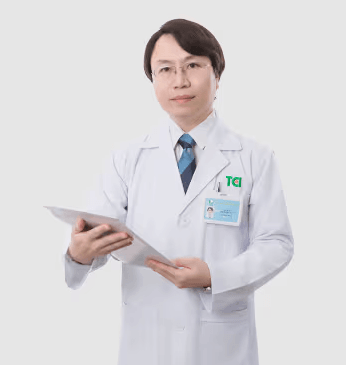
Specialist Level I Doctor Phí Văn Tự
Dr. Phí Văn Tự, MD, Specialist Level I, is a reputable expert in General Surgery and currently serves as Deputy Head of the Department of General Surgery at Thu Cuc International General Hospital. With over 10 years of extensive experience, he is known as a pioneer in applying advanced Diode Laser Hemorrhoidoplasty, directly achieving successful treatment for thousands of cases ranging from simple to complex.
Position: Deputy Head of the Department of General Surgery - Thu Cuc International General Hospital
Languages: Vietnamese, English
286 Thuy Khue, Ba Dinh Ward, Hanoi, Hanoi
Mon - Sun: 06:30-12:00, 13:30-20:00
About Specialist Level I Doctor Phí Văn Tự
Dr. Phí Văn Tự, MD, Specialist Level I, is a reputable expert in General Surgery and currently serves as Deputy Head of the Department of General Surgery at Thu Cuc International General Hospital. With over 10 years of extensive experience, he is known as a pioneer in applying advanced Diode Laser Hemorrhoidoplasty, directly achieving successful treatment for thousands of cases ranging from simple to complex.
The dedication and high professional skill of Dr. Phí Văn Tự, MD, Specialist Level I, have helped many patients overcome pain concerns, recover quickly, and regain confidence in their daily lives.
Conditions Diagnosed and Treated by the Physician
Dr. Phí Văn Tự, MD, Specialist Level I, specializes in examining, consulting, and directly performing surgical interventions to effectively treat conditions including:
- Performing examinations, differential diagnosis, and treatment of various types of hemorrhoids, including internal hemorrhoids, external hemorrhoids, and mixed hemorrhoids, ranging from mild grades to complex cases involving prolapsed and strangulated hemorrhoids.
- Directly applying modern Diode Laser Hemorrhoidoplasty technology to minimize pain, limit invasiveness, and shorten recovery time for patients.
- Diagnosing and surgically treating common anorectal conditions such as anal fistula, anal fissure, and perianal abscess.
- Performing clinical examinations and ordering paraclinical tests for early detection of malformations or abnormalities in the lower gastrointestinal tract.
- Advising on recurrence prevention measures for hemorrhoids, establishing scientific lifestyle and nutrition plans, and closely monitoring patient health postoperatively.
Guide to Booking Appointments and Examination Procedures with Dr. Phí Văn Tự, MD, Specialist Level I
- Step 1: Make an appointment via Bcare by calling the hotline or filling out the booking information on the system to obtain priority status and proactively select an examination time slot suitable for your personal schedule.
- Step 2: Arrive to verify the scheduled appointment at the reception desk of Thu Cuc International General Hospital so that healthcare professionals can confirm information, print the examination slip, and guide you to the physician's clinic.
- Step 3: Enter the clinic to meet the physician directly, present your health status, symptoms experienced, past medical history (personal and family), and undergo a clinical examination.
- Step 4: Move to functional departments to perform ordered paraclinical tests such as blood tests, ultrasound, radiography, computed tomography (CT)/magnetic resonance imaging (MRI), or biopsy as required by the physician.
- Step 5: Return to the initial clinic to receive the physician's interpretation of paraclinical results, obtain a definitive diagnosis, consult on an appropriate treatment regimen, and receive a prescription (if applicable).
Notes Before the Appointment
- Bring all previous medical records, endoscopy results, current prescriptions, or relevant imaging films to provide the physician with a basis for accurately assessing disease progression history.
- Maintain clean personal hygiene of the anal region before the appointment to ensure the clinical examination proceeds smoothly, quickly, and meets epidemiological hygiene standards.
- Fast or refrain from eating for at least 6 hours before the appointment if there is a possibility of requiring proctoscopy or specialized blood tests as indicated.
- Wear loose, comfortable clothing, preferably pants with good elasticity, to facilitate cooperation during anorectal examination procedures.
- Proactively prepare questions about your uncomfortable symptoms beforehand to discuss directly with the physician in order to receive the most useful advice.
Frequently Asked Questions
What are the superior advantages of Diode Laser Hemorrhoidoplasty compared to traditional hemorrhoidectomy?
Diode Laser Hemorrhoidoplasty is a minimally invasive technique using laser light energy to coagulate the blood vessels supplying the hemorrhoidal tissue, causing the hemorrhoids to shrink naturally without the need for wide incisions. The superior advantages of this method include minimizing pain sensation both during and after the procedure, limiting bleeding, avoiding damage to the anal sphincter, and enabling patients to ambulate and resume normal activities quickly without requiring prolonged hospital admission.
If anal fistula is not treated early with surgery, what dangerous complications may occur?
Anal fistula is a chronic infection condition creating tracts connecting the rectum to the perianal skin. Delaying surgical treatment leads to widespread infection and the formation of multiple new complex tracts (multiple fistulas). More serious complications include prolonged suppurative discharge causing ulcerative inflammation and necrosis of surrounding tissue, increasing the risk of bloodstream infection, and potentially progressing to cancer of the anorectal region after many years if not definitively managed.
After undergoing hemorrhoid treatment intervention, how should patients care for the anal area at home?
After hemorrhoid treatment intervention, patients must pay attention to cleaning the anal area with clean tepid water or performing sitz baths exactly as instructed by the physician. Absolutely avoid rubbing vigorously with rough dry paper, which can easily cause bleeding. Additionally, adhere to a high-fiber diet, drink plenty of fluids to prevent constipation, avoid straining during defecation, combine gentle ambulation, and take medication according to the prescribed dosage to help the wound heal completely.
Professional strengths
Workplace
- •Thu Cuc International General Hospital
Experience
- •2008 – 2018: Physician, Department of General Surgery – Son Tay General Hospital
- •2018 – 2021: Physician, Department of General Surgery – Thu Cuc International General Hospital
- •2021 – Present: Deputy Head of the Department of General Surgery, Thu Cuc International General Hospital
Education & training
- •2008: Graduated as a General Practitioner – Thai Binh University of Medicine
- •2011: Certificate in Endoscopic Surgery Training – Saint Paul General Hospital
- •2013: Certificate in Surgical Treatment of Hemorrhoids – Viet Duc University Hospital
- •2015: Graduated as MD, Specialist Level I in General Surgery – Hanoi Medical University Hospital
- •2016: Certificate in Experimental Endoscopic Surgery – Saint Paul General Hospital