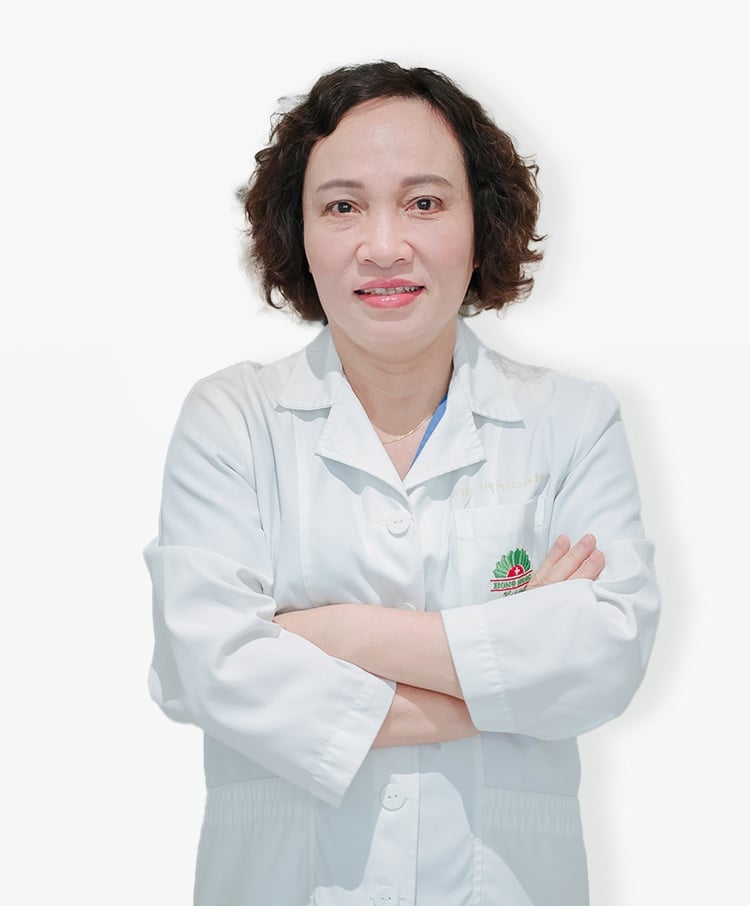
Specialist Level II Doctor Phung Thi Phuong Anh
MD, MSc, Specialist Level II. Phung Thi Phuong Anh is a pulmonology expert with exceptional strengths in early screening for bronchogenic carcinoma, treatment of dangerous chronic pulmonary disorders, and advanced management of Aspergillus mycetoma complications.
Position: Pulmonologist - Hong Ngoc Phuc Truong Minh General Hospital
Languages: Vietnamese, English
So 8 duong Chau Van Liem, Tu Liem Ward, Hanoi, Hanoi
Mon - Sun: 07:30-12:00, 13:30-17:00
About Specialist Level II Doctor Phung Thi Phuong Anh
MD, MSc, Specialist Level II. Phung Thi Phuong Anh is one of the reputable and experienced professionals in the field of Internal Medicine and Tuberculosis in Vietnam. The physician possesses an excellent formal training foundation from the Military Medical Academy, having received a Master of Medicine degree and a Specialist Level II degree in Tuberculosis from Hanoi Medical University.
With nearly 40 years of service in the medical industry, including 20 years serving as an attending physician at the Outpatient Department – National Lung Hospital, and currently as a specialist physician in Internal Medicine at Hong Ngoc General Hospital, the physician is renowned for keen clinical diagnostic capabilities. As an active member of the Vietnam Respiratory Society and the Vietnam Pulmonary Society, the physician has contributed numerous valuable research studies on bronchogenic carcinoma and Aspergillus mycetoma, providing effective treatment regimens for thousands of patients.
When should you make an appointment with Dr. Phung Thi Phuong Anh?
Patients should proactively make an appointment for an in-person examination with MD, MSc, Specialist Level II. Phung Thi Phuong Anh when abnormal signs of the respiratory tract appear or when there are the following medical needs:
- Persistent cough lasting more than 3 weeks of unknown etiology, productive cough with viscous mucus, hemoptysis, or frequent chest tightness during breathing.
- Appearance of dyspnoea, wheezing, shortness of breath upon exercise, or signs suggestive of bronchial asthma or chronic obstructive pulmonary disease (COPD).
- Low-grade fever in the afternoon lasting for a prolonged period, night sweats, rapid weight loss suggesting tuberculosis infection or extrapulmonary tuberculosis forms.
- History of previous lung lesions (such as tuberculous cavities, lung cysts) requiring periodic screening for Aspergillus mycetoma complications.
- Need for early screening for bronchogenic carcinoma or intensive diagnosis of abnormalities in the lung parenchyma based on updated histopathologic studies.
Guidance on making appointments and the examination procedure with Dr. Phung Thi Phuong Anh
- Step 1: Make an appointment via Bcare by calling the hotline or filling out the appointment information on the system to obtain a priority number and proactively select a time slot suitable for your personal schedule.
- Step 2: Arrive to verify the scheduled appointment at the reception desk of the facility according to the registered time to quickly complete the information confirmation procedures.
- Step 3: Move to the Specialty Clinic for Pulmonology as directed by healthcare professionals to undergo a direct clinical examination by the physician.
- Step 4: Perform intensive paraclinical indications such as radiography, Chest CT, spirometry, or sputum examinations to detect mycobacterium as per the direct medical order from the physician.
- Step 5: Return to the initial clinic to hear the diagnostic conclusion, receive the appropriate internal medicine prescription, and guidance on long-term disease monitoring.
Notes before going for an examination
- Patients need to bring all health records, laboratory results for sputum examination, Chest CT images, and the most recent prescriptions currently being used.
- Please specifically note the initiation time and frequency of symptoms such as cough, fever, or dyspnoea to provide accurate information to the physician.
- Patients should avoid using inhaled bronchodilators or sprays 4 to 6 hours before undergoing spirometry.
- Please wear loose-fitting clothing that facilitates easy auscultation of the heart and lungs in the pectoral region and back by the physician.
- Proactively arrive approximately 10 to 15 minutes earlier than the appointment time to complete confirmation procedures and verify information at the reception desk.
Frequently Asked Questions
How does Aspergillus mycetoma develop and what is used for early disease detection?
Aspergillus mycetoma is essentially the development of fungal spores within pre-existing cavities or residual spaces in the lungs left by old injuries, most commonly old tuberculous cavities or bronchiectasis. For early detection, the physician will rely on clinical symptoms such as persistent hemoptysis (from small streaks of blood to large amounts), persistent dry cough combined with radiology. Chest CT images will show the characteristic "air crescent" sign surrounding the fungus ball inside the pulmonary cavity, helping the physician accurately determine the pathology.
What value does studying the histopathologic characteristics of bronchogenic carcinoma bring to patients who have undergone surgery?
For patients with bronchogenic carcinoma who have undergone tumor resection, performing a histopathologic examination (anatomic pathology of tissue specimens) is extremely important to accurately determine the cellular subtype and assess how far malignant cells have invaded, and whether the surgical margins are clear. This result helps the physician accurately diagnose the post-operative disease stage, thereby prognosticating recurrence risk and deciding whether adjuvant therapy with chemotherapy or radiation therapy is needed to optimize survival time for the patient.
Can pulmonary tuberculosis be completely cured and what medication compliance regimen must patients follow?
Pulmonary tuberculosis can absolutely be completely cured if detected timely and treated correctly. The vital principle in antituberculosis therapy is that patients must strictly adhere to the multi-drug regimen of tuberculostatic agents as directed by the specialist physician, taking medication orally at the correct dosage, at the correct time of day, and for the full duration (usually extending from 6 to 9 months). Patients must absolutely not voluntarily reduce the dose or stop taking medication midway when symptoms like cough and fever remit, as this will lead to extremely dangerous and refractory drug-resistant tuberculosis complications.
Professional strengths
Workplace
- •Hong Ngoc Phuc Truong Minh General Hospital
Experience
- •Years 1987-1990: Physician - Engineering Command.
- •Years 2000 - 2020: Attending physician in the Outpatient Department - National Lung Hospital.
- •Years 2021 - present: Specialist Level II Physician in Internal Medicine - Outpatient Department, Hong Ngoc Phuc Truong Minh General Hospital.
- •Member of the Vietnam Respiratory Society and the Vietnam Pulmonary Society.
Education & training
- •From 1983 - 1989: Undergraduate - Military Medical Academy
- •Year 1999: Master of Medicine - Hanoi Medical University
- •Years 2009 - 2011: Specialist Level II Physician in Tuberculosis - Hanoi Medical University