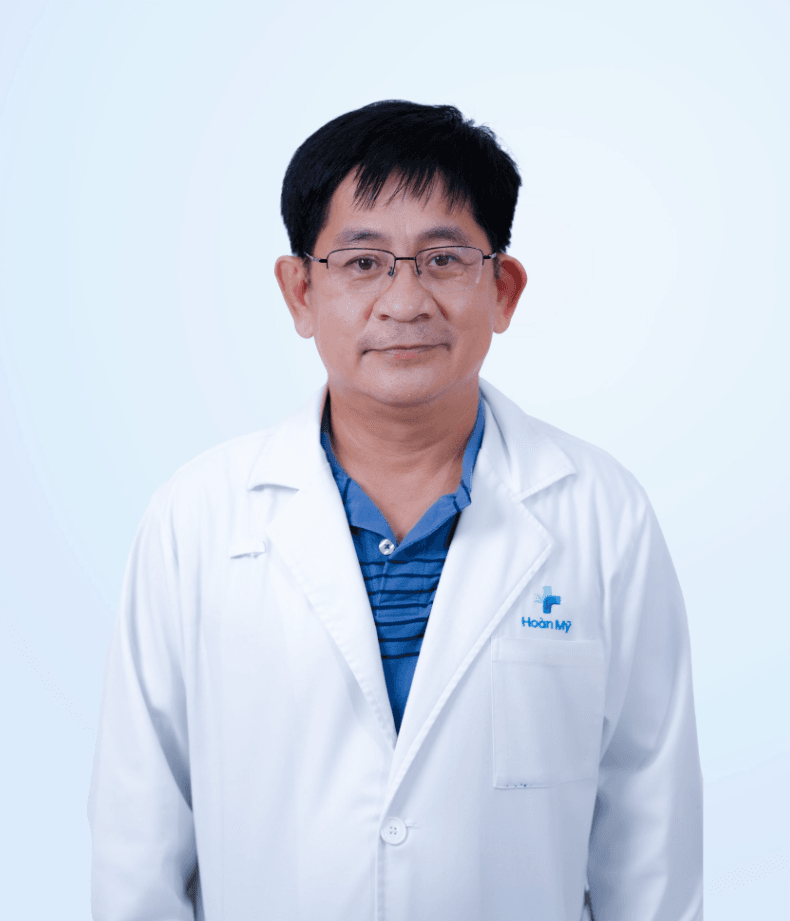
Doctor (MD) Tran Minh Hau
Dr. Tran Minh Hau has more than 30 years of experience in diagnosing and treating cardiovascular internal medicine and interventional cardiology conditions.
Position: Cardiologist, Hoan My Cuu Long Hospital
Languages: Vietnamese, English
Lo 20, Duong Vo Nguyen Giap, Hung Phu Ward, Can Tho, Can Tho
Mon - Sat: 06:00-17:00
Sun: 06:00-11:20
About Doctor (MD) Tran Minh Hau
Dr. Tran Minh Hau is one of the leading experts in Cardiology and Interventional Cardiology with an excellent international training background. He graduated as a Doctor of Medicine from Can Tho University and Ross University (USA).
Currently, he serves as an Attending Physician at the Department of Cardiology, Hoan My Cuu Long General Hospital. With over 30 years of clinical experience, he has successfully performed interventions and treated numerous complex cardiovascular cases.
Conditions Diagnosed and Treated by the Physician
With extensive experience in both the United States and Vietnam, Dr. Tran Minh Hau specializes in examining, consulting on, and treating the following groups of diseases:
- Coronary artery disease, myocardial ischemia, acute and chronic angina pectoris.
- Stenosis or occlusion of peripheral vascular systems in the limbs.
- Cardiac arrhythmias, heart failure, cardiomyopathy, and valvular heart disease.
- Chronic hypertensive diseases, dyslipidemia, and atherosclerosis.
- Early screening for cardiovascular risk and development of preventive regimens for myocardial infarction.
- Intensive health monitoring and management for patients after stent placement.
Guide to Booking Appointments and Examination Procedures with Dr. Tran Minh Hau
To ensure a smooth examination process, please refer to the following steps:
Step 1: Book an appointment via the Bcare system. You can call the hotline or register online to receive priority queue numbers.
Step 2: Arrive at the hospital reception desk. Staff will assist you in verifying your appointment information and issuing a patient health booklet.
Step 3: Enter the clinic to see the physician. The doctor performs a clinical examination, conducts cardiac and pulmonary auscultation, and discusses your symptoms.
Step 4: Move to the paraclinical area. You undergo ordered tests such as electrocardiogram, echocardiography, or blood tests.
Step 5: Return to the initial clinic. The physician reviews the results, provides a definitive diagnosis, and advises on an appropriate treatment or intervention regimen.
Notes Before Your Visit
- You must fast completely before breakfast if blood tests for glucose or lipid profiles are required.
- Bring all previous medical records, electrocardiogram results, and current prescriptions for cardiovascular medications.
- Wear loose, comfortable clothing to facilitate the physician's examination and paraclinical procedures.
Frequently Asked Questions
How does Dr. Tran Minh Hau treat coronary artery disease using interventional cardiac catheterization?
Coronary artery disease causes luminal stenosis and obstructs blood flow to the heart. The physician applies interventional cardiac catheterization techniques to resolve this condition. A small catheter is inserted through a blood vessel in the arm or thigh to reach the site of stenosis. Subsequently, the physician performs balloon dilation and places a stent to keep the lumen patent. This minimally invasive method helps patients experience immediate relief from chest pain and rapid recovery.
When should patients seek medical attention for peripheral vascular disease?
You should seek immediate care if you experience pain, numbness, fatigue, or muscle cramps in the legs while walking. These symptoms typically subside when you stop to rest. These are classic manifestations of peripheral vascular occlusive disease. The physician has deep expertise in peripheral vascular intervention from Cho Ray Hospital. He will help recanalize blood flow to nourish the limbs and prevent the risk of necrosis.
How does the physician manage and treat hypertension along with associated cardiovascular risks?
Hypertension is a leading cause of heart failure and stroke. The physician develops an individualized treatment regimen for each patient. In addition to optimizing antihypertensive drug therapy, the physician consistently focuses on controlling lipid levels. Patients also receive thorough counseling on sodium-restricted diets and healthy lifestyles. Synchronized treatment helps maintain stable blood pressure and provides comprehensive cardioprotection.
What advantages do his work experiences in the US and major hospitals bring to his treatment approach?
The physician worked at CJW Medical Center (USA) from 2006 to 2009. Concurrently, he held key leadership positions at Hoan My Cuu Long General Hospital. Exposure to advanced medicine has equipped him with precise clinical reasoning. He consistently updates himself with the latest international treatment regimens. This acuity enhances the success rate of treating critical cardiovascular cases.
Professional strengths
Workplace
- •Hoan My Cuu Long Hospital
Experience
- •1/ Attending Physician, CJW Medical Center, USA, 2006 – 2009.
- •2/ Head of Department of Cardiology – CCU, Hoan My Cuu Long General Hospital, 2009 to 2018.
- •3/ Deputy Head of Department of Cardiology, Hoan My Cuu Long General Hospital, 2018 to March 2019.
- •4/ Attending Physician, Specialty in Cardiology, Hoan My Cuu Long General Hospital, April 2019 to present.
Education & training
- •1/ Doctor of Medicine, Can Tho University, 1993.
- •2/ Doctor of Medicine, Ross University (USA), 2005.
- •3/ Specialty Orientation in Cardiology, Cho Ray Hospital, 2010.
- •Postgraduate Training:
- •1/ Bachelor of Science in Biochemistry, Virginia Polytechnic Institute & State University, USA, 1999.
- •2/ Bachelor of Chemistry, Virginia Polytechnic Institute & State University, USA, 1999.
- •3/ Interventional Cardiac Catheterization, Ho Chi Minh City Heart Institute, 2012.
- •4/ Hospital Management, Ho Chi Minh City Public Health Institute, 2016.
- •5/ Interventional Cardiac Catheterization Conference, Bayer South East Asia, 2014.
- •6/ Summary of Percutaneous Coronary Intervention, Can Tho Central General Hospital, 2014.
- •7/ Radiation Safety in Diagnostic X-ray, Agency for Radiation and Nuclear Safety, 2017.
- •8/ Radiation Safety in Healthcare, Agency for Radiation and Nuclear Safety, 2014.
- •9/ Supplementary Knowledge on "Peripheral Vascular Intervention," Cho Ray Hospital, 2015.
- •10/ Updates on New Knowledge in General Cardiology and Interventional Cardiology, Ho Chi Minh City Society of Interventional Cardiology, 2015.