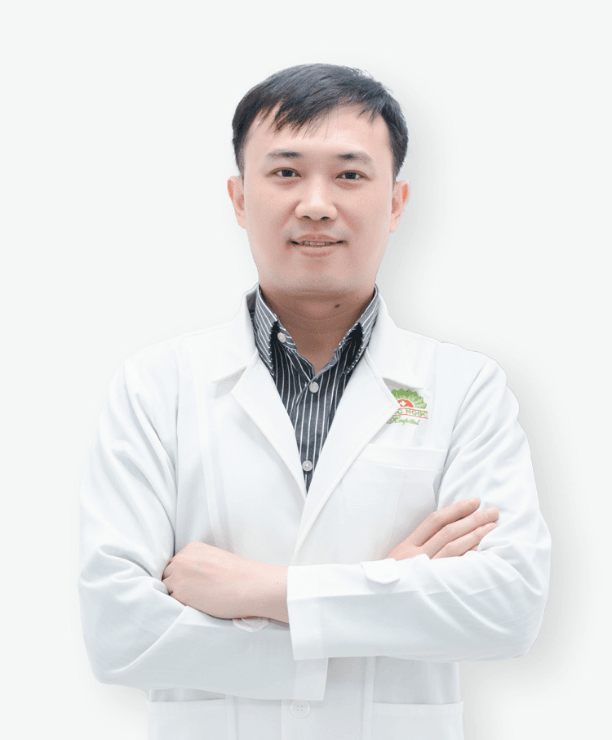
Specialist Level II Doctor Tran Ngoc Tung
MD, MSc, Specialist Level II Tran Ngoc Tung has outstanding strengths in the diagnosis, screening, and development of comprehensive treatment regimens for autoimmune, degenerative, infectious, endocrine, or vascular-neurological disorders related to the locomotor system.
Position: Musculoskeletal Physician, Hong Ngoc Phuc Truong Minh General Hospital
Languages: Vietnamese, English
So 8 duong Chau Van Liem, Tu Liem Ward, Hanoi, Hanoi
Mon - Sun: 07:30-12:00, 13:30-17:00
About Specialist Level II Doctor Tran Ngoc Tung
MD, MSc, Specialist Level II Tran Ngoc Tung is a leading expert with a high-level professional foundation, holding a Master’s degree in Internal Medicine and a Specialist Level II Physician degree in Internal Medicine - Musculoskeletal. The physician's outstanding strengths lie in the diagnosis, screening, and development of comprehensive treatment regimens for autoimmune, degenerative, infectious, endocrine, or vascular-neurological disorders related to the locomotor system.
In particular, the physician has superior strengths in performing advanced conservative treatment procedures such as intra-articular injections, joint aspiration, and enthesis injections, along with intensive scientific research capabilities demonstrated through studies on knee arthroscopy for the treatment of synovial chondromatosis and gout at Bach Mai Hospital - Campus 1 - Hanoi and Hanoi Medical University Hospital.
What conditions does Dr. Tran Ngoc Tung specialize in treating?
With extensive experience working in the Department of Musculoskeletal at Bach Mai Hospital - Campus 1 - Hanoi and continuous knowledge updates from international conferences, MD, MSc, Specialist Level II Tran Ngoc Tung specializes in the comprehensive screening, diagnosis, and treatment of the following groups of diseases:
- Autoimmune and degenerative arthropathies, including rheumatoid arthritis, ankylosing spondylitis, knee osteoarthritis, and shoulder osteoarthritis.
- Septic arthritis and endocrine disorders such as gout or arthritis associated with diabetes mellitus.
- Arthropathies arising from vascular-neurological disorders, typically sciatica and carpal tunnel syndrome.
- Soft tissue disorders and bone or cartilage abnormalities, including tenosynovitis, plantar fasciitis, and osteoporosis.
- Directly performing advanced conservative treatment procedures for the locomotor system, such as intra-articular injections, joint aspiration, and enthesis injections.
Guide to making an appointment and the examination process with MD, MSc, Specialist Level II Tran Ngoc Tung
- Step 1: Make an appointment via Bcare by calling the hotline or filling out the appointment form on the system to obtain a priority number and proactively select a time slot that fits your personal schedule.
- Step 2: Arrive at the reception desk to verify your scheduled appointment at the registered time to quickly complete the information confirmation procedures.
- Step 3: Proceed to the Musculoskeletal Specialty Clinic as directed by healthcare professionals for a direct clinical examination by the physician.
- Step 4: Undergo advanced paraclinical tests such as radiography, blood tests, ultrasound, or joint functional assessments as directly ordered by the physician.
- Step 5: Return to the initial clinic to receive the diagnostic conclusion, undergo indicated local conservative treatment procedures (if any), receive the prescription, and get the follow-up appointment schedule.
Notes before the visit
- Patients need to prepare and bring all medical records, laboratory results, imaging films, and recent musculoskeletal prescriptions currently in use.
- Please inform the physician in detail about symptoms such as pain, fatigue, joint swelling, disease onset time, and your personal drug allergy history.
- Choose loose, comfortable clothing or stretchy garments to allow the physician to easily perform the clinical examination or administer intra-articular injections.
- Patients may be required to undergo advanced blood tests during the examination process, so please fast before coming.
- It is recommended to arrive approximately 10 to 15 minutes earlier than the scheduled appointment time to complete verification and information matching procedures at the reception desk.
Frequently Asked Questions
What benefits do advanced conservative treatment procedures like intra-articular injection and joint aspiration provide to patients?
Advanced conservative treatment procedures, including intra-articular injections, joint aspiration, and enthesis injections, are highly effective local solutions for musculoskeletal disorders. The aspiration technique helps relieve pressure in effused joint cavities, immediately reducing the sensation of fullness, while intra-articular or enthesis injections deliver anti-inflammatory medication directly to the site of disorder. This method helps rapidly cut off pain, minimizes adverse effects compared to systemic oral medication, and supports patients in restoring flexible motor function.
How does gout affect the knee joint, and what are the benefits of correlating arthroscopic images?
Gout arises from metabolic-endocrine disorders, causing the deposition of urate crystals in joints, including the knee joint. Based on the physician's intensive research topic, correlating knee arthroscopy images with clinical and paraclinical features allows for a visual and accurate assessment of the extent of articular cartilage injury and synovial membrane damage caused by urate crystals. This is an important practical medical basis that helps the physician make accurate differential diagnoses and develop targeted treatment regimens for patients.
What should patients with arthropathies due to vascular-neurological disorders, such as sciatica, keep in mind?
Arthropathies due to vascular-neurological disorders, such as sciatica or carpal tunnel syndrome, are essentially caused by mechanical compression or injury to the nerves innervating the motor area. Patients often exhibit numbness and pain radiating along the nerve track, significantly affecting daily activities. When these signs appear, patients should seek specialty examination early so the physician can accurately determine the site of compression. This allows for the combination of medical treatment, spinal pain relief procedures, or timely conservative intervention to prevent complications such as muscle atrophy and limb weakness.
Professional strengths
Workplace
- •Hong Ngoc Phuc Truong Minh General Hospital
Experience
- •2016 - 2020: Department of Outpatient Services, Bach Mai Hospital - Campus 1 - Hanoi
- •2021 - present: Department of Musculoskeletal, Bach Mai Hospital - Campus 1 - Hanoi
- •2023 - present: Department of Musculoskeletal, Hong Ngoc Phuc Truong Minh General Hospital
Education & training
- •2002 - 2008: General Practitioner, Vietnam Military Medical University
- •2013 - 2015: Master’s degree in Internal Medicine, Hanoi Medical University Hospital
- •2013: Principal investigator of the study "Treatment of synovial chondromatosis of the knee joint via arthroscopy combined with minimal open surgery," Bach Mai Hospital - Campus 1 - Hanoi
- •2015: Principal investigator of the study "Correlation of knee arthroscopy images with clinical and paraclinical characteristics in gout patients," Hanoi Medical University Hospital
- •2025: Graduated as Specialist Level II Physician, majoring in Internal Medicine - Musculoskeletal