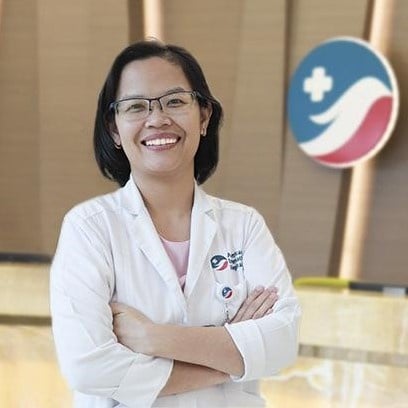
MSc, MD Tran Thi Lam
MD, MSc Tran Thi Lam has more than 15 years of experience in the field of Pediatrics and Neonatology, specializing in the treatment of newborns with pathological conditions such as prematurity, infection, surgical issues, and malformations.
Position: Senior Pediatric and Neonatal Physician, American International Hospital (AIH)
Languages: Vietnamese, English
So 6, Duong Bac Nam 3 (Loi vao 199 Nguyen Hoang), Binh Trung Ward, Ho Chi Minh City, Ho Chi Minh City
Mon - Fri: 08:00-12:00, 13:00-17:00
Sat: 08:00-12:00
750.000đ
About MSc, MD Tran Thi Lam
Dr. Tran Thi Lam has more than 15 years of experience in the field of Pediatrics and Neonatology and currently works in the Department of Pediatrics and Neonatology at American International Hospital (AIH). The physician possesses an outstanding formal professional foundation, having graduated as a General Practitioner in 2009, followed by successfully completing concurrent programs for Residency Training in Pediatrics, Specialist Level I Physician, and Master of Science in Pediatrics at the University of Medicine and Pharmacy at Ho Chi Minh City in 2013.
With 10 years of dedication at Children's Hospital 2 and time spent working at Children's Hospital 1, the physician has accumulated solid clinical competence through frequent exposure to and treatment of newborns with pathological conditions such as prematurity, infection, surgical issues, and malformations. In all circumstances, Dr. Tran Thi Lam consistently demonstrates the confidence and high expertise of an experienced, enthusiastic, and dedicated physician.
Examination and Treatment
MD, MSc Tran Thi Lam specializes in examining and treating the following conditions:
- Premature infants, neonatal infection, nosocomial infection.
- Newborns with surgical problems or congenital malformations.
- Gastrointestinal and hepatobiliary diseases in children, including diarrhea, constipation, reflux, enteritis, and hepatobiliary functional disorders.
- Respiratory and allergic diseases such as asthma, bronchiolitis, pneumonia, cow's milk protein allergy in young children, and atopic eczema.
- Performing safe vaccination procedures and closely monitoring adverse events following immunization in children.
- Malnutrition, loss of appetite, or inborn errors of metabolism.
- Infectious diseases common in children, such as dengue fever, hand, foot, and mouth disease, varicella, measles, and other acute infections.
Appointment Registration Guide
The procedure for making an appointment with MD, MSc Tran Thi Lam is as follows:
- Step 1: Call the Hotline: 0941298865 Or fill out the patient's complete information, including full name, gender, date of birth, phone number, address (province/city, district, ward/commune), and description of symptoms (if any).
- Step 2: Press the "Book Appointment" button. A medical secretary will promptly contact you to confirm and complete the registration process.
Examination Procedure
- Step 1: The patient's family member brings the child to the reception desk of the Department of Pediatrics and Neonatology at the hospital so that healthcare professionals can assist with information reception, complete the medical record, measure basic vital signs such as body weight, height, head circumference, and temperature, and issue a queue number for Dr. Lam's clinic.
- Step 2: MD, MSc Tran Thi Lam directly receives the child and family members in the examination room, conducts thorough history taking, listens to parents describe the onset of acute symptoms such as cough, wheezing, allergic rash, regurgitation, diarrhea, unusual crying behaviors, or issues related to prematurity and malformations.
- Step 3: The physician performs physical examinations gently and skillfully to ensure the child feels safe, conducting a systemic examination, auscultating the heart and lungs to detect rales or abnormal bruits, performing abdominal examination, checking the ears, nose, and throat, observing skin and mucous membrane status, and assessing neonatal reflexes.
- Step 4: Based on the clinical presentations just recorded, the physician orders necessary paraclinical tests appropriate for the child's age and condition, such as complete blood count, biochemical assay, allergy screening, abdominal ultrasound, cranial ultrasonography, or chest radiograph to clarify lesions.
- Step 5: Nurses guide family members to bring the child to specialized functional rooms to collect blood samples, stool specimens for testing, or perform diagnostic imaging techniques. Family members then return the child to the waiting area while results are automatically compiled and sent back to the clinic.
- Step 6: Family members bring the child back to the original examination room so Dr. Lam can directly review the results, analyze detailed paraclinical indices, clearly explain the medical condition to the parents, provide a final diagnosis, prescribe safe medication, or advise hospital admission to the intensive care unit if there is severe progression.
Notes Before the Visit
- Parents should prepare and bring all health monitoring records, vaccine immunization booklets, previous laboratory results, ultrasound reports, imaging films, prescriptions, and types of milk recently used by the child at home, so the physician has sufficient data for accurate comparison.
- If the child exhibits signs of a critical emergency condition such as persistent high fever unresponsive to antipyretics, seizures, rapid shallow breathing, chest retractions, cyanosis of the lips, complete refusal to feed, lethargy, or vomiting everything, family members must immediately take the child to the hospital's emergency department.
- For children presenting for examination due to allergic issues (especially suspected cow's milk protein allergy or food allergy), parents should photograph or video record areas of urticaria, erythema, or the characteristics of the child's stool at home to provide visual evidence for the physician.
- Family members need to proactively inform the physician in detail about the child's drug allergy history (especially antibiotics and antipyretics), history of preterm birth, previously diagnosed congenital anomalies or metabolic disorders, as well as any serious postvaccination reactions if present.
- It is recommended to dress the child in loose, breathable clothing that absorbs sweat easily and allows buttons to be undone conveniently when the physician performs cardiac and pulmonary auscultation, abdominal examination, or when nurses quickly and smoothly collect blood samples for testing.
Professional strengths
Workplace
- •American International Hospital (AIH)
Experience
- •11/2019 to Present: Senior Pediatric and Neonatal Physician, American International Hospital (AIH)
- •11/2009 - 12/2019: Attending Physician, Children's Hospital 2
- •09/2010 - 09/2011: Resident Physician in Pediatrics, Children's Hospital 1
Education & training
- •2013: Master of Science in Pediatrics, University of Medicine and Pharmacy at Ho Chi Minh City
- •2013: MD, Specialist Level I, University of Medicine and Pharmacy at Ho Chi Minh City
- •2013: Residency Training in Pediatrics, University of Medicine and Pharmacy at Ho Chi Minh City
- •2009: General Practitioner, University of Medicine and Pharmacy at Ho Chi Minh City
- •Continuing Education Certificates:
- •2022: Clinical Pediatric Allergology DIU - IAC, Pham Ngoc Thach University of Medicine - University of Corsica Pasquale Paoli (France)
- •2022: Advanced Pediatric Emergency Care, University of Medicine and Pharmacy at Ho Chi Minh City
- •2022: Vaccination Safety, Ho Chi Minh City Center for Disease Control
- •2022: Infection Prevention and Control, Pham Ngoc Thach University of Medicine
- •2021: Postgraduate Pediatric Nutrition, Boston University School of Medicine, USA
- •2021: Latest Updates on Early Diagnosis, Management, and Prevention of Cow's Milk Protein Allergy in Young Children, Vietnam Society of Pediatrics
- •2019: Vaccination Safety, Pasteur Institute of Ho Chi Minh City
- •2016: Trainer for Neonatal Resuscitation Program in Delivery Room, Cooperation Program between Project Vietnam Foundation and Children's Hospital 2
- •2015: Postgraduate International Pediatrics Program, Cooperation Program between the University of Sydney and Children's Hospital 2
- •2015: Trainer for the "Stabilize the Premature Infant before Transport – STABLE" Program - Cooperation Program between International Relief Teams, USA, and Project Vietnam Foundation
- •2015: Breastfeeding, Children's Hospital 2
- •2014: Trainer for the "Helping Babies Breathe" Program, Cooperation Program between Project Vietnam Foundation and Latter-Day Saint Charities, USA
- •2014: Inborn Errors of Metabolism in Children, Children's Hospital 2
- •2013: Mechanical Ventilation, Children's Hospital 1
- •2013: Integrated Management of Childhood Illness Strategy in Outpatient Settings, Children's Hospital 2