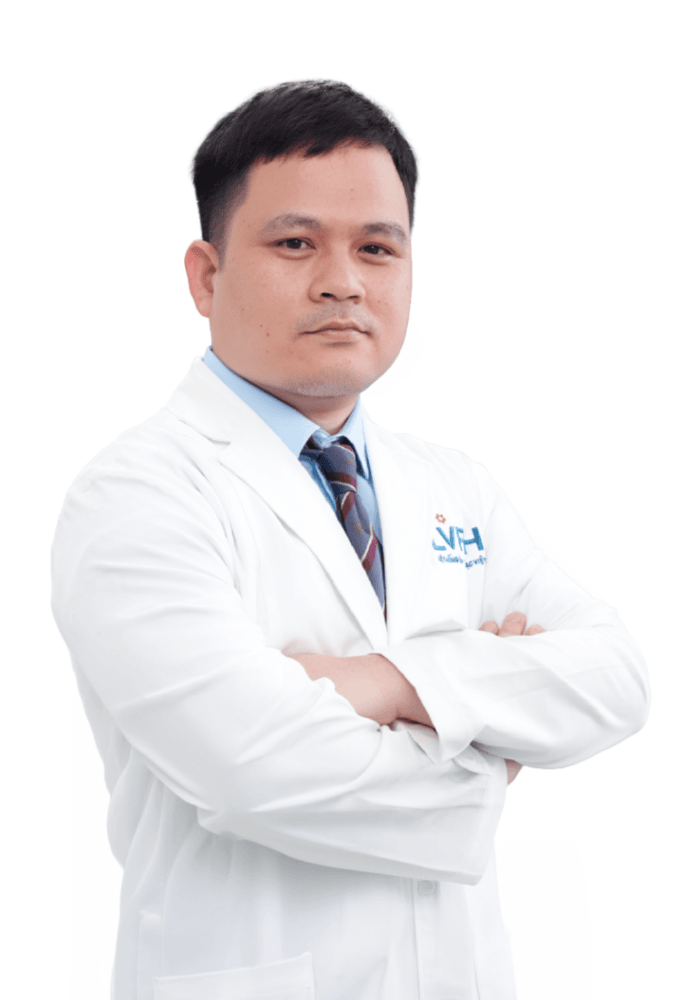
Specialist Level I Doctor Tran Van Thang
Dr. Tran Van Thang is a reputable expert in the field of emergency and critical care with 15 years of experience in diagnosing and managing life-threatening conditions. Currently, Dr. Tran Van Thang serves as Deputy Medical Director and Head of the Emergency and Critical Care Department at Huu Nghi Lac Viet Hospital.
Position: Deputy Medical Director, Head of Emergency and Critical Care Department – Huu Nghi Lac Viet Hospital
Languages: Vietnamese, English
Duong Nguyen Tat Thanh, Vinh Yen Ward, Phu Tho, Phu Tho
Mon - Sun: 07:15-11:45, 13:15-16:45
About Specialist Level I Doctor Tran Van Thang
Dr. Tran Van Thang is a reputable expert in the field of emergency and critical care with 15 years of experience in diagnosing and managing life-threatening conditions. He graduated as a General Practitioner in 2011 from Hai Phong University of Medicine and Pharmacy and completed his Specialist Level I program in Emergency and Critical Care in 2017 at Hanoi Medical University. Dr. Tran Van Thang possesses strong professional competence along with the ability to make quick and accurate decisions.
Having worked for many years in the Intensive Care Unit at Phuc Yen Regional General Hospital, the physician has exceptional strengths in managing medical emergencies, surgical emergencies, and intensive care for critically ill patients. With a demeanor characterized by "Calmness before crisis," combined with a sense of responsibility and dedication, he has successfully treated many severe cases during their most critical moments. Currently, Dr. Tran Van Thang serves as Deputy Medical Director and Head of the Emergency and Critical Care Department at Huu Nghi Lac Viet Hospital.
Abnormal symptoms requiring emergency care
Life-threatening emergency conditions often progress rapidly and can directly threaten life. Patients or their family members should bring the patient immediately to the Emergency and Critical Care Department for direct management by Dr. Tran Van Thang when the following emergency signs appear:
- Severe chest pain or sudden dyspnea: Sensation of angina pectoris, heaviness in the pectoral region radiating to the shoulder or jaw, or severe difficulty breathing, sweating, and cyanotic skin.
- Impaired consciousness, coma, or seizures: The patient suddenly becomes lethargic, talks nonsense, is nonreactive to calls or questions, faints, or experiences generalized convulsions.
- Manifestations of stroke: Sudden facial droop, dysarthria, inability to speak, weakness or hemiplegia on one side, numbness on one side of the body.
- Persistent high fever accompanied by lethargy and hypotension: High fever that does not subside, accompanied by signs of overwhelming infection, hypotension, rapid and weak pulse, indicating septic shock.
- Severe trauma or uncontrollable bleeding: Cases involving accidents, trauma to the head, chest, or abdomen, or wounds with heavy bleeding that cannot be controlled by standard hemostasis methods.
- Severe dehydration or acute poisoning: Vomiting and continuous diarrhea leading to prostration and lethargy, or suspected chemical, food, or drug poisoning.
Frequently Asked Questions
When does a patient need monitoring and treatment in the Emergency and Critical Care Department?
Patients need to be transferred to the Emergency and Critical Care Department when they are in extremis, experiencing impairment or threatened insufficiency of vital organ functions such as respiration, circulation, and neurological function. Cases such as septic shock, severe respiratory failure, myocardial infarction, acute stroke, or post-major surgery requiring close monitoring receive special care here. Treatment in this department ensures patients are continuously supported by modern equipment systems and closely supervised by specialist physicians.
How important is initial emergency management for patients with respiratory failure or hypotension?
Proper initial emergency management helps maintain oxygen supply to the brain and vital organs, preventing irreversible injury or death before advanced intervention. The emergency physician will quickly secure the airway, support respiration via oxygen therapy or mechanical ventilation, and simultaneously administer fluid infusion and vasopressors to stabilize circulation. Accurate assessment and management in the first few minutes play a decisive role in the patient's survival and recovery potential.
What should be done when discovering family members showing signs of suspected stroke or cerebrovascular accident?
When family members show signs of stroke (facial droop, limb weakness, speech difficulty), keep the patient lying quietly on a flat surface, tilting the head to one side if vomiting occurs to prevent airway aspiration. Absolutely do not perform coin rubbing, prick fingers to bleed, or give the patient food, drink, or blood pressure medication without a physician's indication. Subsequently, promptly transport the patient to the nearest facility with an Emergency and Critical Care Department to take advantage of the "golden hour" in stroke treatment.
Professional strengths
Workplace
- •Huu Nghi Lac Viet Hospital
Experience
- •2019 – present: Deputy Medical Director, Head of Emergency and Critical Care Department – Huu Nghi Lac Viet Hospital.
- •2011 – 2019: Worked in the Intensive Care Unit at Phuc Yen Regional General Hospital.
Education & training
- •2015 – 2017: Completed Specialist Level I training in Emergency and Critical Care at Hanoi Medical University.
- •2005 – 2011: Graduated as a General Practitioner from Hai Phong University of Medicine and Pharmacy.