
Specialist Level I Doctor Trinh Thao Nhi
Dr. Trinh Thao Nhi, MD, Specialist Level I, is a dedicated ophthalmology professional with a solid clinical foundation and extensive experience in examining and treating eye diseases in high-quality hospital settings. She has specialized expertise in the examination and treatment of general ophthalmologic conditions, phacoemulsification for cataract treatment, pterygium surgery with grafting, diagnosis and monitoring of fundus diseases, refractive error correction, conjunctivitis, and blepharitis.
Position: Ophthalmologist - Saigon Eye Hospital - Binh Duong
Languages: Vietnamese, English
298 Dai Lo Binh Duong, To 2, Khu pho 1, Phu Loi Ward, Ho Chi Minh City, Ho Chi Minh City
Mon - Sat: 07:30-12:00, 13:00-16:30
About Specialist Level I Doctor Trinh Thao Nhi
Dr. Trinh Thao Nhi, MD, Specialist Level I, is a dedicated ophthalmology professional with a solid clinical foundation and extensive experience in examining and treating eye diseases in high-quality hospital settings. Having received formal training and graduated as a Doctor of Medicine from the University of Medicine and Pharmacy at Ho Chi Minh City, she subsequently completed her Specialist Level I program in Ophthalmology at Pham Ngach Thach Medical University. In addition, the physician has completed multiple advanced certifications in high-technology diagnostic imaging, including A-scan ultrasonography, B-scan ultrasonography, optical coherence tomography (OCT), optical coherence tomography angiography (OCT-A), fluorescein angiography, basic phacoemulsification, and pterygium surgery with grafting. With a professional and attentive work style and a philosophy that always prioritizes patient safety, Dr. Trinh Thao Nhi, MD, Specialist Level I, currently works at Saigon Eye Hospital - Binh Duong, providing optimal vision protection solutions for each patient.
What conditions does Dr. Trinh Thao Nhi, MD, Specialist Level I, examine and treat?
- Cataracts (dry cataract) at various stages, causing symptoms such as blurred vision like a foggy screen, decreased visual acuity, asthenopia, and photophobia; indication and performance of phacoemulsification to safely restore visual acuity.
- Pterygium affecting the eyeball, causing foreign body sensation, redness, lacrimation, or invasion into the cornea affecting vision; performance of pterygium surgery with grafting (autologous limbal conjunctival graft, amniotic membrane) with or without antimetabolite application to minimize recurrence risk.
- Fundus and retinal diseases, utilizing advanced diagnostic imaging techniques such as optical coherence tomography (OCT), optical coherence tomography angiography (OCT-A), and fluorescein angiography to diagnose and monitor retinal lesions, diabetic retinopathy, and macular pathology.
- Common refractive errors such as myopia, hyperopia, astigmatism, and presbyopia, along with inflammatory surface ocular diseases such as conjunctivitis, blepharitis, keratitis, dry eye, and computer vision syndrome.
- Examination, screening, and treatment of general ophthalmologic conditions, assessment of ocular biometric indices using A-scan and B-scan ultrasonography, and consultation on intensive eye care regimens.
Guide to scheduling appointments and the examination process with Dr. Trinh Thao Nhi, MD, Specialist Level I
- Step 1: Make an appointment via Bcare by calling the hotline or filling out appointment information on the system to obtain priority numbering and proactively select an examination time slot suitable for your personal schedule.
- Step 2: Arrive at the reception desk of Saigon Eye Hospital - Binh Duong to verify the scheduled appointment at the registered time, present confirmation information so healthcare professionals can assist in completing administrative procedures, measure initial vital signs, and guide you to the clinic.
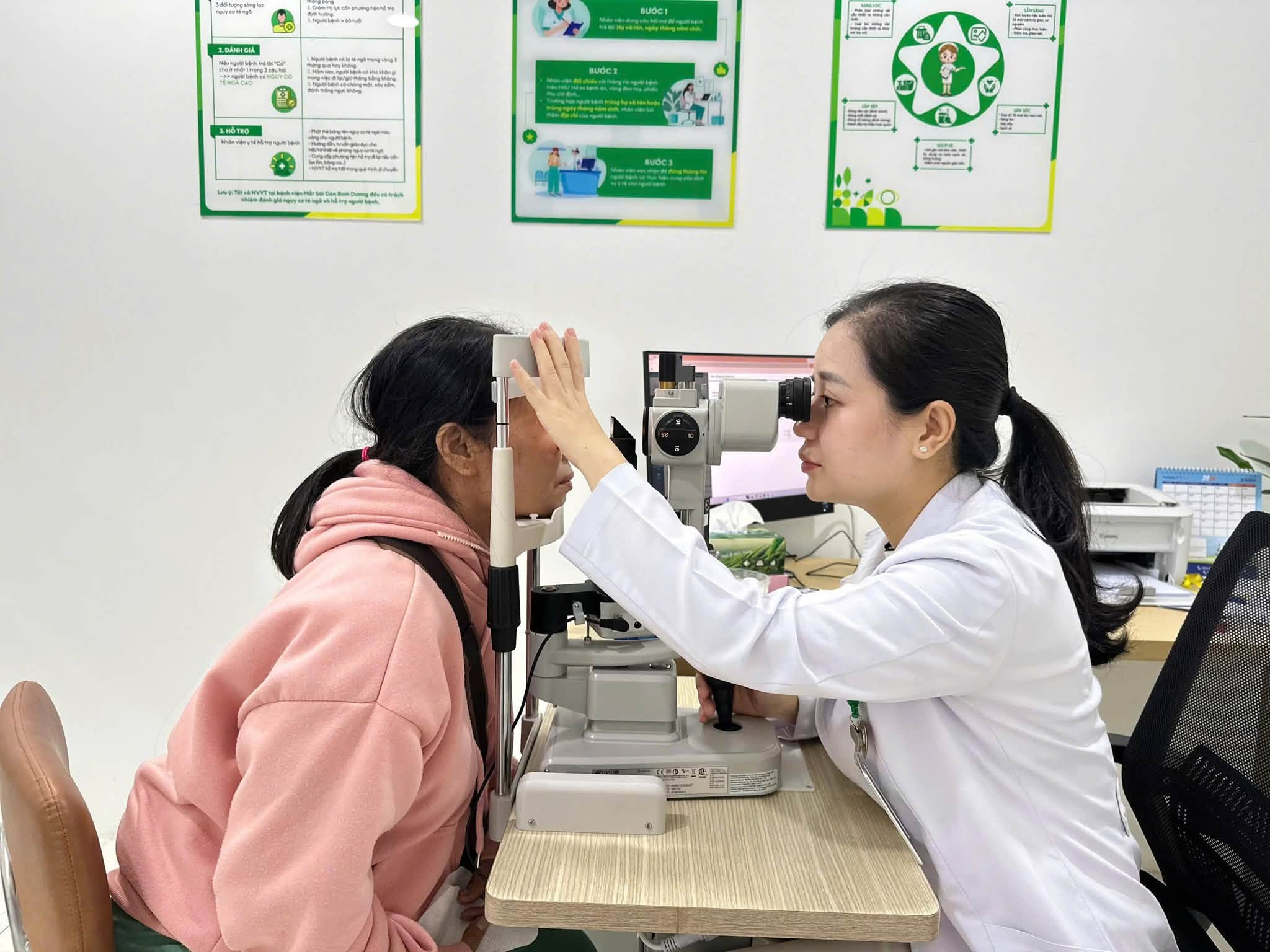
- Step 3: Enter the clinic to meet directly with Dr. Trinh Thao Nhi, MD, Specialist Level I, so the physician can listen to symptom descriptions, take past medical history, perform slit-lamp examination, and order necessary paraclinical tests such as optometry, A/B-scan ultrasonography, OCT, OCT-A, or fluorescein angiography.
- Step 4: Return to the clinic after all paraclinical results are available so the physician can analyze the health status of the eyes, provide a definitive diagnosis, and advise on a medical treatment regimen, surgical indication for phacoemulsification, or pterygium surgery with grafting.
- Step 5: Complete payment procedures at the cashier, receive the prescription for outpatient treatment or undergo procedures to prepare for surgery/procedure according to medical protocols, and receive a scheduled follow-up appointment.
Notes before going for an examination
- Patients should prepare and bring complete previous eye examination records, OCT results, ocular ultrasonography, disease monitoring logs, current eyeglasses or contact lenses, and recent eye prescriptions for the physician to reference and accurately assess disease progression.
- If wearing contact lenses, patients should temporarily stop wearing them prior to the examination time as directed by healthcare professionals to ensure optimal precision during optometry, refraction measurement, and corneal surface inspection.
- Avoid driving personally to the appointment if fluorescein angiography, OCT, or instillation of mydriatic drops for funduscopic examination is required, as the medication may cause temporary blurred vision and photophobia under bright light for several hours; patients should be accompanied by family members to support safe transportation.
- Record any abnormal symptoms experienced beforehand, such as the onset of blurred vision, foreign body sensation due to pterygium, redness, lacrimation, or ocular pain, to discuss in detail with the physician during the visit.
- Proactively arrive at the hospital approximately 15 to 20 minutes before the scheduled appointment time to complete registration procedures at the reception desk, check initial vital signs, and maintain a comfortable mental state before meeting the physician.

Frequently Asked Questions
Where does Dr. Trinh Thao Nhi, MD, Specialist Level I, currently work, and what conditions does she specialize in treating?
Dr. Trinh Thao Nhi, MD, Specialist Level I, currently works in the Outpatient Department at Saigon Eye Hospital - Binh Duong. She has specialized expertise in the examination and treatment of general ophthalmologic conditions, phacoemulsification for cataract treatment, pterygium surgery with grafting (autologous limbal conjunctival graft, amniotic membrane), diagnosis and monitoring of fundus diseases using A/B-scan ultrasonography, OCT, OCT-A, and fluorescein angiography, as well as the treatment of refractive errors, conjunctivitis, and blepharitis.
What benefits does making an appointment in advance with Dr. Trinh Thao Nhi, MD, Specialist Level I, via Bcare offer to patients?
Making an appointment in advance via Bcare allows patients to completely proactively choose the examination date and time slot suitable for their personal schedule, receive priority numbering, and maximize savings on waiting time at the hospital. Patients only need to call the hotline 0941.298.865 or fill out information on the Bcare appointment website; the appointment details will be recorded and confirmed for quick verification at the reception desk of Saigon Eye Hospital - Binh Duong.
Can patients with complex pterygium undergo amniotic membrane or autologous conjunctival graft surgery with this physician?
Yes. Patients can absolutely register for an examination and undergo pterygium surgery directly with Dr. Trinh Thao Nhi, MD, Specialist Level I. The physician holds an advanced certification in pterygium surgery with grafting (autologous limbal conjunctival graft, amniotic membrane) with or without antimetabolite application issued by Pham Ngach Thach Medical University, ensuring a gentle, safe surgical procedure and minimizing the recurrence rate.
What needs to be prepared when coming for a fundus disease diagnosis or fluorescein angiography with the physician?
When coming for a funduscopic examination or undergoing fluorescein angiography, patients should bring complete underlying medical records (such as diabetes mellitus, hypertension) and should be accompanied by family members to support transportation. The funduscopic examination and angiography process may require instillation of mydriatic drops causing temporary blurred vision; patients should prepare sunglasses to wear when traveling home after the visit.
Professional strengths
Workplace
- •Saigon Eye Hospital - Binh Duong
Experience
- •03/2026 - Present: Ophthalmologist - Saigon Eye Hospital - Binh Duong
- •2024 - 02/2026: Ophthalmologist - Saigon Eye Hospital - Tay Ninh
Education & training
- •2018 - Doctor of Medicine - University of Medicine and Pharmacy at Ho Chi Minh City
- •2023 - Certificate "A-scan Ultrasonography, B-scan Ultrasonography, Optical Coherence Tomography, Optical Coherence Tomography Angiography, and Fluorescein Angiography in Ophthalmology" - Pham Ngach Thach Medical University
- •2023 - Certificate "Basic Phacoemulsification Surgery" - Pham Ngach Thach Medical University
- •2024 - Certificate "Pterygium Surgery with Grafting (Autologous Limbal Conjunctival Graft, Amniotic Membrane) with or without Antimetabolite Application" - Pham Ngach Thach Medical University
- •2024 - Specialist Level I in Ophthalmology - Pham Ngach Thach Medical University
- •Certificate in A-scan Ultrasonography, B-scan Ultrasonography, Optical Coherence Tomography, Optical Coherence Tomography Angiography, and Fluorescein Angiography in Ophthalmology
- •Certificate in Basic Phacoemulsification Surgery
- •Certificate in Pterygium Surgery with Grafting (Autologous Limbal Conjunctival Graft, Amniotic Membrane) with or without Antimetabolite Application