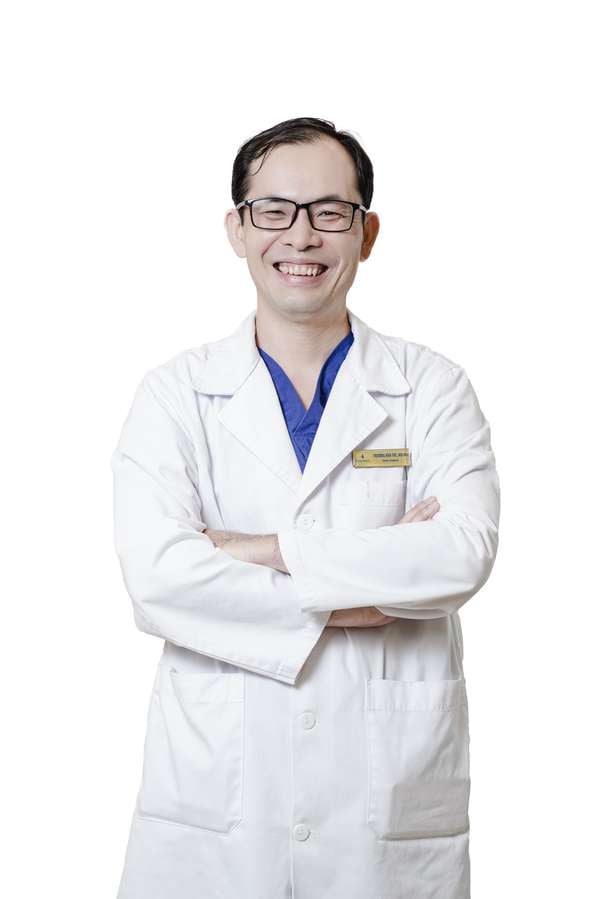
MSc, MD Truong Van Tri
MD, MSc Truong Van Tri has specialized expertise in cranial and spinal surgery, epilepsy surgery, hemifacial spasm, movement disorders, chronic neuropathic pain, spondylopathy, and brain tumors. He is a pioneer who successfully performed the first awake craniotomy for epilepsy treatment and the first intracranial electroencephalography (SEEG) electrode implantation procedure in Vietnam.
Position: Head of Department, Neurosurgery - Spine Surgery, Vinmec Central Park International Hospital
Languages: Vietnamese, English
So 208 Nguyen Huu Canh, Binh Thanh Ward, Ho Chi Minh City, Ho Chi Minh City
Mon - Fri: 08:00-11:00, 13:00-16:00
Sat: 08:00-11:00
About MSc, MD Truong Van Tri
MD, MSc Truong Van Tri is one of the leading experts in Vietnam in the field of Neurosurgery and Spine Surgery, with many years of clinical experience and intensive training in countries with advanced medical systems such as Canada and Belgium. He is a pioneer in Vietnam who successfully performed the first awake craniotomy for epilepsy treatment and the first SEEG electrode implantation procedure. In addition to his distinguished clinical career featuring numerous reputable international research studies, he previously served as Head of the Neurosurgery Unit at Hue University of Medicine and Pharmacy Hospital.
Treatment Experience of Dr. Truong Van Tri
With solid professional competence and precise surgical techniques honed through international fellowship programs, MD, MSc Truong Van Tri has successfully intervened and treated many complex neuro-spinal cases:
- Pioneered the successful performance of the first awake craniotomy for epilepsy treatment in Vietnam, helping patients preserve intact language and motor functions throughout the surgical intervention on the brain.
- The first person in Vietnam to successfully perform an SEEG electrode implantation procedure, enabling accurate localization of seizure onset zones in extremely complex cases of drug-resistant epilepsy.
- Performed delicate cerebral vascular microsurgery to definitively treat trigeminal neuralgia and hemifacial spasm caused by blood vessel compression of the nerve.
- Directly performed microsurgical dissection and removal of brain tumors, spinal cord tumors, and vertebral column tumors located in critical positions, maximally preserving surrounding healthy neural structures for patients.
- Applied minimally invasive methods such as corticosteroid injections to definitively treat sciatica caused by lumbar disc herniation or spinal stenosis, helping patients recover motor function rapidly without major surgery.
Guide to Booking Appointments and Examination Procedures with MD, MSc Truong Van Tri
- Step 1: Book an appointment via Bcare by contacting the call center or filling out information to provide personal details, selecting a suitable time slot, and receiving an appointment confirmation code for a Specialty examination in Neurosurgery - Spine Surgery with the doctor.
- Step 2: Arrive to verify the booked appointment at the reception desk; healthcare professionals will check the appointment code, assist in completing initial registration steps, and guide the patient to the clinic.
- Step 3: The patient enters the clinic for the physician to conduct a direct clinical examination, check neurological reflexes, perform motor function assessment, and take a detailed history regarding the frequency of seizures, pain severity, or any traumatic brain injury or spinal trauma encountered.
- Step 4: The patient proceeds to undergo paraclinical tests as directed by the nurse, such as Magnetic Resonance Imaging (MRI) of the cranium/spine, Computed Tomography (CT), electroencephalogram, or other advanced radiology diagnostics to clearly identify lesions.
- Step 5: The physician reviews all imaging reports and paraclinical results, thoroughly analyzes the nature of the tumor or lesion site to reach an accurate pathological diagnosis, and establishes a treatment regimen involving medical treatment, intra-articular injection, or indication for microsurgical intervention.
Notes Before the Visit
- Patients should bring complete previous medical records, X-ray films, MRI scans of the cranium or spine performed previously, along with their current prescription medications, so the physician can accurately compare disease progression.
- For patients with a history of epilepsy or movement disorders, it is recommended that a family member accompany them to help provide additional information about the frequency and morphology of daily seizures during History taking.
Frequently Asked Questions
What is "awake surgery" in epilepsy treatment, and why are patients alert during the operation?
Awake surgery is a technique involving craniotomy where the patient is awakened to be fully alert during the brain surgery. The purpose of keeping the patient alert is to allow the physician to stimulate the cerebral cortex while conversing with or asking the patient to move, thereby accurately localizing language and motor areas. This technique helps the surgeon maximally excise the epileptogenic lesion area without damaging critical functional regions, avoiding the risk of postoperative paralysis or aphasia.
When is a patient with epilepsy indicated for SEEG electrode implantation surgery?
Indication for intracranial electrode (SEEG) implantation surgery applies to cases of Drug-resistant epilepsy (where at least two medications have been used at correct doses without improvement) and situations where standard scalp electroencephalography or MRI cannot accurately determine the seizure onset zone. The physician drills small holes in the skull to insert electrodes deep into brain structures to directly record electrical signals, helping map the seizure generation area most accurately before proceeding with excision surgery.
How does cerebral vascular microsurgery work to treat trigeminal neuralgia and hemifacial spasm?
Trigeminal neuralgia (facial stabbing pain) or hemifacial spasm is often caused by a normal blood vessel branch in the brain becoming atherosclerotic or displaced, continuously compressing the root of the corresponding cranial nerve. Microvascular decompression (MVD) microsurgery approaches the nerve root area through a small incision behind the ear. The physician uses a microscope to separate the blood vessel from the nerve, then places a specialized biological pad between them to create separation, completely releasing the compression and definitively treating symptoms without damaging the nerve.
Professional strengths
Workplace
- •Vinmec Central Park International Hospital
Experience
- •03/2001 - 10/2018: Lecturer at Hue University of Medicine and Pharmacy, Surgeon at Hue University of Medicine and Pharmacy Hospital
- •12/2016 - 10/2018: Head of Neurosurgery Unit - Hue University of Medicine and Pharmacy Hospital
- •12/2021 to present: Head of Functional Neurosurgery Unit, Department of Neurosurgery – Department of General Surgery, Vinmec Central Park International Hospital
Education & training
- •08/2000: General Practitioner, Hue Medical University, Vietnam
- •08/2010: Master of Surgery, Hue University of Medicine and Pharmacy, Vietnam
- •04/2015: Master of Science in Neuroscience, Faculty of Medicine - University of Montreal, Canada
- •09/2002 - 09/2003: Preliminary Specialization in Neurosurgery, Cho Ray Hospital, Ho Chi Minh City, Vietnam
- •10/2004 - 03/2005: Training in Neurosurgery, Erasme Hospital and St Luc Hospital, Brussels, Belgium
- •02/2008 - 02/2009: Resident Physician in Neurosurgery, St Luc Hospital, Catholic University of Louvain, Brussels, Belgium
- •06/2010 - 09/2010: Training in Neurosurgery, Prince of Wales Hospital, Sydney, Australia
- •07/2013 - 06/2015: Fellow in Epilepsy Surgery, Centre Hospitalier de l'Université de Montréal (CHUM), University of Montreal, Canada
- •03/2017 - 05/2017: Fellow in Neurosurgery at Tokyo Women's Medical University, Japan
- •07/2018 - 03/2021: Fellow in Functional Neurosurgery and Spinal Surgery, Centre Hospitalier de l'Université de Montréal (CHUM), University of Montreal, Canada