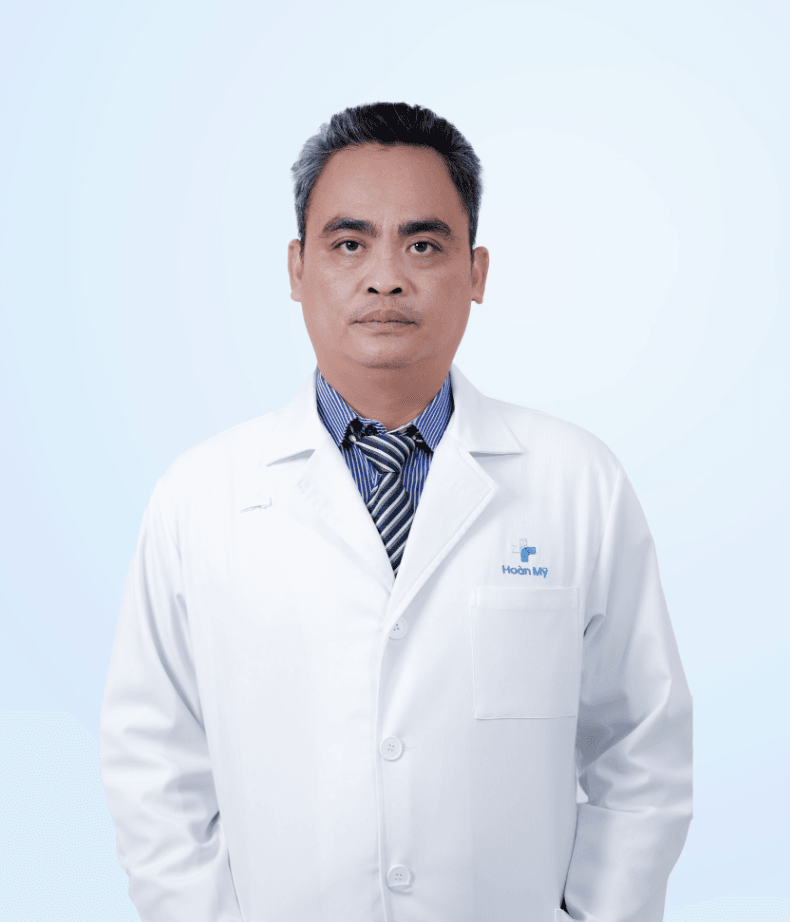
Specialist Level I Doctor Vo Quoc Khoi
Dr. Vo Quoc Khoi, MD, Specialist Level I, has nearly 20 years of experience in the field of Orthopedics - Spine with a broad scope of expertise including arthroscopy, joint replacement techniques...
Position: Orthopedic Surgeon, Hoan My Cuu Long Hospital
Languages: Vietnamese, English
Lo 20, Duong Vo Nguyen Giap, Hung Phu Ward, Can Tho, Can Tho
Mon - Sat: 06:00-17:00
Sun: 06:00-11:20
About Specialist Level I Doctor Vo Quoc Khoi
Dr. Vo Quoc Khoi, MD, Specialist Level I, is one of the experienced professionals in the field of Orthopedics - Spine with 19 years of practical medical work. Currently, Dr. Vo Quoc Khoi, MD, Specialist Level I, serves as an attending specialist physician at Hoan My Cuu Long General Hospital. With a solid professional foundation upon graduating from the Specialist Level I program in Orthopedics - Spine at the University of Medicine and Pharmacy in Ho Chi Minh City, the physician has 15 years of intensive experience in this field, continuously updating modern intervention methods to restore flexible movement for patients.
When should you make an appointment with Dr. Vo Quoc Khoi, MD, Specialist Level I?
Patients should proactively make an appointment early with Dr. Vo Quoc Khoi, MD, Specialist Level I, when they notice abnormal symptoms in the locomotor system or encounter the following injuries:
- Persistent pain, swelling, bruising, or stiffness in joints (knee joint, hip joint, ankle, wrist) causing limited range of motion.
- Injuries resulting from motor vehicle accidents, occupational accidents, or sports accidents leading to suspected fracture, dislocation, or sprain.
- A sensation of laxity in the joints during movement, suggesting ligament damage or meniscal tear following impact.
- Patients with severe osteoarthritis or avascular necrosis of the femoral head who require in-depth consultation regarding artificial joint replacement techniques.
- Patients who need minimally invasive surgery such as arthroscopy to address structural damage within the joint cavity.
Guide to making an appointment and the examination process with Dr. Vo Quoc Khoi, MD, Specialist Level I
To ensure a smooth examination process without long waits, patients are requested to refer to the following steps:
- Step 1: Make an appointment via Bcare by calling the hotline or filling out the booking information on the system to obtain a priority number, thereby saving waiting time at the hospital.
- Step 2: Arrive at the hospital reception desk to verify the scheduled appointment, receive guidance on obtaining a patient health booklet, and proceed to the physician's clinic.
- Step 3: Enter the clinic to meet the physician for clinical examination, inspection of injured joints, assessment of range of motion, and discussion of the current musculoskeletal status.
- Step 4: Move to the paraclinical area to perform imaging orders such as radiography, computed tomography (CT Scanner), or Magnetic Resonance Imaging (MRI) as required by the physician (if applicable).
- Step 5: Return to the initial clinic so the physician can review results, provide a definitive diagnosis, prescribe medication for internal medicine treatment, or advise on a suitable regimen for arthroscopic intervention or joint replacement.
Notes before the visit
- Bring all X-ray films, CT scans, MRI images, previous prescriptions, or injury records (if available) so the physician has a basis to accurately assess the disease progression history of bone and joint conditions.
- It is advisable to wear loose, comfortable clothing to facilitate the physician's performance of examination maneuvers and checks of the range of motion of body joints.
- Proactively and clearly inform the physician about the mechanism of injury (if due to an accident), the duration of pain, and allergy history to analgesics and anti-inflammatory medications.
Frequently Asked Questions
For which pathological conditions does the physician indicate the application of artificial joint replacement techniques?
Joint replacement techniques are typically indicated for cases of severe osteoarthritis (knee joint, hip joint), avascular necrosis of the femoral head, or serious trauma that destroys joint structure where conservative treatment is no longer effective.
What should patients note after undergoing arthroscopy performed by the responsible physician to recover quickly?
Patients must strictly adhere to the medication regimen, keep the surgical wound dry and clean, and combine physical therapy exercises for rehabilitation early according to instructions to prevent joint stiffness and muscle atrophy.
When does an injury to the ankle region or knee require surgical intervention instead of cast immobilization?
Surgery is indicated when the injury causes a displaced fracture with significant displacement, an intra-articular fracture, or complete rupture of the ligamentous system and joint capsule, leading to instability of the locomotor system structure.
At which institutions did Dr. Vo Quoc Khoi complete his specialty training programs?
The physician graduated from the undergraduate program at Can Tho University of Medicine and Pharmacy in 2006 and completed the Specialist Level I Physician program in Orthopedics - Spine at the University of Medicine and Pharmacy in Ho Chi Minh City in 2011.
Professional strengths
Workplace
- •Hoan My Cuu Long Hospital
Experience
- •2007-2017: Vinh Long General Hospital
- •2017-present: Hoan My Cuu Long General Hospital
Education & training
- •Graduated from Can Tho University of Medicine and Pharmacy in 2006
- •Graduated as MD, Specialist Level I in Orthopedics - Spine at the University of Medicine and Pharmacy in Ho Chi Minh City in 2011