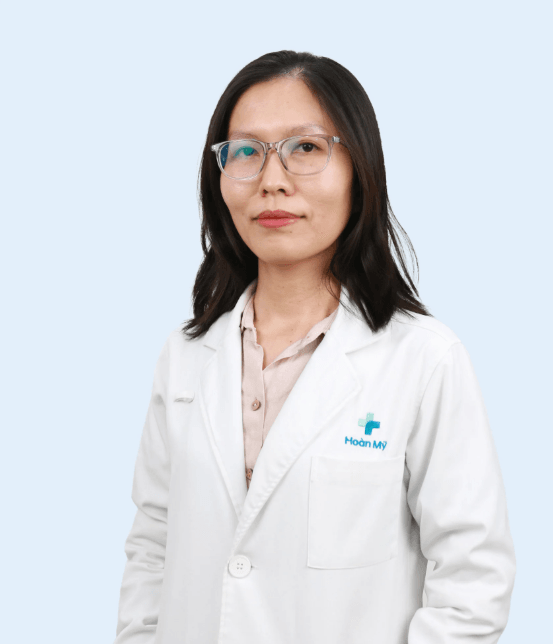
Specialist Level II Doctor Vũ Hai Hang
MD, Specialist Level II Vũ Hai Hang has 4 years of experience in the diagnosis and treatment of internal medicine conditions and 7 years of experience in the diagnosis and treatment of cancer. The physician has experience in the care and treatment of breast, gastrointestinal, lung, and gynecologic cancers.
Position: Oncologist, Hoan My Thu Duc Hospital
Languages: Vietnamese, English
So 241 Quoc lo 1K, Linh Xuan Ward, Ho Chi Minh City, Ho Chi Minh City
Mon - Sat: 07:00-11:30, 12:30-18:00
Sun: 07:00-11:00
About Specialist Level II Doctor Vũ Hai Hang
MD, Specialist Level II Vũ Hai Hang is one of the outstanding Medical Oncology specialists with intensive training in Southern Vietnam. With 11 years of continuous professional experience (including 4 years treating general internal medicine conditions and 7 years specializing in oncology), the physician has built a robust academic and clinical practice foundation at the University of Medicine and Pharmacy at Ho Chi Minh City by completing both a Master’s degree in Cancer and a Specialist Level II degree in Cancer.
Having dedicated many years to major healthcare facilities, Dr. Hang has directly supported, instilled hope in, and provided successful treatment for thousands of patients with serious illnesses. The physician is consistently trusted by patients due to precise individualized treatment regimens, a scientific combination of evidence-based medicine and palliative care, and improved physical status. Currently, MD, Specialist Level II Vũ Hai Hang works at Hoan My Thu Duc International General Hospital.
What conditions does Dr. Vũ Hai Hang specialize in treating and managing?
Possessing deep expertise in medical oncology along with a comprehensive system of supplementary certifications, Dr. Hang has superior strengths in the following areas:
- Intensive Cancer Treatment: Developing protocols and directly administering chemotherapy and targeted therapy for common cancers such as breast cancer, gastrointestinal cancer (stomach, colorectal), lung carcinoma, and gynecologic cancers (cervix, uterus, ovary).
- Clinical Nutrition Management: Providing dietary counseling and designing intensive nutrition regimens for cancer patients before, during, and after chemotherapy cycles to minimize weight loss and prostration and enhance drug response.
- Palliative Care and Internal Medicine: Examining and treating comorbid internal medicine conditions in cancer patients; managing adverse effects of chemotherapy (nausea, hair loss, anemia, fatigue) and pain management in progressive stages.
- Paraclinical Services: Directly performing general ultrasound to assess lesions and participating in clinical teaching and technology transfer for younger generations of physicians and nurses, leveraging certification in health sciences education methods.
Guide to Making an Appointment and Examination Process with MD, Specialist Level II Vũ Hai Hang
To ensure a smooth examination and treatment journey and minimize patient fatigue, patients and their family members are requested to refer to the following procedure:
- Step 1: Make an appointment via Bcare by calling the hotline or filling out the appointment form on the system to obtain a priority number, allowing for proactive time management and avoiding queues during peak hours.
- Step 2: Arrive to verify the scheduled appointment at the reception desk of the Oncology Unit – Hoan My Thu Duc International General Hospital so that healthcare professionals can update the status and guide you to the physician's clinic.
- Step 3: Enter the clinic to meet the physician for a clinical examination, discuss health status and past medical history, and receive indications for necessary diagnostic testing.
- Step 4: Move to the paraclinical area to undergo general ultrasound, blood tests, or imaging studies as indicated, then wait for results.
- Step 5: Bring the results back to the initial clinic for the physician to interpret them, provide a definitive diagnosis, advise on pharmacotherapy regimens, schedule hospital admission for chemotherapy infusion, and set a follow-up visit.
Important Notes for Patients
- Bring all medical records, current prescriptions, laboratory results, anatomic pathology reports (biopsy), and imaging films (CT, MRI, PET-CT) from other facilities within the last 6 months to allow the physician to accurately assess tumor progression.
- For patients preparing for a chemotherapy cycle or undergoing a complete blood count, it is recommended to fast completely in the morning to ensure the accuracy of biochemical indices.
- It is encouraged for patients to be accompanied by at least one family member to listen together to the physician's explanation regarding the treatment regimen, potential adverse effects, and home care and health monitoring instructions.
Frequently Asked Questions
Are there solutions to help patients reduce fear regarding chemotherapy side effects?
Chemotherapy is a method using intravenous infusion medications or oral medication to destroy cancer cells systemically; therefore, it inevitably affects some healthy cells and causes adverse effects such as vomiting, fatigue, hair loss, or leukopenia.
Patients can use prophylactic regimens for adverse effects very early with new-generation antiemetics, erythropoietin/leukocyte-stimulating agents when necessary, combined with intensive psychological counseling. Good physical and psychological preparation helps more than 90% of patients pass through chemotherapy cycles gently and safely.
What specific benefits does nutrition bring to patients with breast cancer and gastrointestinal cancer?
In cancer, nutrition is considered a "therapeutic weapon" alongside medication. Many patients with gastrointestinal cancer suffer from prostration because the tumor obstructs the digestive tract, or patients with breast cancer experience metabolic disorders during chemotherapy infusion.
With deep expertise in clinical nutrition, Dr. Hang will directly establish individualized diet and nutritional support plans (via oral route or intravenous route), precisely calculating the required protein and energy intake to help patients avoid weight loss, regenerate the immune system, and maintain sufficient health to complete the entire treatment course without interruption.
When are lung cancer and gynecologic cancer patients indicated for treatment with targeted therapy?
Targeted therapy is a method using drugs that attack specific biological targets (such as mutated genes or specific proteins) that facilitate tumor development, thereby causing less damage to healthy cells compared to chemotherapy.
To determine whether a patient with lung carcinoma or gynecologic cancer is eligible for this method, Dr. Hang will indicate specialized molecular biology or gene mutation tests (such as EGFR mutation in lung carcinoma). If the results are suitable, targeted therapy will provide superior disease control effectiveness, especially in progressive stages.
Professional strengths
Workplace
- •Hoan My Thu Duc Hospital
Experience
- •2015 – 2018: Attending Physician in Internal Medicine at Tan Phu District Hospital
- •2019 – 2025: Chemotherapy Physician at Military Hospital 175
- •2025 – Present: Oncologist at Hoan My Thu Duc International General Hospital
Education & training
- •2008 – 2014: General Practitioner – University of Medicine and Pharmacy at Ho Chi Minh City
- •2015 – 2018: Master of Cancer – University of Medicine and Pharmacy at Ho Chi Minh City
- •2022 – 2024: MD, Specialist Level II in Cancer – University of Medicine and Pharmacy at Ho Chi Minh City
- •2023: Certificate in General Ultrasound
- •2024: Certificate in Clinical Nutrition
- •2025: Certificate in Clinical Teaching Methods for Practical Instructors in Health Sciences Education