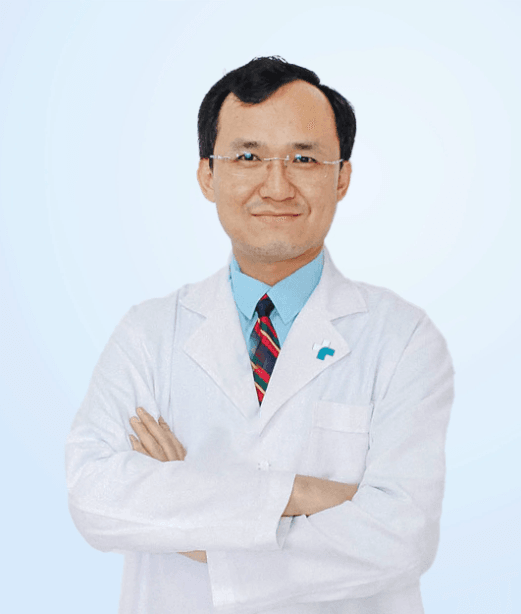
Specialist Level I Doctor Vu Xuan Hoang Tri
MD, Specialist Level I Vu Xuan Hoang Tri - Deputy Head of the Department of Orthopedics – Physical Therapy - Rehabilitation – Musculoskeletal at Hoan My Dong Nai Hospital, with nearly 20 years of experience in the field of Orthopedics.
Position: Deputy Head of the Department of Orthopedics – Physical Therapy - Rehabilitation – Musculoskeletal at Hoan My Dong Nai Hospital
Languages: Vietnamese, English
1048A Pham Van Thuan, Bien Hoa Ward, Dong Nai, Dong Nai
Mon - Sat: 06:30-12:00, 13:00-16:30
Sun: 07:30-11:30
About Specialist Level I Doctor Vu Xuan Hoang Tri
MD, Specialist Level I Vu Xuan Hoang Tri is an outstanding orthopedic specialist with nearly 20 years of intensive experience in examining, surgically treating, and managing injuries to the locomotor system. The physician graduated as a Specialist Level I Physician in Orthopedics in 2013 and holds a comprehensive set of advanced technical certifications, including joint replacement, basic microsurgery laboratory practice, burn-plastic surgery, neurosurgery, and intra-articular injection.
With comprehensive professional competence and extensive practical experience, MD, Specialist Level I Vu Xuan Hoang Tri currently serves as Deputy Head of the Department of Orthopedics – Physical Therapy - Rehabilitation – Musculoskeletal at Hoan My Dong Nai Hospital.
Conditions examined and treated by the physician
MD, Specialist Level I Vu Xuan Hoang Tri specializes in effectively examining and treating the following groups of conditions:
- Examination, diagnosis, and surgical treatment of severe bone and joint injuries, applying joint replacement techniques for cases of degeneration or serious joint damage.
- Performing basic microsurgical techniques to suture and repair severed blood vessels, nerves, and tendons/muscles caused by accidents or trauma.
- Providing specialized treatment for burn cases, managing post-burn sequelae, and performing aesthetic and functional reconstructive burn-plastic surgeries.
- Performing intra-articular injections and tendon treatments under specialist guidance to provide local pain relief and anti-inflammatory effects for patients with chronic musculoskeletal disorders.
- Coordinating radiology and neurosurgical techniques to manage complex trauma cases involving the vertebral column, spinal cord, or peripheral nerves.
Guidance on scheduling appointments and the examination process with Dr. Vu Xuan Hoang Tri
- Step 1: Make an appointment via Bcare by calling the hotline or filling out the booking information on the system to obtain a priority number, helping to proactively manage time and minimize waiting periods upon arrival at the hospital.
- Step 2: Arrive at the reception desk of Hoan My Dong Nai Hospital to verify the scheduled appointment so that healthcare professionals can check the information and guide you to receive a queue number for entry into the Specialty Clinic managed by the assigned physician.
- Step 3: Enter the clinic to meet the physician directly for a clinical examination, assessment of joint movements and range of motion of the limbs, and specific discussion regarding injury history or pain.
- Step 4: Proceed to the functional rooms to undergo paraclinical orders such as digital radiography (ensuring strict radiation safety), computed tomography, or other specialized explorations as requested by the physician.
- Step 5: Bring the paraclinical results back to the initial clinic for the physician to review, analyze the injury, provide an accurate diagnostic conclusion, and advise on a medical treatment regimen, perform local injections, or schedule appropriate surgery.
Notes before the examination
- Patients need to bring all previous medical records, current prescriptions, and especially any X-ray, CT scan, or MRI images related to injuries or musculoskeletal issues from the past 6 months, if available.
- When seeking care for limb or joint conditions, patients should wear loose, comfortable clothing (preferably wide-leg pants that are easy to pull up or loose skirts) to facilitate examination and the performance of joint injection procedures when indicated.
- For patients with acute trauma or suspected fractures, it is necessary to limit vigorous movement of the injured area; temporary fixation may be applied, and the patient should go to the hospital immediately for physician management.
Frequently Asked Questions
What characteristic symptoms indicate that a patient's joint has been severely damaged and requires a joint replacement technique?
Patients should seek immediate medical attention when experiencing severe, persistent joint pain that limits mobility, worsening pain during ambulation or weight-bearing, and lack of response to oral medications. Accompanying signs include joint deformation, loud clicking sounds during movement, morning joint stiffness, or complete loss of normal limb flexion and extension capabilities.
What benefits do intra-articular injection and tendon treatment techniques offer to patients with musculoskeletal disorders?
This method involves delivering anti-inflammatory medication or artificial synovial fluid directly into the joint capsule or the paratenon tissue surrounding the injured tendon under absolute sterility conditions. This technique helps rapidly cut off pain episodes, reduce local inflammatory reactions, and enhance lubrication to allow smooth joint movement without causing systemic adverse effects on the stomach or kidneys associated with oral medication use.
How does microsurgery help in cases where patients suffer from amputation injuries or vascular and musculoskeletal tendon injuries?
Microsurgery utilizes a specialized operating microscope to enable physicians to clearly visualize microscopic structures, allowing for precise suturing of each severed nerve fiber, blood vessel, and tendon/muscle.
Timely microsurgical intervention helps maximize the restoration of blood supply to the limb, regenerate nerve conduction function, prevent the risk of necrosis, and assist patients in recovering natural motor function of their hands and feet.
Professional strengths
Workplace
- •Hoan My Dong Nai Hospital
Experience
- •2016 – Present: Attending physician – Deputy Head of the Department of Orthopedics at Hoan My Dong Nai Hospital.
Education & training
- •2013: Graduated as MD, Specialist Level I – Orthopedics
- •Received Certification in Intra-articular Injection and Tendon Treatment Techniques
- •Received Professional Certification in Infection prevention and control
- •Received Certification in Burn-Plastic Surgery (2014)
- •Received Certification in Basic Microsurgery Laboratory Practice Course (2010)
- •Received Certification in Neurosurgery (3B3)
- •Received Certification in Radiology Specialty Orientation (2012)
- •Received Certification in Medication Counseling
- •Received Certification in Joint Replacement Techniques (2017)
- •Received Certification in Healthcare mini MBA
- •Received Certification in Radiation safety for radiation workers in diagnostic medical radiography