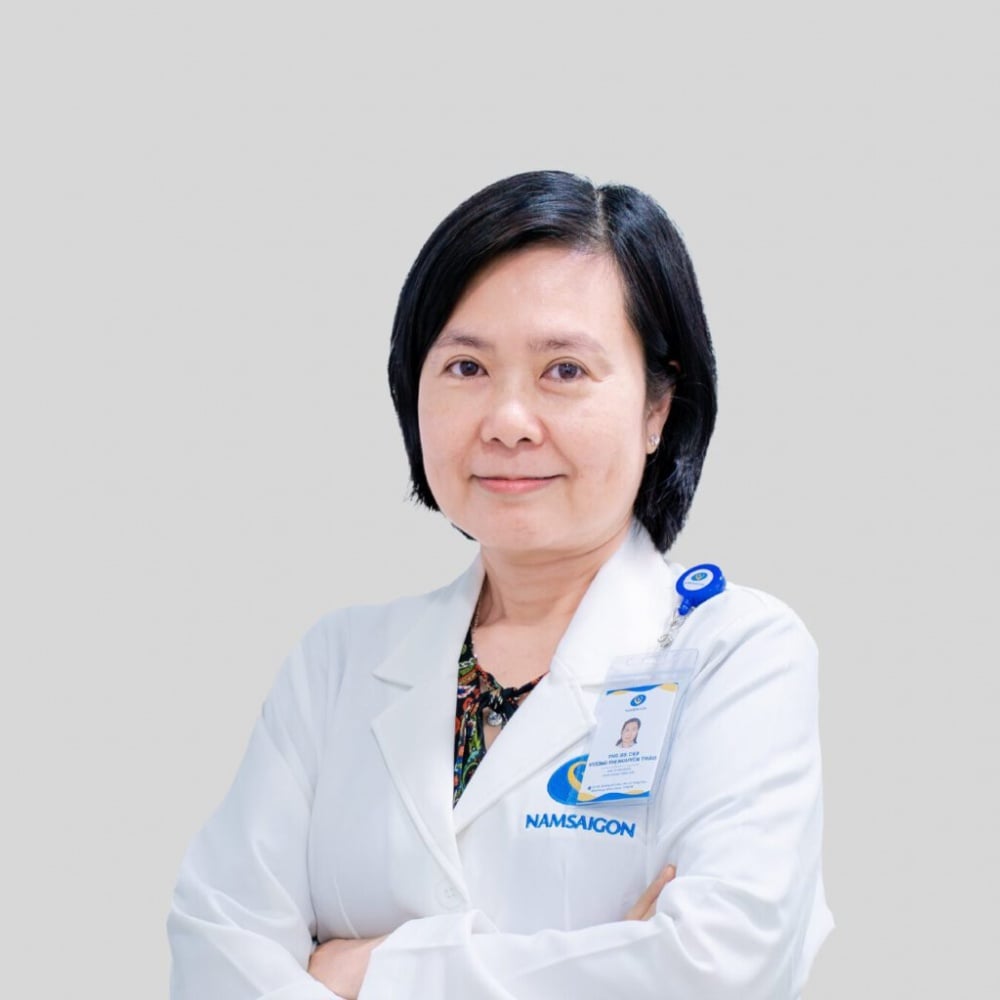
MSc, Specialist Level II Doctor Vuong Thi Nguyen Thao
MD, MSc, Specialist Level II Vuong Thi Nguyen Thao is one of the most experienced, dedicated, and reputable experts in Oncology and Palliative Care in Vietnam. Her extensive professional foundation and attentiveness enable her to effectively perform cancer screening, medical treatment for solid organ tumors, and optimal symptom control for patients.
Position: Oncologist - Nam Saigon International General Hospital
Languages: Vietnamese, English
So 88, Duong so 8, Khu dan cu Trung Son, Binh Hung Commune, Ho Chi Minh City, Ho Chi Minh City
Mon - Sat: 07:00-12:00, 13:30-17:00
Sun: 07:00-12:00
About MSc, Specialist Level II Doctor Vuong Thi Nguyen Thao
MD, MSc, Specialist Level II Vuong Thi Nguyen Thao is one of the most experienced, dedicated, and reputable experts in Oncology and Palliative Care in Vietnam. She graduated as a General Practitioner from the University of Medicine and Pharmacy at Ho Chi Minh City in 1992, subsequently completing a Master’s degree in Internal Medicine, Specialist Level I, and Specialist Level II in Oncology at the same institution. In 2007, Dr. Nguyen Thao completed an advanced training course in palliative cancer care at the National Cancer Centre Singapore.
With over 33 years of experience in medical practice, she has dedicated many years to Cho Ray Hospital, where she served as Head of the Department of Palliative Treatment – Oncology Center, and participated in teaching within the Ministry of Health's clinical training programs. Her extensive professional foundation and attentiveness enable her to effectively perform cancer screening, medical treatment for solid organ tumors, and optimal symptom control for patients. Currently, MD, MSc, Specialist Level II Vuong Thi Nguyen Thao serves as an Oncologist in the Department of General Surgery at Nam Saigon International General Hospital.
Quality of Medical Care by MD, MSc, Specialist Level II Vuong Thi Nguyen Thao
To assess the quality of medical care provided by MD, MSc, Specialist Level II Vuong Thi Nguyen Thao, patients may refer to the following professional credentials and practical competencies:
- She holds a Master’s degree in Internal Medicine and a Specialist Level II degree in Oncology, and has completed a certificate in Palliative Care at the National Cancer Centre Singapore. She regularly updates her knowledge of advanced medical practices through domestic and international conferences.
- With more than three decades of dedication to the medical field, including her tenure as Head of the Department of Palliative Treatment – Oncology Center at Cho Ray Hospital, she is able to accurately diagnose conditions and develop effective treatment regimens for thousands of cancer patients.
- She possesses strong professional competence in screening and providing medical treatment for solid organ oncological diseases involving the digestive system, hepatobiliary system, and urinary system, while also delivering palliative care to alleviate symptoms and improve patients' quality of life.
- Having served as a lecturer for the clinical palliative care training program for physicians in Southern Vietnam organized by the Ministry of Health, she consistently conducts careful examinations, provides individualized treatment regimens, and supports patients in alleviating anxiety throughout their course of treatment.
Guide to Making an Appointment and Examination Process with MD, MSc, Specialist Level II Vuong Thi Nguyen Thao
- Step 1: Make an appointment via Bcare by calling the hotline or filling out the booking information on the system to obtain a priority number, helping to reduce waiting time and proactively manage examination schedules.
- Step 2: Arrive at Nam Saigon International General Hospital and verify your booked appointment details so that healthcare professionals can guide you through the procedures and admit you to the Department of General Surgery.
- Step 3: Enter the clinic to meet MD, MSc, Specialist Level II Vuong Thi Nguyen Thao for a clinical examination, assessment of lesions, evaluation of pain/fatigue levels, and detailed discussion of the patient's past medical history.
- Step 4: Undergo necessary paraclinical tests such as blood tests, ultrasound, computed tomography (CT scan), magnetic resonance imaging (MRI), or other specialized radiology diagnostics as advised by the physician.
- Step 5: Return to the clinic for the physician to review paraclinical results, conclude the diagnosis, establish a medical treatment regimen for oncology, or develop an appropriate plan for palliative symptom management.
Notes Before Your Visit
- Bring your complete patient health booklet, current daily prescriptions, and all previous laboratory results, imaging films, and pathology reports to allow the physician to compare disease progression.
- Fast before breakfast if the patient requires or is indicated for morning blood chemistry tests, gastrointestinal endoscopy, or abdominal ultrasonography.
- Wear loose, comfortable clothing to facilitate physical examination and clinical assessment steps.
- Prepare a list of current uncomfortable symptoms (pain severity, nausea, weight loss, fatigue) to discuss in detail with the physician.
- Arrive 10 to 15 minutes before your scheduled appointment time to complete information verification procedures at the hospital reception desk.
Frequently Asked Questions
What is the role of palliative symptom management for cancer patients?
Palliative care is a specialized approach aimed at minimizing distressing symptoms caused by cancer or adverse effects of therapeutic interventions, such as pain, fatigue, nausea, insomnia, or anxiety. Timely palliative care intervention helps patients improve their physical condition, maintain mental stability, and significantly enhance their quality of life throughout their journey with illness. This regimen can be applied at any stage of cancer concurrently with specific treatments.
What is the significance of periodic cancer screening for the digestive and hepatobiliary systems?
Periodic cancer screening for the digestive and hepatobiliary systems helps detect premalignant lesions or tumors at very early stages before distinct clinical presentations appear. Early detection improves the effectiveness of medical treatment, prolongs prognosis, and reduces costs and treatment burden for patients. Patients should proactively undergo routine follow-ups to receive advice from a consulting physician on a screening package suitable for their age and risk factors.
What paraclinical diagnostic steps do patients with urinary system cancer need to undergo to assess their condition?
To accurately diagnose and stage urinary system cancer, patients are typically indicated for urinalysis, blood tests to assess renal function, and cancer biomarker indices. These are combined with modern radiology methods such as ultrasonography of the urinary system, computed tomography (CT scan), or magnetic resonance imaging (MRI) to help the physician clearly observe tumor size and invasiveness. Based on these results, the physician will determine the most appropriate intervention regimen for each patient.
Professional strengths
Workplace
- •Nam Saigon International General Hospital
Experience
- •1993-2000: Department of Internal Medicine – Cho Ray Hospital
- •2001-2002: Department of Infection Prevention and Control – Cho Ray Hospital
- •2002-2022: Department of Palliative Treatment – Oncology Center, Cho Ray Hospital.
- •2015-2022: Head of Department of Palliative Treatment – Oncology Center, Cho Ray Hospital.
- •2017: Principal Physician for Palliative Treatment – Oncology Center, Cho Ray Hospital.
- •March 2022 - April 2024: Attending Physician, Department of Oncology, Tam Anh General Hospital.
- •2025 – Present: Oncologist, Department of General Surgery, Nam Saigon International General Hospital.
Education & training
- •1992: General Practitioner – University of Medicine and Pharmacy at Ho Chi Minh City.
- •2004: Master of Internal Medicine – University of Medicine and Pharmacy at Ho Chi Minh City.
- •2013: Specialist Level I in Oncology – University of Medicine and Pharmacy at Ho Chi Minh City.
- •2017: Specialist Level II in Oncology – University of Medicine and Pharmacy at Ho Chi Minh City.